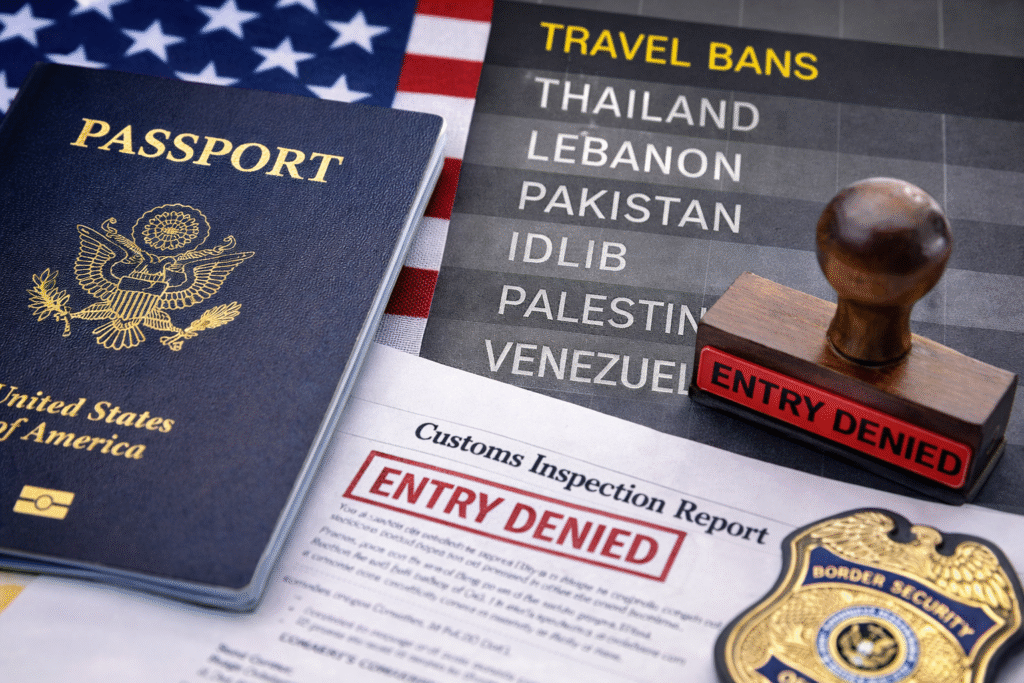
The United States has announced a sweeping expansion of its travel restrictions. On December 17, 2025, the administration added 20 new countries to its restricted travel list. This move raises the total number of affected nations to 39.
The new Border Shield policy takes effect on January 1, 2026. The policy introduces full travel bans on five countries. It also imposes strict new vetting rules on fifteen others.
The decision marks one of the largest shifts in US border policy in decades. The global travel industry now faces sudden uncertainty.
Border Shield Policy Signals a Harder Entry Era
The Border Shield framework reflects a tougher approach to entry standards. US officials state that security concerns drive the policy expansion.
Authorities argue that some governments fail to share reliable identity and criminal data. Without this cooperation, the US claims it cannot assess traveler risk properly.
Under the new rules, travelers from listed countries will face bans or extended screening. Processing delays will increase sharply.
Palestinian Authority Documents Face Full Ban
One of the most controversial decisions involves Palestinian Authority travel documents. The policy places these documents under the full ban category.
Many travelers holding these documents lack alternative passports. The rule effectively blocks travel for thousands of individuals.
Human rights groups have raised concerns about mobility and family separation. The policy creates complex challenges for affected travelers.
Tourism Industry Braces for Immediate Economic Losses
The travel ban expansion carries serious economic consequences. Tourism analysts expect significant revenue losses during early 2026.
Industry estimates suggest a potential loss of twelve billion dollars in tourism spending within six months. This decline affects airlines, hotels, and travel services.
Destinations that rely on long-haul international visitors will feel the impact first.
Airlines Face Cancellations and Route Adjustments
Airlines serving affected regions already report increased booking cancellations. Routes connecting the Middle East, Africa, and Southeast Asia show the sharpest drops.
Carriers must adjust schedules and capacity quickly. Some airlines may suspend routes temporarily.
These changes disrupt global connectivity and airline revenue planning for 2026.
Hospitality Sector Prepares for Lower Occupancy
Luxury hotels in major US cities expect softer demand. New York, Washington, and Los Angeles depend heavily on international travelers.
High-spending visitors from restricted regions often book premium accommodations. Their absence reduces average daily rates.
Hotels now shift focus toward domestic and alternative international markets.
Universities Warn of Disrupted Academic Travel
Higher education institutions have expressed strong concern. Many international students now face uncertain entry prospects.
Visa delays may affect spring semester enrollments. Some students may defer or cancel studies.
Universities rely on international tuition revenue. Extended travel barriers threaten academic budgets and diversity goals.
Families Rush to Beat the January Deadline
The policy has triggered urgency among immigrant families. Many green card holders are racing to reunite with relatives before January 1.
Airports worldwide report increased outbound traffic toward the US. Travelers fear separation under the new rules.
Secondary screening has intensified at US entry points. Border officers now apply stricter questioning protocols.
Travelers Face New Risks Even Without Bans
Not all affected countries face full travel bans. Many fall under enhanced vetting categories.
These travelers must expect longer processing times. Visa approvals may take four to eight additional weeks.
Transit routes also carry new risks. Travelers passing through banned countries may face added scrutiny upon arrival.
Border Uncertainty Complicates Travel Planning
The administration has not clarified the status of existing visas. Travelers with valid visas still risk extended questioning.
Airlines and travel advisors now urge caution. Travelers must review entry rules carefully before booking.
Uncertainty complicates global mobility for business, education, and leisure travel.
Security Goals Drive Policy Justification
US officials frame the expansion as a security necessity. Authorities emphasize the importance of data sharing and identity verification.
They argue that border control requires cooperation from foreign governments. Without that cooperation, entry access becomes restricted.
The policy prioritizes risk prevention over travel facilitation.
Global Travel Industry Enters Recalibration Phase
The expansion forces the travel industry to adapt quickly. Markets once considered growth drivers now face access barriers.
Tour operators must redesign itineraries. Airlines must rethink network strategies. Hotels must diversify demand sources.
The shift reflects a broader trend toward tighter borders and digital vetting.
Digital and Physical Borders Tighten Together
The Border Shield policy combines physical restrictions with digital screening. Data now determines access more than ever.
Travelers face a future shaped by algorithms, databases, and geopolitical decisions.
The balance between security and mobility continues to evolve.
2026 Marks a Turning Point for Global Travel
As 2025 ends, global tourism enters a new chapter. Hard borders replace the optimism of post-pandemic reopening.
The US travel ban expansion reshapes travel flows worldwide. Economic, social, and human impacts will unfold throughout 2026.
For travelers and the industry alike, adaptation becomes essential. Global mobility now depends on policy as much as desire.
For more travel news like this, keep reading Global Travel Wire