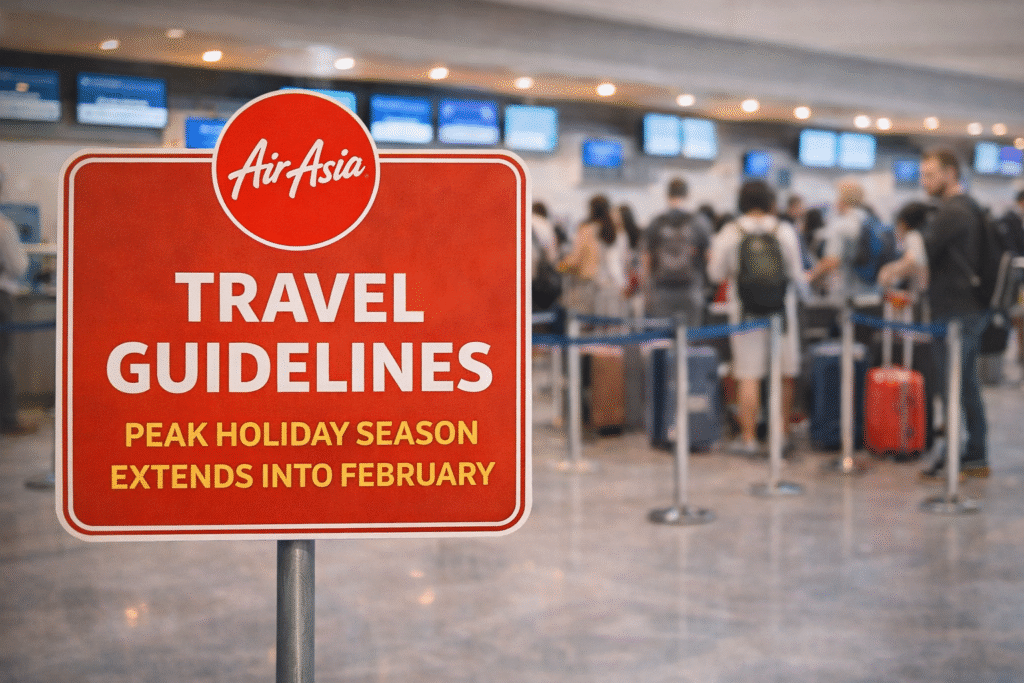
As the peak holiday travel season extends well into February, AirAsia has issued a comprehensive set of travel guidelines aimed at helping passengers navigate busy airports and packed flight schedules with ease. With school holidays, festive breaks, and leisure travel converging, passenger volumes across Asia and beyond are expected to remain consistently high, making preparation more important than ever.
The airline is encouraging travellers to plan ahead, arrive early, and make full use of its digital ecosystem to reduce waiting times and avoid unnecessary stress. These measures are designed to improve the overall travel experience while supporting smoother airport operations during one of the busiest periods of the year.
Digital Check-In Takes Centre Stage
AirAsia continues to emphasise self check-in as the most effective way to save time during peak travel periods. Passengers can check in online using the AirAsia MOVE app from up to 14 days before departure and as late as one hour prior to take-off. Completing check-in in advance allows travellers to confirm their booking details, select seats where applicable, and receive an electronic boarding pass directly on their mobile device.
By arriving at the airport already checked in, passengers can bypass long counter queues and proceed straight to security or baggage drop, significantly reducing congestion during high-traffic hours.
AirAsia MOVE App as a Travel Companion
The AirAsia MOVE app plays a central role in the airline’s peak season travel strategy. Designed as an all-in-one travel companion, the app provides real-time flight updates, notifications on schedule changes, and easy access to booking management tools. During busy travel periods, instant alerts help passengers stay informed and respond quickly to operational changes.
Through the app, travellers can also manage add-ons, purchase extra baggage, request special assistance, and retrieve boarding passes, making it a vital tool for efficient travel.
Who Can Use Airport Check-In Counters
To streamline airport processes, AirAsia limits counter check-in services to specific passenger groups. These include travellers with reduced mobility, passengers travelling with infants under 24 months, pregnant guests, senior citizens, and unaccompanied minors.
Pregnant passengers are reminded that additional documentation is required. Those beyond 27 weeks of pregnancy must present a medical certificate, and all expectant travellers need to complete a declaration form at the airport counter before boarding.
Passengers requiring wheelchair assistance are strongly encouraged to request the service in advance through the app or during booking. Requests should be submitted at least four hours before departure to ensure adequate support is available upon arrival at the airport.
International Travel and Visa Readiness
For international flights, AirAsia advises travellers to carefully review entry and transit requirements for every destination on their itinerary. Visa regulations and travel authorisations may change with little notice, and passengers are responsible for ensuring all documents are valid before departure.
To simplify document checks, the airline allows passengers to upload or photograph visa documents through its digital platforms. This enables faster verification and, in many cases, allows travellers to receive a complete boarding pass without needing additional checks at the airport.
Auto Visa Check Enhances Convenience
AirAsia’s Auto Visa Check feature further supports seamless online check-in. Eligible travellers can scan their visa or upload electronic travel authorisations during the check-in process. Once verified, the system issues a boarding pass instantly. If automatic verification is not possible, a quick manual review can be completed at the airport.
This digital validation process helps reduce bottlenecks at check-in counters and speeds up passenger flow during peak periods.
Early Arrival Still Essential
Despite digital conveniences, AirAsia reminds passengers that early arrival at the airport remains critical. Travellers should arrive at least two hours before domestic flights and three hours before international departures.
At Kuala Lumpur International Airport Terminal 2, check-in counters close one hour before departure, while at other Malaysian airports domestic counters close 45 minutes prior to take-off. Late arrival may result in denied boarding, particularly during busy travel periods.
Faster Immigration and Paperless Travel
Malaysian passport holders departing from KLIA Terminal 2 can benefit from faster immigration clearance by using the MyBorderPass app. After completing facial verification, travellers can access dedicated lanes that reduce waiting times significantly.
Paperless travel also continues to gain momentum. Electronic boarding passes issued through the AirAsia MOVE app are accepted at all airports in Malaysia and many international destinations. While some airports may still require printed passes, most travellers can proceed directly to security using their mobile device.
Baggage and Cabin Requirements
Self-service baggage kiosks and bag drop counters are available at many airports, allowing passengers to tag and drop luggage quickly after online check-in. Additional baggage allowance can be purchased or adjusted up to four hours before departure through the app.
Travellers are reminded to comply with cabin baggage rules. Each passenger may carry one cabin bag and one small personal item, with a combined weight not exceeding seven kilograms. Adhering to these limits helps avoid delays and additional charges at boarding gates.
Preparing for a Smooth Journey
As the holiday rush continues, AirAsia encourages passengers to plan carefully, use digital tools, and follow airport guidelines to ensure a smooth and enjoyable journey. With thoughtful preparation and early action, travellers can minimise delays and focus on enjoying their holiday experiences during this extended peak travel season.
For more travel news like this, keep reading Global Travel Wire