Madagascar sits off Africa’s southeastern coast and ranks among Earth’s most unique destinations. Nearly ninety percent of its wildlife exists nowhere else. This remarkable statistic places the island at the center of global conservation and tourism interest.
Geographic isolation shaped Madagascar’s natural story. The island separated from ancient landmasses millions of years ago. Life evolved independently, creating species found only within its borders.
Scientists often call Madagascar the eighth continent. This title reflects its biological distinction rather than political status. For travelers, the island offers an experience unlike any other place on Earth.
Ancient Isolation Created a Living Evolutionary Laboratory
Madagascar split from surrounding continents roughly eighty-eight million years ago. This separation prevented outside species from entering the ecosystem. Plants and animals evolved without competition from mainland species.
The island’s geography adds to this diversity. Central highlands divide wet eastern rainforests from dry western plains. Southern regions feature arid landscapes with specialized vegetation.
Each climate zone supports unique ecosystems. Rainforests shelter rare amphibians and orchids. Dry forests host resilient reptiles and mammals. Coastal areas support mangroves and marine life.
Lemurs Define Madagascar’s Wildlife Identity
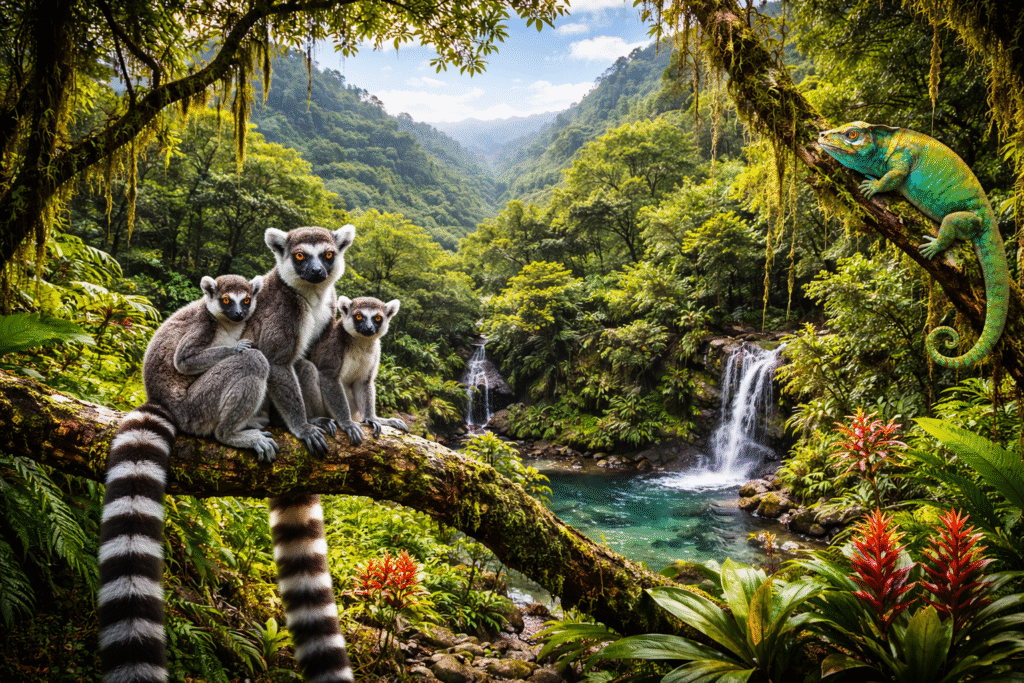
Lemurs represent Madagascar’s most famous residents. More than one hundred lemur species live across the island. Each species shows unique size, behavior, and habitat preferences.
Tiny mouse lemurs weigh less than a tennis ball. Large indri lemurs produce haunting calls across forest canopies. Sifakas leap sideways between tree trunks with striking agility.
No other country hosts wild lemurs. Their survival depends entirely on Madagascar’s forests. Travelers often describe lemur encounters as the highlight of their visit.
Rare Predators and Reptiles Add to the Wonder
Madagascar supports an array of rare animals beyond lemurs. The fossa acts as the island’s top land predator. This sleek mammal resembles a small cougar and hunts with speed.
The island also hosts two-thirds of the world’s chameleon species. Some chameleons grow longer than a human arm. Others remain smaller than a fingertip.
Frogs, geckos, and snakes display vivid colors and unusual adaptations. Tenrecs, small spiny mammals, fill ecological roles held elsewhere by hedgehogs or shrews.
Insects thrive across all regions. Many species remain undocumented. This richness keeps scientists and travelers returning year after year.
Madagascar’s Plant Life Shapes Iconic Landscapes
Madagascar’s vegetation rivals its wildlife in uniqueness. Six of the world’s nine baobab species grow on the island. These massive trees dominate western landscapes and attract photographers worldwide.
Some baobabs have survived for over one thousand years. Their thick trunks store water during droughts. These trees symbolize resilience and longevity.
Eastern regions feature lush rainforests with orchids, palms, and ferns. Vanilla vines and coffee plants thrive in fertile soils. The traveler’s tree stands as another iconic symbol.
Southern areas support spiny forests filled with euphorbia and aloe. These plants adapted to extreme dryness and poor soil conditions.
Tourism Supports Conservation and Local Communities
Madagascar faces serious environmental challenges. Deforestation threatens habitats at alarming rates. Illegal logging and land clearing place many species at risk.
Sustainable tourism now plays a crucial role in conservation. National parks rely on visitor fees for protection and management. Eco-lodges support local employment and education.
Guided wildlife tours raise awareness about endangered species. Visitors often support conservation projects during their stay. Responsible travel helps balance economic needs with environmental care.
Exploring Madagascar Requires Regional Travel Planning
Madagascar rewards travelers who explore multiple regions. Each area reveals different ecosystems and species. Rainforests, deserts, and coastlines exist within the same country.
Guided tours offer valuable local knowledge. Experienced guides help visitors spot elusive animals. They also explain cultural traditions and conservation challenges.
Road travel can take time due to rugged terrain. Domestic flights connect major regions. Travelers should plan longer stays to appreciate the island fully.
Growing Global Interest Elevates Madagascar’s Tourism Profile
Nature-based travel continues to rise worldwide. Madagascar fits perfectly into this trend. Its wildlife, landscapes, and authenticity attract eco-conscious travelers.
However, increased tourism requires careful management. Authorities emphasize low-impact travel and protected area limits. These measures help preserve fragile ecosystems.
Eco-tourism revenue supports long-term conservation goals. Education programs benefit both visitors and residents. Sustainable growth remains the central objective.
Madagascar’s Future Depends on Responsible Travel Choices
Madagascar’s biodiversity represents a global responsibility. The island protects species found nowhere else. Tourism can either support or harm this delicate balance.
Sustainable practices offer a hopeful path forward. Travelers who respect nature contribute to preservation. Local communities gain income without sacrificing heritage.
Madagascar remains one of Earth’s last true wildlife frontiers. Its future depends on thoughtful exploration and shared stewardship. For travelers seeking meaning and wonder, the island delivers an unforgettable journey.
For more travel news like this, keep reading Global Travel Wire