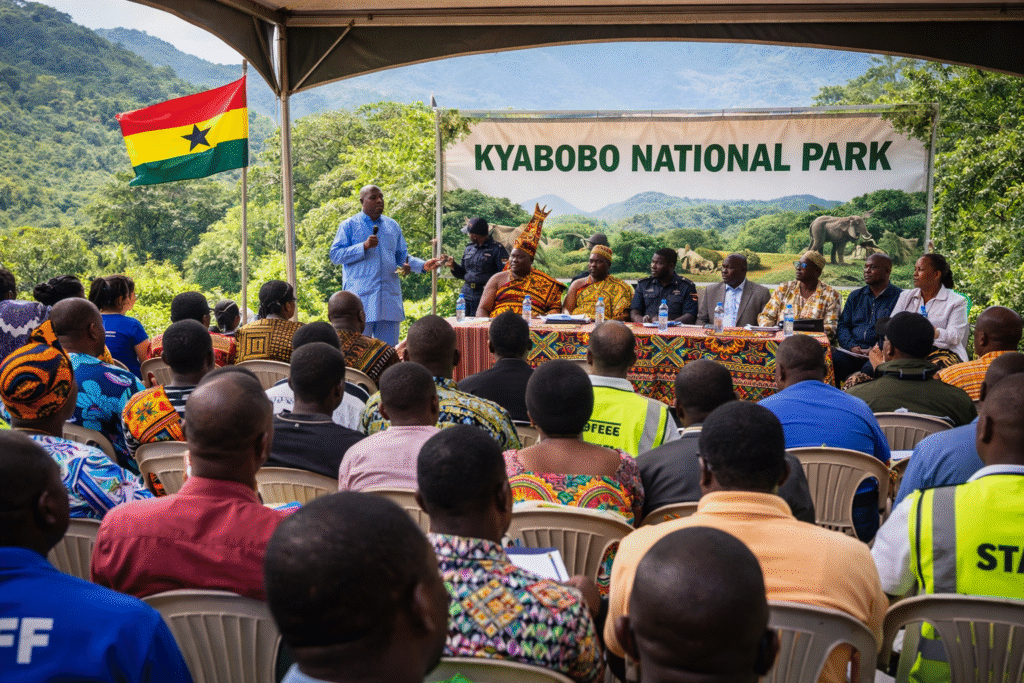
Kyabobo National Park has taken a major step toward sustainable tourism development in Ghana. The park hosted its 2025 stakeholders conference in the Nkwanta South Municipality of the Oti Region. The event brought together key decision-makers to shape the future of tourism, community engagement, and peacebuilding.
The conference created a shared platform for dialogue and collaboration. Participants focused on long-term strategies that support conservation, local livelihoods, and social harmony. Organisers designed the event to align tourism growth with community wellbeing.
Broad Stakeholder Participation Strengthens Collaboration
The conference welcomed a diverse group of participants. Traditional leaders, security agencies, hospitality operators, corporate institutions, media representatives, and local authorities attended. Political leaders and private business owners also contributed to the discussions.
This inclusive approach encouraged open dialogue and shared responsibility. Each group provided insights based on its role within the region. Together, participants explored solutions that balance economic growth with environmental protection.
Stakeholders agreed that collaboration remains essential for sustainable tourism success. Unified planning helps reduce conflict and ensures fair distribution of benefits.
Kyabobo National Park Anchors Tourism in the Oti Region
Kyabobo National Park plays a vital role in the Oti Region’s tourism potential. The park features rich biodiversity, scenic landscapes, and strong cultural heritage. These assets position it as a unique destination within Ghana.
Stakeholders discussed ways to enhance the park’s visibility and appeal. They emphasized responsible tourism that protects wildlife and ecosystems. Participants also highlighted the importance of improving visitor experiences.
Tourism growth at Kyabobo can stimulate local economies. Visitors create demand for accommodation, food services, transport, and guiding services. This demand supports small businesses and job creation.
Community Involvement Remains Central to Tourism Planning
Community engagement formed a key theme of the conference. Stakeholders stressed that tourism must benefit nearby communities directly. Local residents should participate in decision-making and tourism operations.
Participants discussed training programs for youth and women. These initiatives can build skills in hospitality, guiding, and cultural tourism. Empowered communities are more likely to protect natural resources.
Community-led tourism also promotes authenticity. Visitors gain meaningful cultural experiences while communities retain control over their heritage.
Infrastructure Development Supports Visitor Experience
Improved infrastructure emerged as a priority. Stakeholders identified the need for better access roads, visitor facilities, and basic services. These improvements can increase visitor comfort and safety.
Hospitality operators shared insights on accommodation standards and service quality. Enhanced facilities can attract higher-value tourists and longer stays.
Infrastructure investment also benefits residents. Roads, utilities, and communication systems support daily life and economic activity beyond tourism.
Peacebuilding Integrated into Tourism Strategy
Peacebuilding featured prominently in conference discussions. Participants recognized tourism as a tool for social cohesion. Employment opportunities reduce tensions and foster cooperation among communities.
Cultural exchange through tourism encourages mutual understanding. Visitors interact with local traditions and values. These interactions strengthen pride and unity.
Security agencies emphasized the importance of stability for tourism growth. Safe destinations attract visitors and investment. Stakeholders agreed to maintain close coordination on safety matters.
Sustainable Tourism Practices Protect Natural Resources
Environmental stewardship remains a core focus at Kyabobo National Park. Stakeholders reaffirmed commitments to conservation and responsible tourism practices. Protecting ecosystems ensures long-term tourism viability.
Discussions covered waste management, visitor limits, and eco-friendly operations. Sustainable practices help preserve wildlife habitats and scenic landscapes.
Eco-tourism trends continue to grow globally. Kyabobo can attract environmentally conscious travelers through strong sustainability credentials.
Long-Term Vision for Inclusive Tourism Development
The conference marked the start of an ongoing development process. Stakeholders committed to regular engagement and monitoring. Continuous dialogue ensures adaptation to changing needs.
Partnerships formed during the event will guide future projects. These partnerships link government agencies, communities, and private investors.
Inclusive development ensures tourism benefits reach all segments of society. This approach strengthens local support for conservation and tourism initiatives.
Kyabobo National Park as a Model for Ghana
Participants expressed confidence in Kyabobo’s potential to lead by example. The park demonstrates how tourism, community development, and peacebuilding can align.
As the Oti Region expands its tourism offerings, Kyabobo will serve as a flagship destination. Lessons learned here can inform other parks and regions across Ghana.
Strong governance and community participation remain critical success factors. Transparent management builds trust and accountability.
Eco-Tourism Positions Ghana for Global Recognition
Global demand for eco-tourism continues to rise. Travelers increasingly seek authentic and responsible experiences. Kyabobo National Park meets these expectations through community-led conservation.
The park’s approach strengthens Ghana’s reputation as a sustainable tourism destination. Eco-conscious travelers value destinations that respect nature and culture.
International recognition can attract further investment and partnerships. This momentum supports national tourism goals.
A United Path Toward Sustainable Tourism
The 2025 stakeholders conference set a clear direction for Kyabobo National Park. Participants aligned on sustainability, inclusivity, and peace as guiding principles.
Through shared commitment, the park can drive economic growth while protecting heritage. Communities stand to gain lasting benefits from responsible tourism.
Kyabobo National Park now moves forward with a unified vision. This vision places the Oti Region firmly on the map as a leading example of sustainable, community-based tourism in Ghana and beyond.
For more travel news like this, keep reading Global Travel Wire