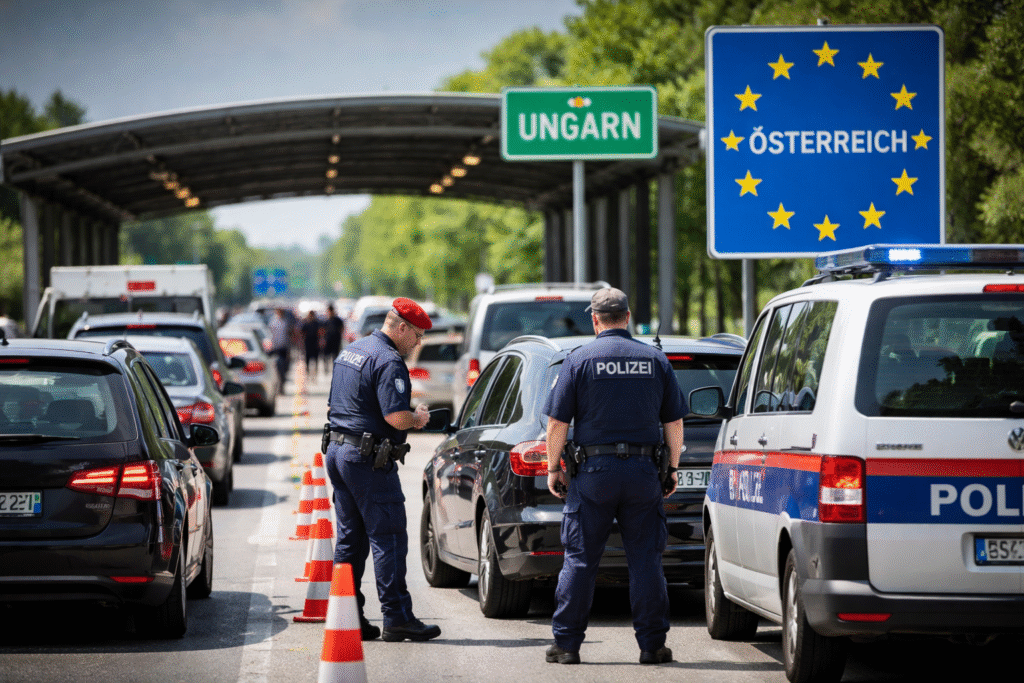
Austria has confirmed extended border checks with Hungary, Slovenia, the Czech Republic, and Slovakia until June 2026. The decision signals a major shift for travel and tourism across Central Europe. Authorities cite migration pressure, security risks, and regional instability as core reasons.
This move affects road travel, cross-border tourism, and freight movement. It also reshapes expectations inside the Schengen Area. Travelers now face a more controlled travel environment in one of Europe’s busiest regions.
Why Austria Chose to Extend Border Controls
Austria continues to face strong migration pressure along its eastern and southern borders. Officials report ongoing irregular migration routes through the Western Balkans. Many migrants attempt onward travel toward Germany and northern Europe.
The government wants tighter control over who enters the country. Border checks allow officers to verify identities and travel documents. Officials also aim to disrupt smuggling networks and human trafficking routes.
Security agencies link border checks to crime prevention. Authorities focus on arms trafficking, organized crime, and extremist threats. Officials argue that checks reduce risks before they reach urban centers.
How the Decision Fits Within the Schengen Area
The Schengen Area supports free movement across most European Union states. However, Schengen rules allow temporary border checks during security threats. Austria has relied on this legal framework for several years.
Several European countries now use similar measures. Germany, France, Denmark, and Italy have introduced internal checks in recent years. Austria’s long extension reflects deeper concern about long-term migration management.
This trend signals a more cautious Schengen model. Governments now balance free movement with domestic security priorities. Travelers must adapt to this new reality.
Impact on Road Travel and Border Crossings
Road travelers will feel the strongest impact. Border officers will continue passport and identity checks. Vehicles may stop at designated checkpoints during peak hours.
Drivers should expect longer waiting times on weekends and holidays. Bus operators may also face delays. Travelers should carry valid passports or national identity cards at all times.
Authorities advise travelers to plan extra time for border crossings. Early morning and late-night travel may reduce delays. Border wait times can change quickly based on traffic volume.
Rail Travel Remains the Best Option
Rail travel remains the smoothest option for tourists. Authorities rarely stop international trains for full inspections. Train operators maintain regular schedules across borders.
Tourists traveling between Vienna, Prague, Bratislava, and Budapest benefit from strong rail links. High-frequency services support leisure and business travel. Rail travel also reduces stress during peak tourism seasons.
Many tourism boards now recommend rail for regional travel. Trains support sustainable tourism goals while avoiding border congestion.
Effects on Tourism and Visitor Experience
Austria welcomes millions of visitors every year. Most tourists will still enjoy smooth travel experiences. Border checks do not restrict legal entry for tourists.
However, travelers arriving by car should expect added checks. Families, tour groups, and seniors should prepare documentation in advance. Clear preparation avoids stress at checkpoints.
Hotels, ski resorts, and cultural destinations remain fully accessible. Tourism services continue normal operations. Airlines and airports face no direct impact from land border controls.
Trade and Freight Face Ongoing Pressure
Extended border checks affect freight transport across Central Europe. Trucks must undergo inspections at key crossings. These checks can slow delivery schedules.
Logistics companies may face higher operating costs. Delays can affect supply chains, especially for food and manufacturing sectors. Industry groups continue talks with authorities to improve traffic flow.
Austria has invested in digital monitoring systems. Authorities aim to reduce delays while maintaining security. However, freight operators must plan for longer transit times.
Legal Basis for the Extension
Austria relies on the Schengen Borders Code for this extension. The code allows internal border checks during serious threats. Each extension requires formal notification and justification.
Austria must report outcomes to European institutions. Authorities must show proportionality and effectiveness. Reviews occur regularly to assess continued necessity.
This legal framework supports national decision-making. It also reflects ongoing debates about shared European migration policy.
What Travelers Should Expect Through 2026
Border checks will remain in place until at least June 2026. Travelers should expect consistency rather than sudden changes. Authorities may adjust enforcement levels based on risk assessments.
Visitors should monitor official travel advisories before departure. Carrying valid documents remains essential. Travel insurance policies should account for possible delays.
Tour operators may adjust itineraries to avoid congested crossings. Flexible planning will help travelers manage time efficiently.
Austria’s Broader Migration Strategy
Austria continues to support humanitarian obligations. At the same time, the country promotes stricter external border protection. Officials call for stronger cooperation at the European level.
The government supports faster asylum processing and return agreements. Authorities also back stronger controls along external EU borders. These policies aim to reduce pressure on internal borders.
Austria’s stance reflects growing consensus among several EU states. Migration management remains a top political priority.
Final Thoughts for Tourists and Businesses
Austria’s extended border checks mark a lasting change for Central Europe. Travelers will still enjoy safe and welcoming destinations. Preparation will make travel smoother.
Rail travel offers the easiest alternative for cross-border trips. Road travelers should plan ahead and expect delays. Businesses should adjust logistics timelines accordingly.
Austria remains open to visitors. The country simply adds stronger controls to protect security and stability through 2026.
For more travel news like this, keep reading Global Travel Wire