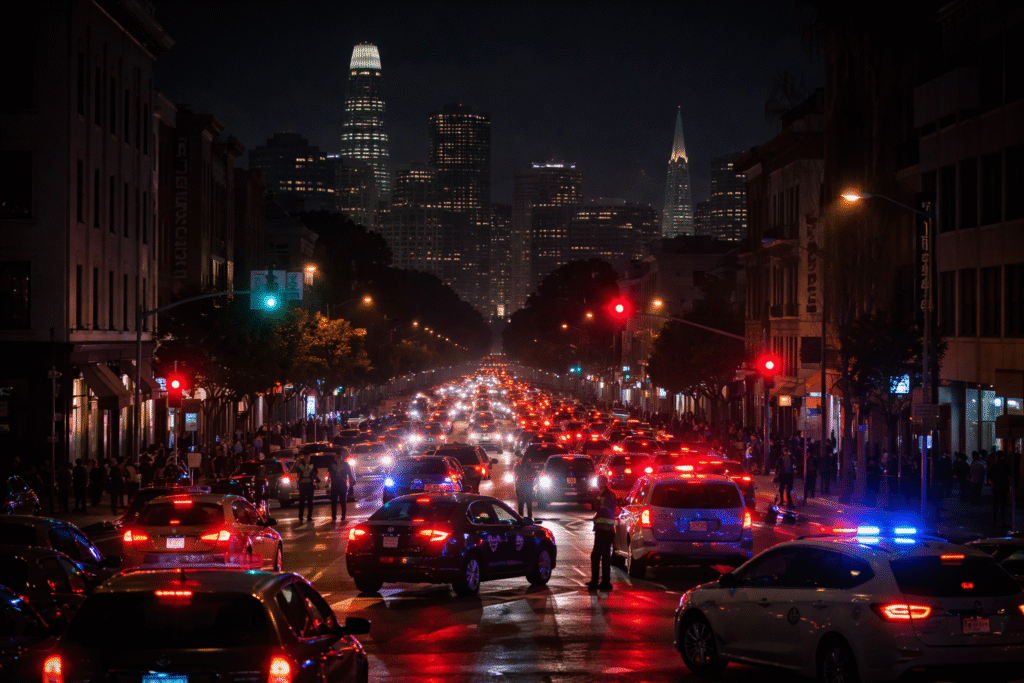
San Francisco faced a large-scale power outage during one of the busiest holiday weekends of the year. A fire at a major electrical substation near 8th and Mission triggered the blackout. The incident cut electricity to about 130,000 homes and businesses. Crowds heading to year-end events, shopping districts, and waterfront attractions found themselves navigating a city suddenly without power.
By Sunday morning, most areas regained electricity. Yet thousands of residents and businesses remained offline as repair crews worked through the night. The blackout created widespread confusion, slowed travel, and raised concerns about the city’s infrastructure readiness during peak tourism periods.
Transportation Chaos Across the City
The outage brought San Francisco’s transportation network to a crawl. Traffic signals across major corridors went dark. Drivers struggled to navigate crowded intersections with no guidance. Congestion increased rapidly, especially near downtown, SoMa, and key travel routes toward the Golden Gate Bridge and Bay Bridge.
Public transit felt the shock almost instantly. Several BART stations were forced to halt or reduce operations. Muni’s subway and streetcar lines saw delays and service modifications. Visitors attempting to reach hotels, museums, and waterfront attractions encountered gridlock and long waits. Airport-bound travelers also faced uncertainty as transit connections slowed.
The blackout caused unusual scenes on city streets. Autonomous taxis stalled at intersections because navigation systems could not handle signal outages. Ride-hailing demand spiked as commuters looked for alternatives. Even so, many vehicles became stuck in heavy traffic.
Impact on Tourism and Visitor Movement
San Francisco draws significant holiday tourism, and the outage disrupted key visitor activities. Popular areas such as Union Square, Fisherman’s Wharf, Chinatown, and the Embarcadero saw a sharp drop in foot traffic. Many holiday events continued, but guests struggled to reach venues on time.
Hotels remained open, but some operated with limited lighting or reduced amenities until backup generators activated. Travelers checking in or out experienced delays. Visitor centers and tour operators also faced interruptions, with some suspending activities for several hours.
Several museums and cultural sites temporarily closed or restricted entry due to safety concerns. Retail stores, especially around major shopping districts, lost valuable weekend sales. For many travelers, the blackout reshaped their itineraries and caused unexpected detours.
Public Transit Adjustments and Safety Measures
Transit agencies moved quickly to respond. BART shifted train routes and turned back some services to avoid powerless stations. Muni rerouted buses and operated limited subway lines to keep essential travel moving. Passengers crowded platforms waiting for the next available trains, often with little information about delays.
City officials urged residents and visitors to avoid non-essential driving. Police were stationed at major intersections to manage traffic flow manually. The Department of Emergency Management reminded everyone to treat dark signals as four-way stops and to stay alert in congested areas.
Despite the scale of the outage, emergency services reported no major injuries related to the blackout. Authorities emphasized the importance of staying informed through official channels while crews worked to stabilize the grid.
Local Businesses Feel the Strain
The blackout arrived at a crucial moment for local businesses. Holiday weekends typically bring a surge of customers to shops, restaurants, and entertainment venues. With sudden power loss, many establishments closed for the day. Refrigeration, lighting, payment systems, and heating all shut down. Restaurants discarded perishable goods or shifted to limited menus.
Some businesses reopened on Sunday once electricity returned. Yet many owners expressed concern about the financial impact during one of the most profitable weekends of the year. Street vendors and small retailers, who rely heavily on foot traffic, were hit hardest.
City Response and Infrastructure Concerns
PG&E crews assessed extensive damage at the impacted substation. The fire caused widespread electrical failures that required careful restoration. Repairs continued across several neighborhoods, including parts of downtown, the Richmond District, Sunset, and Presidio areas.
City Hall and several municipal buildings remained closed on Monday as a precaution. Officials highlighted the need for stronger resilience planning, especially during holiday periods when city activity peaks. The blackout revived public discussions about infrastructure modernization and emergency readiness.
Recovery Efforts and Looking Ahead
By late Sunday, power had returned to most homes and businesses. Crews stayed on site to stabilize systems and prevent further interruptions. Officials estimated full restoration by early Monday afternoon, with only isolated outages remaining.
The event underscored how vulnerable dense urban areas can be during infrastructure failures. It also demonstrated the cascading effect one outage can have on tourism, transportation, public safety, and daily routines.
For many visitors, the blackout became an unexpected part of their holiday story. Yet it also highlighted the city’s quick response, its robust emergency services, and the resilience of both residents and travelers.
As San Francisco moves forward, the lessons from this outage will shape future planning. Efforts to strengthen electrical systems, improve redundancy, and prepare transit networks aim to reduce the risk of similar disruptions during peak travel seasons.
For more travel news like this, keep reading Global Travel Wire