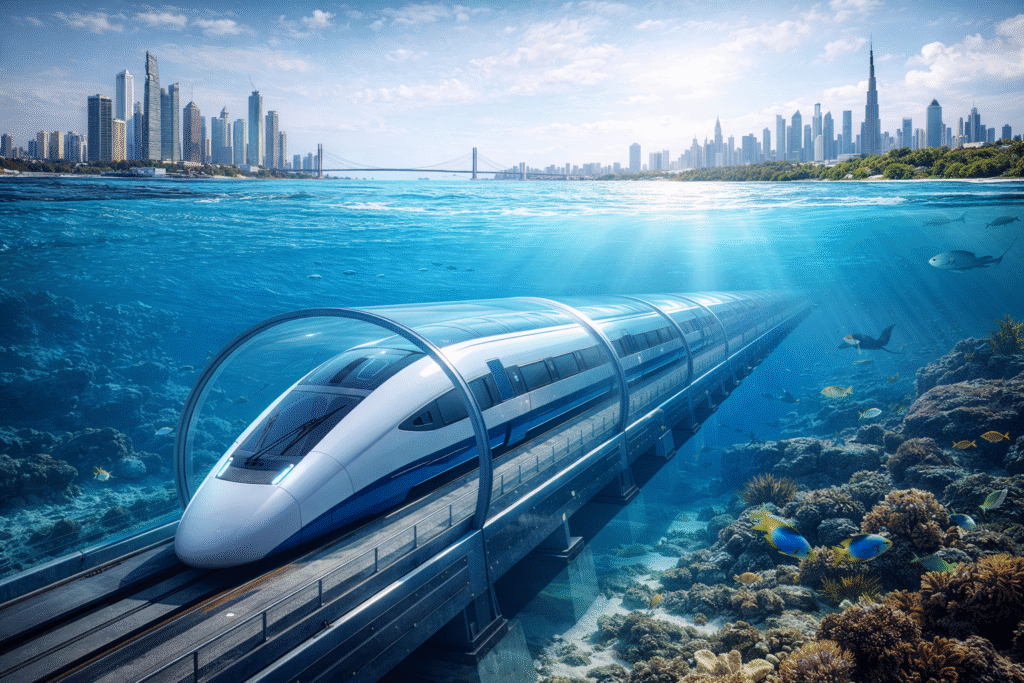
India and the UAE have unveiled plans for a revolutionary transport project. The proposal features a high-speed underwater train linking Mumbai and Dubai. The project aims to redefine long-distance travel between South Asia and the Middle East.
The train could cut travel time to just two hours. Current flights take more than three hours. This dramatic shift could transform regional mobility.
Unmatched Speed Beneath the Sea
Engineers have designed the system for extreme speed. Trains could travel between 600 and 1,000 kilometers per hour. These speeds exceed many commercial aircraft.
The underwater route would offer a smooth and uninterrupted journey. Passengers could avoid airport congestion and long security processes. This convenience could attract business and leisure travelers alike.
More Than Passenger Transport
The tunnel serves a dual purpose. It will carry passengers and vital resources. Planners want the tunnel to transport crude oil from the UAE to India. The system could also move fresh water from India to the UAE.
This design addresses critical infrastructure needs for both nations. The project blends transport innovation with strategic resource management.
Massive Investment and Job Creation
The project carries an estimated cost exceeding 50 billion dollars. This investment reflects its scale and ambition. Authorities expect the project to create more than 50,000 jobs.
Employment opportunities will span engineering, construction, technology, and operations. These jobs could support long-term economic growth in both countries.
Mumbai’s Rise as a Global Transport Hub
The underwater train could elevate Mumbai’s global standing. The city could emerge as a major international transport hub. Faster connectivity often attracts foreign investment and business expansion.
Companies value speed and efficiency. This project could make Mumbai more competitive in global markets.
Lower Travel Costs for Travelers
The project could reduce travel costs by up to 60 percent. Affordable pricing could make the train popular among frequent travelers. Families, tourists, and professionals could all benefit.
Lower costs often stimulate higher travel demand. Increased movement could strengthen people-to-people connections between India and the UAE.
A New Alternative to Air Travel
Many travelers dislike airport delays and tight schedules. The underwater train offers a compelling alternative. A two-hour journey could rival domestic travel times.
Passengers could board in city centers and arrive directly downtown. This efficiency could reshape travel habits across the region.
Progress Through Diplomatic Cooperation
India and UAE authorities continue discussions on the project. Both sides have shown strong interest and commitment. These talks suggest positive momentum.
The project will likely progress through multiple planning stages. Each phase will address engineering, safety, and environmental concerns.
Engineering Challenges and Innovation
Building an underwater tunnel of this scale presents challenges. Engineers must ensure safety, durability, and performance. Advanced materials and technologies will play a key role.
Success could inspire similar projects worldwide. Other regions may adopt underwater high-speed rail for cross-border travel.
Environmental Advantages Over Aviation
The project emphasizes sustainability. High-speed rail typically produces fewer emissions than air travel. Electric systems could further reduce environmental impact.
India and the UAE both pursue carbon reduction goals. This project aligns with broader sustainability strategies.
Driving Regional Economic Growth
Improved connectivity often boosts trade and investment. Faster travel allows quicker business decisions and market access. Companies can move goods and people more efficiently.
The train could strengthen supply chains between South Asia and the Middle East. This connectivity supports long-term regional development.
Tourism Set to Benefit
Tourism could see major gains from faster travel. Travelers could plan short trips with ease. Weekend travel between Mumbai and Dubai could become realistic.
Hotels, restaurants, and attractions in both cities could benefit. Cultural exchange could also increase through higher visitor numbers.
A Catalyst for Future Transport Innovation
This project could set a global benchmark. Few underwater transport systems operate at such speeds. Success could redefine future infrastructure planning.
Governments worldwide are watching closely. The project combines ambition, technology, and economic vision.
Strategic Importance for Both Nations
India and the UAE share strong economic ties. This project could deepen that partnership further. Enhanced connectivity strengthens diplomacy and cooperation.
Efficient transport supports long-term strategic interests. Both nations stand to gain from closer integration.
What Comes Next
The project still faces planning and approval stages. Technical studies and environmental assessments will guide progress. Public and private partners may support funding.
Despite uncertainties, the vision remains compelling. The idea continues to capture global attention.
A Glimpse Into the Future of Travel
The Mumbai–Dubai underwater train represents bold thinking. It promises faster journeys, lower costs, and sustainable transport. Few projects match its ambition.
If completed, it could change how people view international travel. The future of connectivity between India and the UAE looks faster than ever.
For more travel news like this, keep reading Global Travel Wire