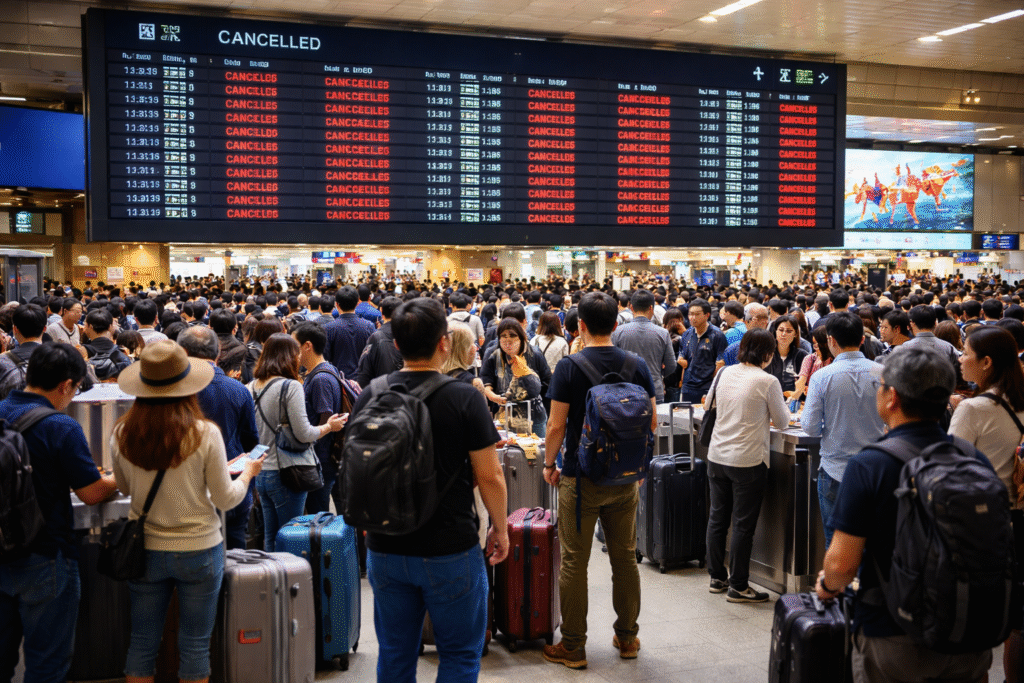
Air travel across Asia faced major disruption as extreme weather forced airlines to cancel and ground hundreds of flights. More than 60 flights were abandoned, while over 750 aircraft remained grounded across Japan, China, and surrounding regions. The sudden breakdown in operations left thousands of passengers stranded at major airports, creating one of the most widespread aviation disruptions in recent months.
Airlines struggled to restore schedules as strong winds, heavy rain, snowstorms, and poor visibility swept through key aviation corridors. Airports in Tokyo, Osaka, Shanghai, Beijing, Chengdu, and parts of western China faced mounting congestion and long delays.
Scale of Flight Cancellations and Groundings
The disruption impacted both domestic and regional routes. Airlines were forced to suspend operations to maintain safety standards as weather conditions changed rapidly throughout the day.
More than 60 scheduled flights were cancelled outright. In addition, 753 flights remained grounded as airlines delayed departures while awaiting weather clearance. These delays triggered a domino effect, disrupting connecting flights and crew rotations.
Major Airlines Under Pressure
Several leading Asian carriers bore the brunt of the disruption.
Japan-based operations faced cancellations on around 20 flights. Routes connecting Tokyo, Osaka, Niigata, and smaller regional airports were among the hardest hit. Strong winds and reduced visibility made safe landings difficult, especially at coastal and regional airfields.
China’s major carriers cancelled another 20 flights across dense air corridors linking Shanghai, Beijing, Chengdu, and Hangzhou. Heavy rain and low cloud cover reduced runway visibility, forcing repeated delays before flights were finally cancelled.
Regional Chinese airlines operating in western provinces also cancelled close to 20 flights. Snowfall, freezing temperatures, and icy runways created hazardous conditions, particularly in Xinjiang and neighboring regions.
Airports Facing Severe Operational Strain
Airports across East Asia struggled to manage passenger flow as cancellations mounted.
In Japan, Osaka Itami and Tokyo Haneda experienced heavy congestion. Flights to regional cities faced repeated delays as weather worsened later in the day.
In China, Shanghai Hongqiao and Beijing Capital airports saw packed terminals. Chengdu Tianfu, Hangzhou Xiaoshan, and Dalian airports also reported extended ground delays.
Western China faced unique challenges. Airports in Hotan, Aksu, and Hami dealt with snowstorms and freezing fog, grounding aircraft for safety reasons.
Regional Weather Patterns Behind the Chaos
Meteorological authorities reported a mix of storm systems across East Asia. Japan experienced strong coastal winds and heavy rainfall. Northern and central China faced storms and low cloud cover. Western regions encountered snowfall and freezing temperatures.
These rapidly shifting conditions made flight planning difficult. Aircraft already airborne faced diversions, while departing flights remained on the ground awaiting clearance.
Passenger Impact: Delays, Costs, and Stress
Passengers bore the heaviest burden of the disruption. Thousands remained stranded for hours, and in some cases days, as airlines worked to rebook flights.
Airport terminals became overcrowded as travelers waited for updates. Hotel availability near major airports dropped sharply, driving up prices for last-minute stays.
Many travelers faced added costs for meals, accommodation, and alternative transport. Business travelers missed meetings, while leisure travelers lost valuable vacation time. Emotional stress rose as uncertainty lingered.
Key Routes Affected by Cancellations
Several high-demand routes were suspended during the disruption.
In Japan, flights between Osaka and Izumo, as well as Tokyo and Niigata, were cancelled due to strong winds and low visibility. These routes serve both business travelers and domestic tourists.
In China, flights between Shanghai and Chengdu, along with the busy Beijing–Shanghai corridor, faced repeated cancellations. These routes are critical for domestic mobility and international connections.
In western China, regional routes linking Shache, Hotan, Aksu, and Tianjin were grounded as snow and ice made operations unsafe.
Tourism Industry Feels the Ripple Effect
The aviation disruption quickly spilled into the tourism sector. Popular destinations experienced reduced arrivals as flights remained grounded.
In Japan, cities such as Osaka and nearby cultural hubs saw fewer domestic tourists. Local hotels, transport services, and attractions reported slower activity.
In China, tourist centers like Chengdu, Xi’an, and parts of Xinjiang recorded a drop in visitor numbers. Cultural sites and local businesses dependent on tourism expressed concern over short-term revenue losses.
Industry Response and Recovery Efforts
Airlines activated contingency plans to restore operations. Many offered flexible rebooking options and fee waivers. Real-time updates through apps and airport displays helped manage passenger expectations.
Airport authorities worked to clear backlogs once weather conditions improved. Additional staff were deployed to assist stranded travelers and manage crowd control.
Tourism boards in affected regions began promoting alternative transport options, including high-speed rail and long-distance buses, to keep travelers moving.
Looking Ahead: Building Resilience
The disruption highlighted the growing impact of extreme weather on air travel. Industry leaders now face pressure to invest in better forecasting tools, stronger coordination, and improved passenger support systems.
Despite the chaos, recovery is already underway as conditions stabilize. With better planning and cooperation, Asia’s aviation and tourism sectors aim to rebound quickly and emerge more resilient for future challenges.
For more travel news like this, keep reading Global Travel Wire