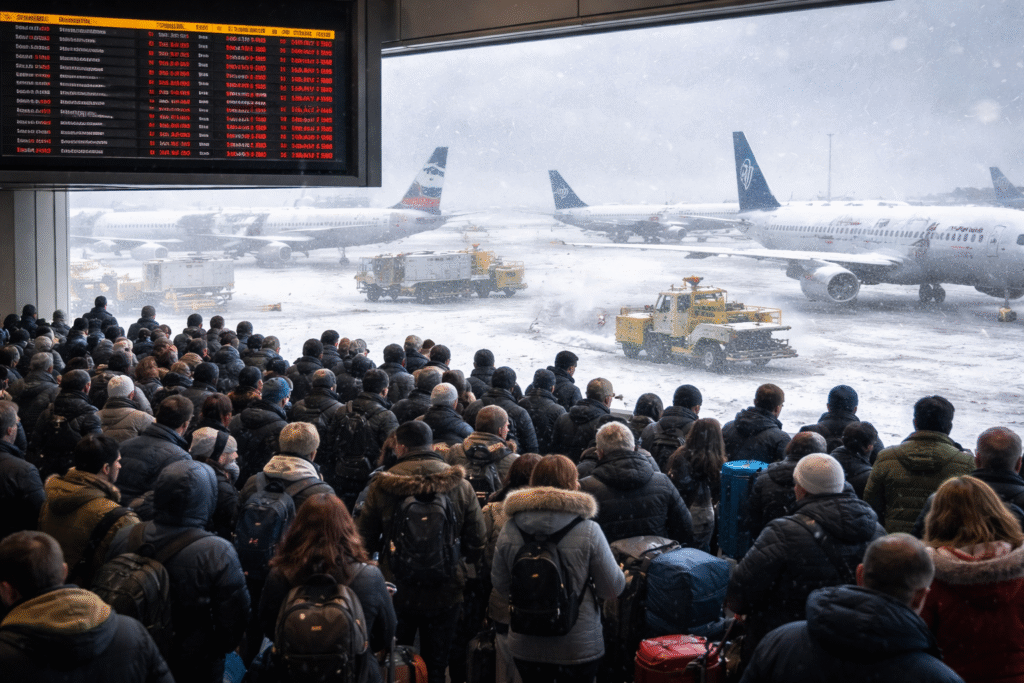
A powerful winter storm system has thrown year-end travel across the United States into chaos. Heavy snowfall, icy winds, and a rapidly intensifying bomb cyclone have caused widespread flight cancellations and long delays. Millions of travelers now face disrupted holiday plans, crowded terminals, and uncertain journeys.
Major airlines are struggling to maintain operations. Key airports in the Northeast have become bottlenecks, triggering a nationwide ripple effect across air and ground transport.
Snow and Ice Paralyze Key Northeast Airports
Airports serving the New York metropolitan area were among the worst affected. Heavy snow accumulation and poor visibility forced repeated runway closures. Aircraft de-icing slowed departures, while strong winds made landings unsafe.
Flights were canceled in waves as conditions deteriorated. Even operational flights faced hours-long delays. Passengers endured packed terminals, missed connections, and limited rebooking options during one of the busiest travel weeks of the year.
What Makes a Bomb Cyclone So Disruptive
A bomb cyclone forms when atmospheric pressure drops sharply in a short period. This process fuels extreme weather. It brings intense snowfall, freezing rain, and powerful winds.
Wind gusts exceeded safe operating limits for aircraft. Visibility dropped rapidly. These conditions left airlines with little choice but to suspend flights for safety reasons. Ground crews also struggled to clear runways fast enough to restore normal operations.
Airlines Grapple With Network-Wide Disruptions
Major US airlines reported severe operational stress. Aircraft and crews became stranded far from scheduled routes. This imbalance forced airlines to cancel additional flights beyond the storm zone.
Rebooking systems were overwhelmed. Customer service lines stretched for hours. While airlines offered fee waivers and flexible travel options, limited seat availability left many passengers waiting days for new departures.
International Flights Also Feel the Impact
The storm did not only affect domestic travel. Several long-haul international flights were canceled or delayed. Aircraft arriving late from overseas missed onward connections, compounding disruption across continents.
International travelers faced visa issues, missed hotel bookings, and extended airport stays. Airlines introduced flexible change policies, but recovery remains slow due to aircraft positioning challenges.
Ground Transportation Adds to Travel Chaos
Road travel suffered alongside aviation. Snow-covered highways and icy bridges caused traffic accidents and closures. Major interstate routes slowed to a crawl as snowplows struggled to keep pace with snowfall.
Rail and bus services also faced delays. Some stations closed temporarily due to safety concerns. Travelers who abandoned flights for driving alternatives often found themselves stuck for hours with limited shelter options.
Tourism Economy Takes a Heavy Blow
The timing of the storm has amplified its economic impact. Late December is critical for tourism, retail, and hospitality sectors. Canceled trips led to empty hotel rooms, missed tours, and reduced visitor spending.
Cities dependent on holiday tourism reported sharp declines in foot traffic. Restaurants, theaters, and attractions saw mass cancellations. Airlines also absorbed heavy costs linked to refunds, crew overtime, and disrupted schedules.
Why Winter Travel Disruptions Are Increasing
Weather experts warn that extreme winter events are becoming more frequent. Rapid temperature shifts and stronger storm systems now pose greater risks to transportation networks.
Airports and airlines continue to invest in resilience measures. However, infrastructure limits and safety priorities mean weather-related shutdowns will remain unavoidable during severe events.
How Travelers Can Reduce Storm-Related Stress
Preparation is essential for winter travel. Small steps can make a big difference during disruptions.
Key tips for travelers:
- Monitor flight status frequently using airline apps
- Choose flexible tickets when traveling in winter
- Pack essentials like chargers, snacks, and warm clothing
- Consider travel insurance that covers weather delays
- Allow extra buffer time between connections
Flexibility remains the most valuable asset during storm seasons.
The Long Road to Recovery
As weather conditions slowly improve, airlines are working to restore normal schedules. Clearing backlogs will take days. Crew availability, aircraft positioning, and airport congestion remain ongoing challenges.
Passengers should expect residual delays even after snowfall ends. Patience and early planning will remain critical as the system stabilizes.
Final Outlook: Adapting to a New Winter Reality
The latest US winter storm highlights the fragile balance between safety and mobility. Snowstorms and bomb cyclones now pose a serious threat to year-end travel reliability.
While technology and planning help reduce risk, severe weather will continue to disrupt travel. In this new reality, informed travelers and flexible systems are key to navigating winter journeys with fewer surprises.
For more travel news like this, keep reading Global Travel Wire