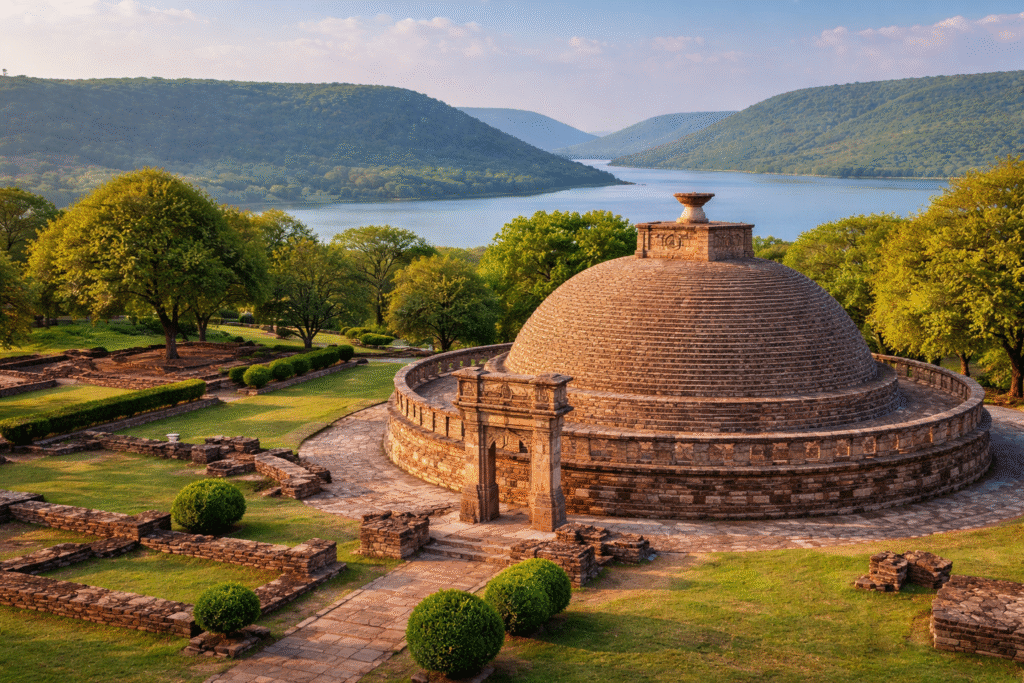
India’s ancient Buddhist legacy is set for a major revival as Andhra Pradesh takes a decisive step toward preserving one of the country’s most valuable yet underrepresented cultural treasures. The state government has allocated land at the historic site of Nagarjunakonda for the establishment of a National Academy for Rural Buddhist Heritage Conservation and Development, positioning Andhra Pradesh as a national leader in heritage protection and cultural tourism.
This landmark initiative aims to safeguard hundreds of rural Buddhist sites spread across India, many of which remain undocumented, underfunded, or vulnerable to environmental and human-induced threats. By focusing on conservation, research, training, and community participation, the proposed academy represents a shift from isolated preservation efforts to a coordinated national mission.
A Strategic Move to Protect India’s Buddhist Roots
Buddhism originated in the Indian subcontinent and spread across Asia, shaping philosophy, art, education, and spiritual traditions for centuries. While iconic sites like Sarnath and Bodh Gaya are globally recognized, vast numbers of rural monasteries, stupas, rock-cut caves, and inscriptions remain largely unknown. These sites are increasingly at risk due to climate change, unregulated development, erosion, and lack of skilled conservation support.
The National Academy is envisioned as a solution to these challenges. It will serve as a central institution dedicated to mapping rural Buddhist heritage, training conservation professionals, and developing best practices tailored to India’s diverse ecological and cultural landscapes. The academy’s long-term goal is to ensure that preservation efforts are systematic, scientific, and sustainable.
Why Nagarjunakonda Is the Ideal Location
Nagarjunakonda, located in the Krishna River valley, is one of India’s most significant early Buddhist centers. Dating back nearly two millennia, the region was once a thriving hub of monastic education, art, and international exchange. Archaeological discoveries from the area include monasteries, stupas, sculptures, inscriptions, and evidence of trade and cultural links with Southeast Asia.
Despite large-scale excavations in the past, Nagarjunakonda still holds immense scholarly and cultural value. Establishing the academy here reconnects contemporary conservation efforts with a site that symbolizes India’s historic role as a center of Buddhist learning. The location also offers a living laboratory for students and researchers, allowing hands-on engagement with heritage management in a rural setting.
International Momentum and National Vision
The idea for the academy gained momentum following an international conference on rural Buddhist heritage preservation, which brought together scholars, monks, conservation experts, and policymakers. Discussions highlighted the urgency of coordinated action, especially as climate-related damage increasingly affects ancient structures in fragile regions.
Key themes that emerged included the need for modern documentation techniques, climate-resilient conservation strategies, and community-led stewardship. Participants emphasized that protecting Buddhist heritage is not only about preserving monuments, but also about safeguarding living traditions, local histories, and cultural identities.
The consensus was clear: India’s Buddhist heritage should be treated as a national responsibility with global significance. The proposed academy aligns with this vision by acting as a nodal center for collaboration, research, and policy support.
Community-Centered Conservation and Tourism
One of the most distinctive features of the National Academy is its emphasis on community involvement. Rural communities living near Buddhist sites are often the first custodians of heritage, yet they rarely benefit directly from preservation efforts. The academy plans to change this by integrating local knowledge, creating skill-based employment, and fostering a sense of shared ownership.
Training programs will equip local youth with expertise in heritage documentation, site maintenance, guiding services, and sustainable tourism operations. This approach not only strengthens conservation outcomes but also generates livelihoods, helping reduce migration from rural areas.
The academy also envisions a new model of responsible Buddhist tourism in India. Instead of mass tourism concentrated at a few famous sites, the focus will be on curated heritage circuits that highlight lesser-known rural destinations. This model encourages longer stays, cultural immersion, and equitable economic benefits while minimizing environmental impact.
A Hub for Research, Education, and Innovation
Beyond conservation, the academy is expected to function as a national and regional hub for academic research and professional training. It will support interdisciplinary studies in archaeology, architecture, climate science, anthropology, and digital heritage management. Advanced technologies such as 3D documentation, remote sensing, and digital archives are likely to play a central role.
The institution also aims to foster regional and international collaboration, especially with countries across Asia that share Buddhist cultural ties. Such partnerships can promote knowledge exchange, joint research projects, and shared strategies for heritage preservation.
Looking Ahead
While the land allocation marks a significant milestone, the journey ahead involves securing funding, establishing governance frameworks, and building partnerships with academic and cultural institutions. However, the vision is clear: to create a permanent institution that protects rural Buddhist heritage while contributing to sustainable development and tourism growth.
As Andhra Pradesh leads this transformative effort, the National Academy for Rural Buddhist Heritage Conservation stands as a beacon of hope for preserving India’s Buddhist legacy. By combining history, community empowerment, and responsible tourism, the initiative promises to ensure that these ancient sites continue to inspire future generations and strengthen India’s cultural presence on the global stage.
For more travel news like this, keep reading Global Travel Wire