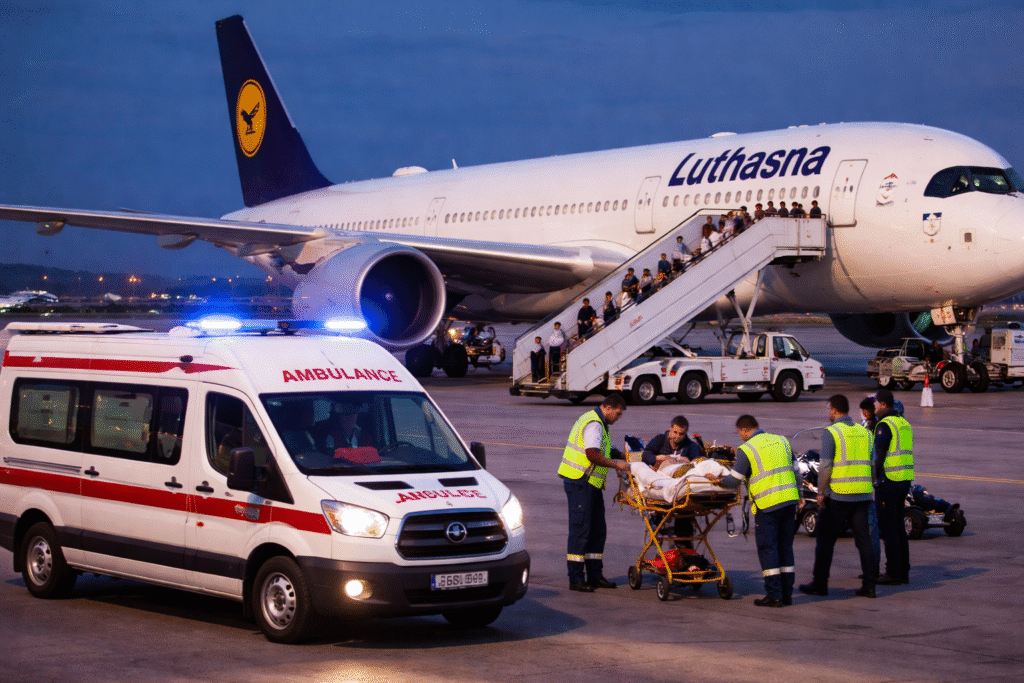
International tourism between Europe and Asia continues to grow. Airlines connect Germany and China through busy long-haul routes. On December 26, 2025, this network faced a tragic interruption. A passenger died during a Lufthansa flight from Munich to Beijing. The incident led to an emergency diversion to Kazakhstan and renewed attention on in-flight medical preparedness.
The event underscored the human realities of long-distance travel. It also showed how airlines respond during medical crises while prioritizing safety and dignity.
Munich–Beijing Journey Interrupted Mid-Air
The Lufthansa service, operating as flight LH722, departed from Munich on schedule. The aircraft headed east toward Beijing with passengers traveling for tourism, business, and family visits. While cruising over Central Asia, a passenger suddenly lost consciousness.
Cabin crew responded immediately. They followed standard medical emergency procedures. Despite onboard assistance, the passenger’s condition worsened. The flight crew decided that urgent medical care was necessary on the ground.
Emergency Diversion to Kazakhstan
After assessing available options, the pilots diverted the aircraft to Almaty. The nearest suitable airport was Almaty International Airport. Air traffic control coordinated the diversion swiftly.
The decision aligned with international aviation safety standards. Airlines regularly divert flights when medical conditions cannot be stabilized onboard. Speed and access to advanced care remain critical factors.
Medical Response on Arrival
Medical teams were ready when the aircraft landed in Kazakhstan. Airport doctors and city ambulance services boarded the plane without delay. Despite these efforts, authorities later confirmed that the passenger had passed away.
The response reflected strong coordination between aviation and health services. Officials followed all required safety and public health procedures. The situation was handled with professionalism and respect for those onboard.
After formal checks, the aircraft was cleared for departure. The flight later continued to Beijing.
Impact on Passengers and Flight Schedule
The diversion caused a delay of slightly over two hours. Passengers arrived later than planned at Beijing Capital International Airport. Some travelers missed onward connections.
Lufthansa staff supported passengers during the delay. The airline focused on minimizing further disruption while meeting all safety obligations. Such incidents remind travelers that long-haul flights carry uncertainties beyond operational control.
Aircraft and Crew Preparedness
The flight used an Airbus A350, a modern long-haul aircraft known for efficiency and comfort. The aircraft was about six years old and equipped with advanced medical kits.
Cabin crew receive regular medical training. They learn to manage cardiac events, loss of consciousness, and other emergencies. Crews can also consult ground-based doctors through satellite communication. These systems support fast and informed decisions during critical moments.
Aviation Authorities Confirm the Diversion
Kazakhstan’s aviation authorities confirmed the safe landing and emergency response. Such confirmations ensure transparency in international aviation. They also show how cross-border cooperation supports passenger safety.
Global aviation depends on trust and coordination. Airlines, airports, and regulators work together, especially on routes linking Europe and Asia. These routes remain vital for tourism and economic exchange.
Medical Emergencies Remain Rare but Serious
In-flight medical emergencies occur infrequently. They are more common on long-haul routes due to flight duration and cabin conditions. Airlines invest heavily in prevention, training, and equipment to manage these risks.
The Lufthansa incident demonstrated these systems in action. Even when outcomes cannot change, airlines must act decisively. Such responses help maintain traveler confidence in global aviation safety.
Similar Incident Affects European Short-Haul Travel
A separate event involving easyJet highlighted similar challenges closer to home. A flight from Malaga Airport to London Gatwick Airport faced major delays after an elderly passenger died shortly after boarding.
The aircraft had begun taxiing when the situation escalated. The crew returned to the stand. Authorities boarded the plane, and passengers disembarked. The flight departed nearly 12 hours later. The airline provided food and drink vouchers during the wait.
Passenger Handling During Sensitive Situations
Such incidents require careful passenger management. Airlines must follow legal, medical, and security procedures. These steps can extend delays but remain mandatory.
For tourists with fixed itineraries, delays can disrupt plans. Still, passenger care and regulatory compliance take priority. Airlines continue to refine crisis handling to balance empathy with efficiency.
What This Means for Global Tourism
These events reflect the realities of modern travel across Germany, China, Kazakhstan, Spain, and the United Kingdom. As tourism demand rises, airlines remain focused on safety and preparedness.
Technology drives aviation forward. Yet, compassion remains central. In moments of crisis, the global travel industry continues to place human wellbeing at the heart of every journey.
For more travel news like this, keep reading Global Travel Wire