Passenger safety perceptions play a major role in long-haul travel confidence. Recent inflight theft reports on overnight flights between the United Arab Emirates and Hong Kong China have raised serious concerns within the global tourism and aviation sectors. Several travelers reported missing valuables after landing, leading to immediate police involvement and renewed focus on cabin security.
These incidents surfaced as international travel demand continues to recover. Premium travel has also grown sharply. The cases now highlight risks that extend beyond one airline or route. They also raise wider questions about vigilance, responsibility, and prevention in modern air travel.
Repeated Complaints on Abu Dhabi to Hong Kong Services
A series of inflight theft reports emerged on overnight services operating between Abu Dhabi and Hong Kong. Passengers arriving at Hong Kong International Airport reported missing valuables stored in overhead compartments. Law enforcement officers boarded aircraft shortly after landing to investigate complaints.
One reported incident involved a foreign passenger who discovered a diamond missing after the flight. Authorities detained a suspect upon arrival. The rapid response reflected heightened alert levels due to similar past cases on the same route.
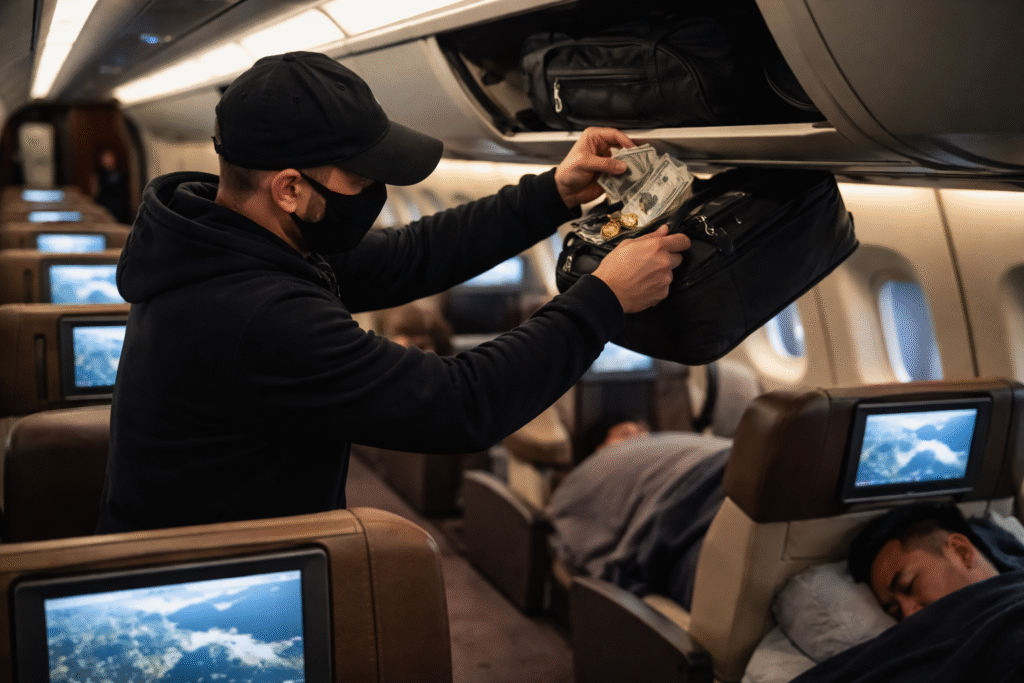
Overnight flights appear especially vulnerable. Cabin lights are dimmed, passengers sleep for long periods, and overhead storage remains unattended. These conditions can create opportunities for theft if monitoring lapses.
Earlier Cases Reveal a Clear Pattern
Previous reports from late last year showed similar methods. In one case, a passenger woke up to someone handling a personal bag. Multiple credit cards later went missing. Cabin crew alerted authorities, and a suspect was detained after landing.
Another incident involved multiple passengers on the same flight. One traveler reported missing bank cards. Another lost a luxury watch valued at more than one hundred thousand US dollars. Witnesses later recalled unusual aisle movement and frequent seat changes during the night.
These repeated patterns suggest coordination rather than isolated incidents. Travel analysts now link overhead compartment theft to organized criminal behavior targeting premium travelers.
Law Enforcement Response Intensifies
Hong Kong authorities had already made arrests earlier in the year on similar allegations. Several passengers arriving from Abu Dhabi were detained in July following inflight theft complaints. These actions strengthened suspicions that specific long-haul routes had become targets for criminal groups.
While inflight theft can occur on many international routes, the repeated focus on the UAE–Hong Kong corridor has drawn industry attention. Airlines operating overnight and premium-heavy services now face increased pressure to review cabin monitoring practices.
Why Overnight Flights Increase Risk
Long-haul overnight travel creates unique security challenges. Reduced lighting, extended sleep periods, and limited passenger movement all contribute to vulnerability. Bags stored overhead may remain untouched for hours.
Widebody aircraft also complicate surveillance. Even with trained cabin crew, monitoring every aisle consistently during quiet night hours remains difficult. These conditions make passenger awareness and proactive reporting even more important.
Regional Context Highlights Wider Threat
A separate high-profile case on a Middle East to Southeast Asia route highlighted similar risks. In that incident, authorities uncovered an organized plan to steal valuables from Business Class passengers. The offender targeted luxury items after cabin lights were dimmed.
Investigations later revealed links to a criminal syndicate. Travel expenses had been funded solely to gain access to premium cabins. Although the attempt failed, courts imposed a strong sentence to deter future crimes.
This case reinforced concerns that inflight theft is not random. Instead, it often involves deliberate planning, route selection, and targeting of high-value travelers.
Organized Syndicates Focus on Premium Cabins
Security investigations across Asia and the Middle East reveal a consistent strategy. Criminal groups focus on travelers carrying luxury watches, cash, electronics, and jewelry. Premium cabins attract attention due to higher-value belongings and quieter environments.
Offenders often choose seats near potential targets. They wait until passengers sleep before accessing overhead compartments. This method reduces the chance of immediate detection.
Authorities now stress that intent alone poses a serious threat to passenger confidence and airline reputation.
Impact on Travel and Tourism Confidence
For global aviation hubs such as Hong Kong China, Singapore, and the United Arab Emirates, inflight security incidents affect more than airline operations. Destination trust plays a critical role in tourism growth, especially for long-haul and premium travelers.
Repeated theft reports can influence travel choices, insurance costs, and brand perception. Business travelers and luxury tourists are especially sensitive to safety concerns. Maintaining confidence remains essential as international tourism continues its recovery.
Strengthening Prevention and Awareness
Experts emphasize that prevention requires shared responsibility. Airlines must maintain frequent cabin patrols, even during overnight hours. Improved coordination with arrival authorities also helps ensure swift response.
Passengers play an equally important role. Travelers should keep valuables close, avoid storing high-value items overhead, and report suspicious behavior immediately. Simple awareness can significantly reduce risk.
Airlines are also reviewing crew training and communication protocols to improve detection without disrupting passenger comfort.
A Wake-Up Call for Global Aviation Security
The inflight theft cases reported on UAE–Hong Kong routes highlight evolving challenges in air travel security. When viewed alongside similar incidents elsewhere in Asia, a broader pattern becomes clear.
For the global travel and tourism industry, safety perception remains central to passenger experience. Continued cooperation between airlines, airports, and law enforcement will prove vital. Protecting travelers ensures that long-haul international travel remains safe, reliable, and welcoming in a competitive global tourism landscape.
For more travel news like this, keep reading Global Travel Wire