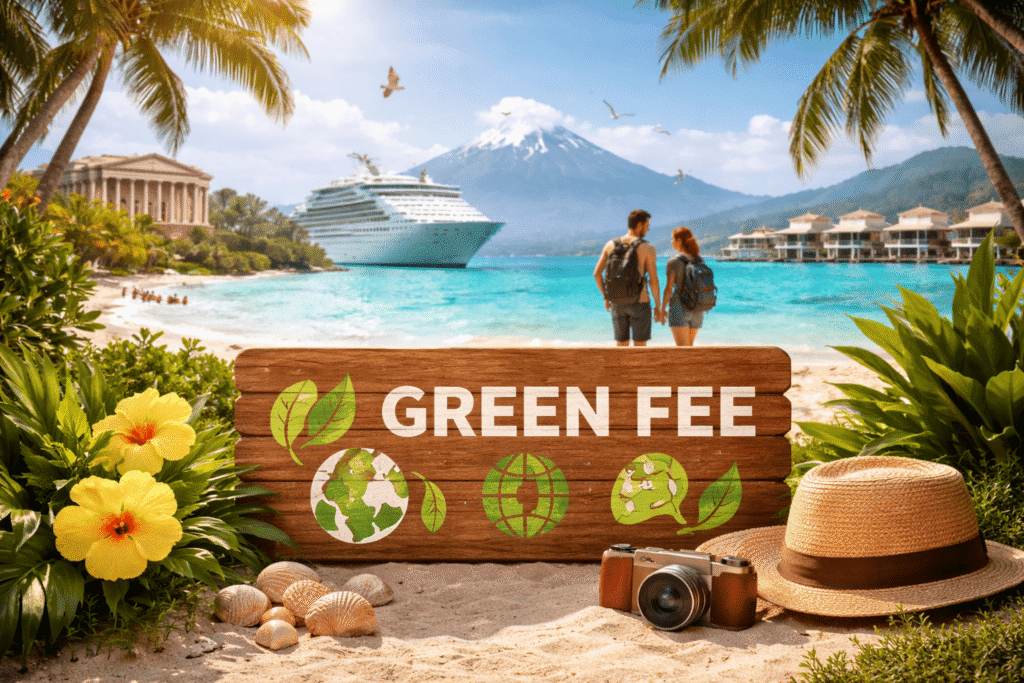
Tourism is rebounding fast across the world. While this recovery supports jobs and economies, it also brings serious challenges. Popular destinations now face overcrowding, environmental damage, and rising pressure on infrastructure.
To respond, governments are introducing green fees and tourist taxes. These measures aim to reduce overtourism while funding conservation and climate resilience. Hawaii has now joined this growing global movement.
Hawaii Launches a Landmark Green Fee Policy
Hawaii has become the first U.S. state to introduce a comprehensive green fee system. The policy applies to hotel stays, short-term rentals, and cruise tourism.
From 2026, cruise passengers will pay an 11 percent levy. The charge will depend on how long ships remain in Hawaiian ports. Revenue will support environmental protection, disaster preparedness, and climate adaptation projects.
Hawaii’s ecosystems face mounting threats. Coral reefs are under stress. Freshwater supplies are limited. Coastal erosion continues to worsen. The green fee aims to ensure tourism contributes directly to protecting the islands.
Tourism Growth Must Support Sustainability
Tourism generates billions for Hawaii’s economy and supports thousands of jobs. However, unchecked growth has strained natural and community resources.
The green fee does not seek to discourage visitors. Instead, it encourages responsible travel. Officials want tourism to fund its own footprint. The focus is long-term preservation rather than short-term gains.
Greece Replaces Accommodation Tax With Climate Fees
Greece has restructured its tourism taxation to address climate risks. In 2025, it replaced its accommodation tax with a Climate Resilience Fee.
Hotel guests now pay a nightly charge based on property category. Rates increase during peak travel months. Cruise passengers also face new disembarkation fees.
Funds support flood prevention, wildfire response, and infrastructure upgrades. Greece aims to protect both residents and visitors from climate-related disruptions.
Maldives Doubles Green Tax to Protect Fragile Reefs
The Maldives has taken bold action to safeguard its marine environment. Starting in 2025, the country doubled its green tax on tourists.
Resort guests now pay a higher nightly fee. Visitors staying in smaller guesthouses also face increased charges. The revenue supports coral reef protection, waste management, and renewable energy projects.
The nation’s low elevation makes it highly vulnerable to sea-level rise. Protecting marine ecosystems is critical for both tourism and survival.
Bali Introduces Entry Fee to Control Visitor Impact
Bali has struggled with overcrowding for years. Traffic congestion, waste, and water shortages have intensified.
To address this, authorities introduced an entry fee for international visitors. The charge supports environmental conservation, cultural preservation, and local community projects.
The goal is to reduce low-impact tourism while encouraging longer, more meaningful stays. Local leaders see the fee as essential for restoring balance.
Spain Raises Tourist Taxes in High-Pressure Regions
Spain continues to face growing resistance to mass tourism, especially in urban centers. In 2025, Catalonia doubled its regional tourist tax.
The fee applies to hotels, hostels, and short-term rentals. Rates vary based on accommodation type.
Revenue will improve public transport, waste management, and housing pressures. Officials aim to protect resident quality of life while maintaining tourism revenue.
Japan Uses City-Level Tourism Controls
Japan has avoided a nationwide tourist tax. Instead, individual cities are acting independently.
Kyoto plans to increase its tourism levy in 2025. The city receives millions of visitors each year. Historic districts face crowding and wear.
Funds will support heritage conservation, sustainable transport, and visitor management systems. The approach allows flexible, local solutions.
Norway Introduces Nationwide Accommodation Levy
Norway has announced a three percent accommodation tax starting in 2025. The charge applies across the country.
Tourism growth has placed pressure on fjords, mountain trails, and Arctic regions. Infrastructure has struggled to keep pace.
The tax will fund trail maintenance, waste systems, and community services in remote areas.
Venice Expands Fees to Manage Day Visitors
Venice continues to fight the effects of overtourism. The city has expanded its entry fee for day visitors.
Short-term visits often create congestion without contributing to local services. The fee targets this imbalance.
Revenue supports flood protection, heritage maintenance, and public access systems. Authorities hope the measure will reduce crowd peaks.
More Countries Preparing Green Fees for 2026
Several destinations plan to introduce or expand green fees by 2026. These include parts of Southeast Asia and Central Europe.
Most policies focus on sustainability funding, disaster preparedness, and infrastructure upgrades. Green fees are becoming a standard tool in tourism management.
Green Fees Are Reshaping the Future of Travel
Hawaii’s decision reflects a broader global shift. Tourism must now give back to the places it depends on.
Green fees do not signal the end of travel. They signal smarter travel. Destinations that invest in protection today will remain attractive tomorrow.
As global tourism continues to grow, sustainability will define success. The future of travel depends on balance, responsibility, and preservation.
For more travel news like this, keep reading Global Travel Wire