The global tourism and hospitality industry is undergoing a significant shift in 2025, driven by a wave of landmark luxury hotel openings that are redefining travel experiences and stimulating tourism growth worldwide. As international travel rebounds and demand for premium experiences accelerates, these new properties are emerging as powerful catalysts for destination appeal, economic impact, and long-term tourism development. From Asia and Europe to the Middle East and Africa, luxury hotels are no longer just places to stay—they are central to how destinations position themselves on the global tourism map.
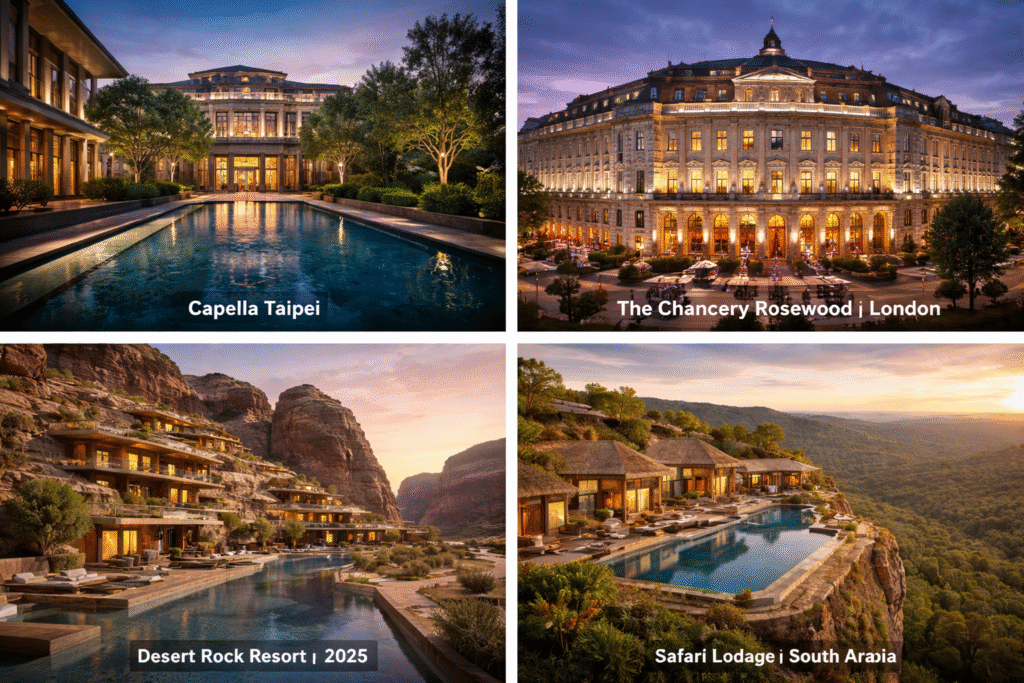
Among the most notable openings of the year is Capella Taipei, a highly anticipated debut that marks the arrival of the prestigious Capella Hotels brand in Taiwan. Located in Taipei’s Songshan District, the hotel represents a major step forward for the city’s luxury accommodation sector and reflects broader regional efforts to attract affluent international travelers.
Capella Taipei Redefines Luxury in Taiwan
Capella Taipei has quickly emerged as a symbol of Taiwan’s growing confidence in the global luxury tourism market. Featuring just 86 meticulously designed rooms, the hotel embraces a refined approach to hospitality that blends modern elegance with subtle references to Taiwanese culture. The minimalist design philosophy prioritizes space, light, and tranquility, offering guests a sophisticated urban retreat in one of Asia’s most dynamic capitals.
The opening aligns closely with Taiwan’s tourism strategy, which has increasingly focused on attracting high-value visitors from long-haul markets such as North America and Europe. By expanding its portfolio of premium accommodations, Taipei strengthens its ability to host travelers seeking personalized service, cultural depth, and extended stays. Luxury properties like Capella play a vital role in encouraging higher visitor spending across dining, retail, wellness, and cultural attractions, contributing directly to the local economy.
Europe Strengthens Its Luxury Hospitality Landscape
Europe continues to reinforce its dominance in high-end tourism through several headline-making hotel launches in 2025. Major cities are investing in iconic properties that combine historical preservation with contemporary luxury, appealing to discerning travelers who value authenticity alongside comfort.
London stands out with the forthcoming opening of The Chancery Rosewood, a project that transforms a historic diplomatic building into a world-class luxury hotel. With expansive suites, fine dining venues, and panoramic city views, the property reflects the city’s ongoing strategy to remain competitive among global capitals for affluent tourism. Such developments not only attract international visitors but also generate employment and revitalize urban neighborhoods.
Similar luxury-focused expansions are taking shape in Paris, Amsterdam, and other European cities, where boutique and flagship hotels are designed to enhance cultural immersion while meeting the expectations of modern luxury travelers.
Middle East Luxury Meets Sustainability
In the Middle East, luxury tourism is increasingly intertwined with sustainability and experiential travel. Saudi Arabia’s Desert Rock Resort in the Hejaz Mountains exemplifies this shift. Built directly into dramatic granite formations, the resort combines architectural innovation with environmental sensitivity, offering guests immersive desert experiences without compromising ecological responsibility.
This type of development supports the region’s broader economic diversification goals by positioning tourism as a long-term growth engine. By offering culturally rich, environmentally conscious luxury experiences, destinations attract both adventure-focused travelers and high-end leisure tourists seeking exclusivity.
Africa’s High-End Nature Experiences Gain Momentum
Africa’s luxury hospitality sector is also expanding, with new properties designed to deliver intimate, nature-based experiences. In South Africa, exclusive safari lodges such as Few & Far Luvhondo are drawing global attention by offering limited-suite accommodations that emphasize privacy, conservation, and local engagement.
These developments play a critical role in promoting sustainable tourism models that benefit both wildlife preservation and local communities. By attracting travelers willing to invest in meaningful, high-quality experiences, luxury lodges contribute to long-term conservation funding and regional economic resilience.
Asia’s New Luxury Icons Beyond Taipei
Beyond Taiwan, Asia continues to see innovative luxury hotel openings that blend tradition with modernity. In Japan, properties like Patina Osaka are redefining urban luxury by integrating contemporary design with deep cultural influences. These hotels support national tourism goals focused on balancing mass tourism with premium offerings that encourage longer stays and deeper cultural exploration.
Luxury hotels in Asia increasingly emphasize wellness, culinary excellence, and experiential travel, responding to evolving traveler preferences shaped by post-pandemic priorities.
Luxury Hotels as Tourism Growth Engines
Across all regions, luxury hotel openings in 2025 share a common purpose: driving sustainable tourism growth. Governments and tourism authorities recognize that high-end travelers typically stay longer, spend more, and engage more deeply with destinations. As a result, luxury accommodation is now seen as a strategic investment rather than a niche offering.
At the same time, sustainability and cultural preservation have become central considerations. Many new hotels incorporate renewable energy systems, local materials, and community partnerships, ensuring that tourism growth aligns with environmental and social responsibility.
A Defining Year for Global Tourism
The surge of luxury hotel openings in 2025 signals a turning point for global tourism. Properties like Capella Taipei are not only elevating local hospitality standards but also reshaping how destinations compete for international attention. By offering immersive, high-quality experiences, these hotels influence travel decisions, strengthen destination branding, and deliver measurable economic benefits.
As travelers increasingly prioritize meaningful, personalized, and responsible journeys, luxury hotels will continue to play a defining role in the future of tourism. Whether in Taipei, London, the Saudi desert, or the African wilderness, the class of 2025 luxury openings is setting new benchmarks for global travel—marking a year that will shape the industry for decades to come.
For more travel news like this, keep reading Global Travel Wire