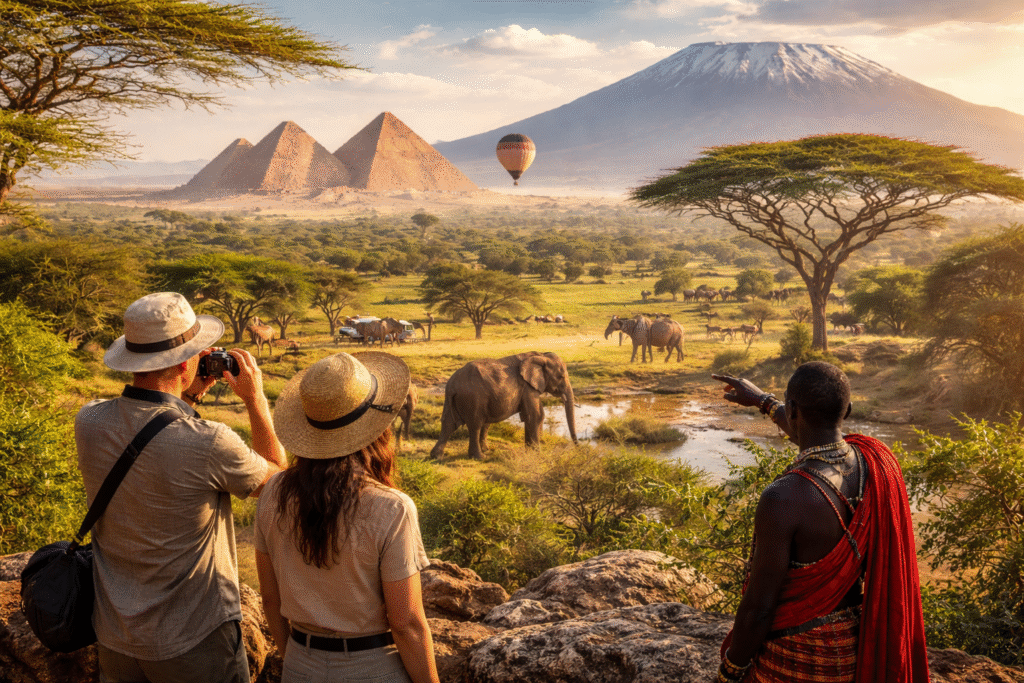
Africa enters a critical phase in 2025 as tourism growth collides with environmental and social limits. Egypt has now joined Tanzania, Kenya, Seychelles, South Africa, and Botswana in tightening tourism controls. Governments aim to protect fragile ecosystems, historic landmarks, and local communities from the impact of overcrowding.
International arrivals continue to rise across the continent. Wildlife safaris, heritage sites, and coastal cities face mounting pressure. Authorities now favor quality over quantity. High-value tourism, visitor caps, and higher entry fees form the backbone of this new strategy.
Egypt Introduces Heritage Protection Fees
Egypt’s world-famous heritage sites attract millions each year. The pyramids, ancient temples, and tombs face erosion, congestion, and structural strain. In 2025, Egypt has strengthened entry regulations at key archaeological locations.
Controlled ticketing and revised entry fees now limit daily footfall. Revenue supports site restoration, digital monitoring, and archaeological preservation. The government also invests in visitor flow management to reduce crowd concentration.
These steps aim to protect ancient monuments while sustaining tourism revenue. Egypt’s move reflects a broader shift toward preservation-first tourism.
Rwanda Sets the Benchmark for High-Value Tourism
Rwanda continues to lead Africa’s low-impact tourism model. Gorilla trekking remains its flagship experience. Permit pricing stays high to restrict numbers and fund conservation.
Strict daily limits reduce stress on endangered mountain gorillas. Tourism revenue supports anti-poaching efforts, forest protection, and community development. Local residents benefit through jobs, education funding, and infrastructure projects.
This approach proves that fewer visitors can still generate strong economic returns.
Tanzania Spreads Visitors Beyond the Serengeti
Tanzania faces intense pressure at Ngorongoro Crater and Serengeti National Park. Peak seasons bring heavy safari traffic and wildlife disruption. In response, crater access fees and vehicle controls have expanded in 2025.
Authorities now actively promote lesser-known parks. Southern and western circuits offer rich wildlife with fewer crowds. Ruaha and Nyerere National Parks receive new infrastructure and marketing support.
This diversification reduces pressure on headline attractions while sharing tourism income more evenly.
Kenya Enforces Vehicle Limits in the Masai Mara
The Masai Mara remains one of Africa’s busiest safari destinations. Wildlife crossings during migration seasons often draw hundreds of vehicles. In 2025, Kenya enforces strict caps on vehicle numbers at key viewing points.
New rules limit congestion and restore natural animal movement. Enhanced ranger oversight ensures compliance. Kenya also strengthens revenue-sharing programs with Maasai landowners.
Community conservancies gain a larger role in tourism management. This keeps land under conservation rather than conversion.
South Africa Tackles Urban and Nature-Based Pressures
South Africa faces overtourism on two fronts. Cape Town struggles with housing pressure, infrastructure strain, and neighborhood displacement. In response, authorities roll out urban tourism management plans.
Policies now promote responsible accommodation growth and community investment. Affordable housing initiatives receive tourism-linked funding.
In national parks, tiered pricing remains central. International visitors pay higher fees, which fund conservation and park maintenance. Infrastructure upgrades aim to reduce bottlenecks at popular sites.
Botswana Refines Okavango’s Exclusive Model
Botswana’s Okavango Delta operates under a high-cost, low-volume tourism system. Still, benefit distribution remains a concern. In 2025, Botswana pushes for stronger local participation.
New policies require safari operators to expand community ownership and employment. Revenue-sharing agreements receive tighter oversight. Conservation standards also grow stricter to protect wetlands and wildlife corridors.
The goal remains clear. Tourism must support both nature and people.
Seychelles Uses Fees to Protect Fragile Islands
Seychelles depends heavily on tourism but faces environmental limits. Island access charges and marine park levies now play a larger role in 2025.
Fees fund coral reef protection, marine patrols, and waste management. Authorities also regulate coastal development more tightly. Eco-certified resorts and low-impact activities receive priority.
These controls help preserve biodiversity while sustaining the island economy.
Key Measures Driving Africa’s Tourism Reset
Across Africa, governments align around several core actions in 2025:
Higher Entry Fees
Premium pricing reduces crowd density and increases conservation funding.
Visitor Caps
Daily limits protect wildlife, heritage sites, and visitor experience.
Operator Regulations
Safari and tour operators face stricter sustainability standards.
Community Participation
Local communities gain direct financial and management roles.
Infrastructure Investment
Eco-friendly transport, waste systems, and visitor facilities expand.
The Future of African Tourism
Africa’s tourism boom brings opportunity and risk. The 2025 measures mark a decisive shift toward sustainability. Egypt’s entry into this movement highlights how cultural tourism now faces the same pressures as wildlife destinations.
If these policies succeed, Africa can protect its landscapes, wildlife, and heritage while sustaining economic growth. Collaboration between governments, communities, and the private sector remains essential.
Africa’s message is clear in 2025. Tourism must respect limits, value conservation, and deliver shared benefits. Only then can the continent safeguard its treasures for generations to come.
For more travel news like this, keep reading Global Travel Wire