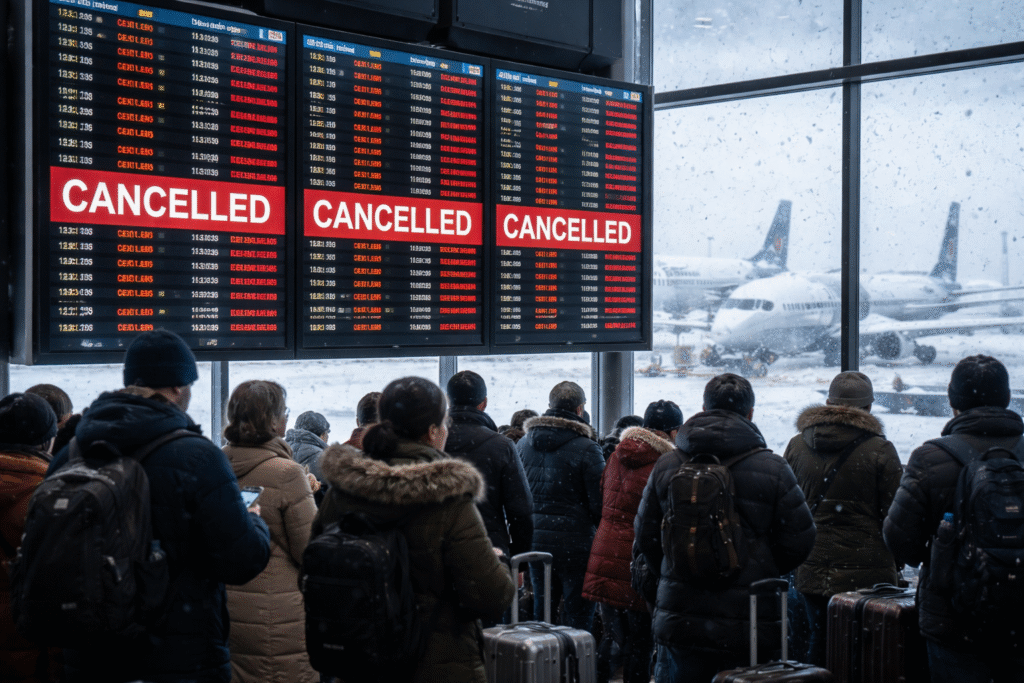
A severe winter storm is disrupting air travel across the United States, triggering widespread flight cancellations and long delays. Major airports in the Midwest and Northeast face the heaviest impact as Arctic air, extreme cold, and heavy snow combine to ground aircraft and strain airport operations.
Holiday travelers are dealing with missed connections, packed terminals, and uncertain schedules. The storm arrives during one of the busiest travel periods of the year, intensifying the chaos.
New York Airports See the Worst Disruptions
New York’s major airports are among the hardest hit. John F. Kennedy International Airport, LaGuardia Airport, and Newark Liberty International Airport are reporting a sharp rise in cancellations.
At peak disruption, nearly one in five scheduled flights at these airports did not operate. Runway de-icing delays, reduced visibility, and aircraft positioning issues added to the disruption.
Airports across Chicago, Detroit, Cleveland, Minneapolis, and Boston also reported severe slowdowns as the storm spread eastward.
Thousands of Flights Delayed Nationwide
Flight delays surged as the storm intensified. By late December, thousands of flights across the country faced delays lasting several hours. Crews struggled with icy aircraft, frozen ground equipment, and air traffic flow restrictions.
Even flights departing from clear-weather cities experienced delays due to aircraft and crew shortages. A single canceled flight often triggered a chain reaction, affecting multiple routes throughout the day.
Why This Storm Is So Disruptive
This winter system stands out for its scale and intensity. Extremely cold air plunged temperatures well below seasonal averages. In the Great Lakes region, lake-effect snow created whiteout conditions.
Ice buildup slowed ground operations and forced airports to space out takeoffs and landings. Aircraft de-icing took longer than usual due to freezing temperatures and limited capacity.
Meteorologists expect the cold wave to linger into early January, with sharp temperature drops extending into the southern United States.
What Passengers Are Entitled To During Weather Disruptions
Weather-related cancellations fall outside airline control, which limits mandatory compensation. However, passengers still have important rights.
If an airline cancels your flight, you can request a full refund instead of rebooking. This applies even to non-refundable tickets.
If you choose to continue your trip, airlines must rebook you on the next available flight without penalty. Fare differences usually do not apply in these cases.
Airlines are not required to provide hotel stays, meals, or ground transportation for weather delays. Some carriers may offer assistance as a goodwill gesture, but policies vary.
Airlines Offering Flexible Rebooking Options
To reduce passenger stress, most major U.S. airlines introduced travel waivers. These waivers allow travelers to change travel dates or routes without paying change fees.
Airlines offering weather-related flexibility include major legacy carriers and low-cost airlines alike. Passengers should review fare rules and rebooking windows directly with their airline before making changes.
Seats on alternative flights fill quickly during widespread disruptions, so early action improves rebooking chances.
How Travelers Can Reduce Stress During Winter Travel
Winter travel requires extra preparation. Simple steps can reduce frustration and improve outcomes.
Check Flight Status Often
Monitor flight status before leaving for the airport. Conditions can change rapidly during winter storms.
Pack Essentials in Carry-On Bags
Keep medications, chargers, snacks, and warm clothing in your carry-on. Checked bags may arrive late or be rerouted.
Rebook Early if Needed
If cancellation seems likely, rebook as soon as options open. Early changes offer better seat availability.
Allow Extra Time
Security lines and boarding processes often slow during disruptions. Arrive early and stay patient.
New York Airports Remain Under Pressure
New York’s airports handle some of the highest passenger volumes in the country. Weather disruptions there affect flights nationwide.
By late December, combined cancellations at JFK and LaGuardia exceeded several hundred flights. Airlines continued adjusting schedules to manage crew availability and aircraft positioning.
Officials urge travelers to expect rolling delays as weather patterns evolve.
Impact on the Remainder of the Holiday Season
Travel disruptions are expected to continue through the New Year. Forecasts suggest ongoing cold snaps and additional snow systems across northern states.
Airlines will likely maintain flexible booking policies while monitoring weather developments. Travelers planning early January trips should stay alert and prepare for possible changes.
Conclusion: Flexibility Is Key This Winter
The winter storm has turned holiday travel into a challenge for millions of passengers. Major airports, especially in New York, face ongoing cancellations and delays as extreme weather persists.
While airlines cannot control the weather, knowing your rights and acting early can reduce stress. Staying informed, flexible, and prepared remains the best strategy for navigating winter travel disruptions in the United States.
For more travel news like this, keep reading Global Travel Wire