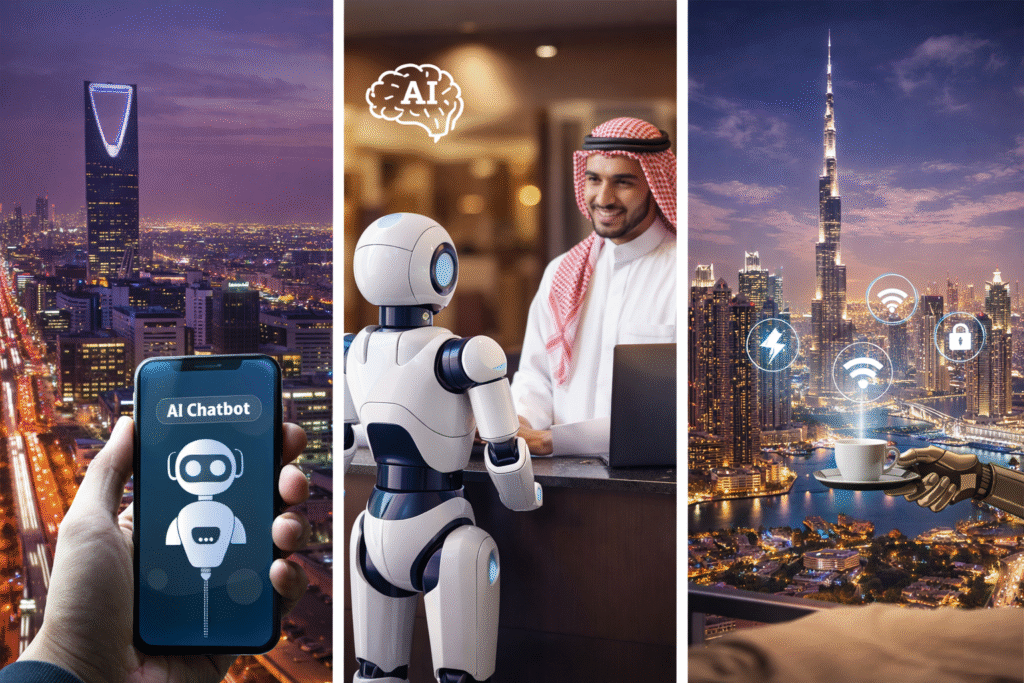
The Middle East is undergoing a profound transformation in its hospitality and tourism sector, driven by rapid adoption of artificial intelligence. With more than ninety percent of hospitality leaders in the region already using or testing AI-powered solutions, countries such as Saudi Arabia and the United Arab Emirates are setting new global benchmarks for technology-led tourism. This shift is redefining how hotels operate, how travelers experience destinations, and how tourism supports long-term economic growth beyond traditional industries.
Hospitality plays a central role in the Middle East’s diversification strategies, and AI has emerged as a powerful enabler of that vision. From luxury hotels and resorts to large-scale tourism developments, artificial intelligence is now embedded across guest services, operational systems, and strategic planning.
AI Adoption Accelerates Across the Region
AI integration in Middle Eastern hospitality has moved beyond experimentation and into large-scale implementation. Industry leaders report widespread use of AI-driven tools, ranging from automated booking platforms and predictive pricing models to smart energy management and virtual concierge services. This high adoption rate reflects the region’s broader commitment to digital transformation and innovation-led growth.
Saudi Arabia has been particularly aggressive in leveraging technology to reshape its tourism offering. As part of its long-term economic diversification agenda, the Kingdom is developing new tourism destinations, smart cities, and entertainment hubs where AI plays a central role. From managing visitor flows at major attractions to personalizing hotel stays, AI is seen as essential to delivering world-class experiences at scale.
The UAE, long recognized for its leadership in smart city initiatives, continues to integrate AI across hospitality operations. In cities such as Dubai and Abu Dhabi, AI helps manage high volumes of international visitors, optimize service delivery, and maintain consistency across diverse accommodation types, from ultra-luxury resorts to business hotels.
Enhancing Guest Experience Through Smart Technology
One of the most significant impacts of AI adoption is the transformation of guest engagement. Hotels across the region are using AI to deliver highly personalized experiences tailored to individual preferences. Smart systems analyze booking history, travel behavior, and real-time data to recommend dining options, activities, spa treatments, and local experiences.
AI-powered chatbots and virtual assistants now handle guest inquiries around the clock, offering instant responses in multiple languages. This not only improves customer satisfaction but also reduces wait times and enhances overall service efficiency. Smart room technology allows guests to control lighting, temperature, entertainment, and room service through mobile apps or voice commands, creating a seamless and intuitive stay.
For travelers, these advancements translate into smoother journeys, faster service, and experiences that feel customized rather than standardized.
Operational Efficiency and Cost Optimization
Beyond guest-facing services, AI is transforming the operational backbone of hospitality businesses. Hotels are using AI to forecast demand, manage staffing levels, optimize pricing, and reduce energy consumption. Predictive analytics enable operators to anticipate peak travel periods, adjust resources accordingly, and maintain service quality even during high occupancy.
Automation of routine tasks has significantly improved productivity. From housekeeping schedules and inventory management to maintenance alerts and financial reporting, AI reduces manual workloads and minimizes errors. This allows staff to focus on higher-value interactions that enhance guest satisfaction.
Many hospitality operators report substantial cost savings as a result of AI-driven efficiency, strengthening profitability while maintaining competitive pricing.
Workforce Challenges and Skill Gaps
Despite its rapid adoption, AI integration in hospitality presents notable challenges. One of the most pressing issues is the shortage of skilled professionals with expertise in AI, data analytics, and digital systems. Many hospitality organizations are investing in training and upskilling programs to bridge this gap, while others are partnering with technology providers to manage implementation.
Another challenge lies in integrating AI with legacy systems. Older infrastructure can limit the effectiveness of advanced technologies, requiring phased upgrades and careful change management. However, governments and private-sector stakeholders are increasingly aligning on modernization efforts to ensure long-term competitiveness.
What This Means for Travelers
For travelers visiting Saudi Arabia, the UAE, and neighboring destinations, the rise of AI in hospitality promises a more efficient, intuitive, and enjoyable experience. From frictionless check-ins and personalized itineraries to real-time support and smart accommodation features, AI is removing many of the pain points traditionally associated with travel.
Business travelers benefit from streamlined services, faster connectivity, and intelligent meeting facilities, while leisure travelers enjoy curated experiences that reflect their interests and preferences. As AI continues to evolve, travelers can expect even greater integration across transport, accommodation, attractions, and retail.
AI and the Future of Middle Eastern Tourism
The widespread adoption of AI aligns closely with national tourism and economic strategies across the Middle East. Governments see technology as a way to attract high-spending visitors, extend length of stay, and position the region as a leader in innovation-driven tourism.
AI is also playing a role in sustainability, helping hotels reduce energy usage, manage water consumption, and minimize waste. These efficiencies support broader environmental goals while improving long-term operational resilience.
Looking ahead, the Middle East is poised to become a global model for AI-powered tourism. Continued investment in smart infrastructure, talent development, and digital ecosystems is expected to drive further innovation across hospitality and travel services.
A New Era for Global Travel
The rapid integration of artificial intelligence into Middle Eastern hospitality marks a turning point for the global tourism industry. By embracing smart technology at scale, destinations such as Saudi Arabia and the UAE are not only enhancing visitor experiences but also reshaping how tourism operates in the digital age.
As AI adoption deepens, travelers can expect smarter services, greater personalization, and more seamless journeys across the region. For the Middle East, this technological transformation reinforces its position as a forward-looking tourism powerhouse, setting standards that destinations worldwide are likely to follow in the years ahead.
For more travel news like this, keep reading Global Travel Wire