Taipei is rapidly emerging as one of Asia’s most influential destinations for sustainable luxury tourism, with its high-end hotels leading a citywide transformation toward greener travel. As global travelers become more conscious of their environmental impact, Taipei’s luxury hospitality sector has responded by blending world-class comfort with progressive sustainability practices. This evolution has positioned the Taiwanese capital as a model city where responsible tourism and premium experiences coexist seamlessly.
The shift toward sustainability in Taipei’s luxury hotel sector did not happen overnight. It is the result of years of policy alignment, cultural awareness, and a growing recognition within the hospitality industry that environmental responsibility is no longer optional. Today, Taipei’s top hotels are redefining what luxury means by prioritizing efficiency, conservation, and community impact alongside elegance and service excellence.
Government Policy as a Catalyst for Change
One of the key drivers behind Taipei’s green tourism success is strong policy direction. Taiwan has implemented forward-thinking environmental regulations that directly influence the hospitality industry. Luxury hotels have been required to rethink traditional practices, particularly around waste management and single-use plastics.
Strict regulations on disposable plastics have encouraged hotels to eliminate items such as plastic water bottles, straws, and miniature toiletries. In their place, hotels now use refillable dispensers, reusable containers, and biodegradable alternatives. These changes have significantly reduced waste without compromising guest comfort, demonstrating how regulation and innovation can work together.
Energy efficiency targets introduced by authorities have also pushed hotels to invest in smart infrastructure. These measures support national sustainability goals while helping hotels reduce long-term operational costs, making green investment both environmentally and financially viable.
Energy Efficiency at the Core of Luxury Hospitality
Taipei’s luxury hotels have embraced advanced energy-saving technologies as a central pillar of sustainability. Intelligent energy management systems now monitor heating, cooling, and lighting in real time, adjusting usage based on occupancy and weather conditions. This reduces unnecessary energy consumption while maintaining optimal comfort for guests.
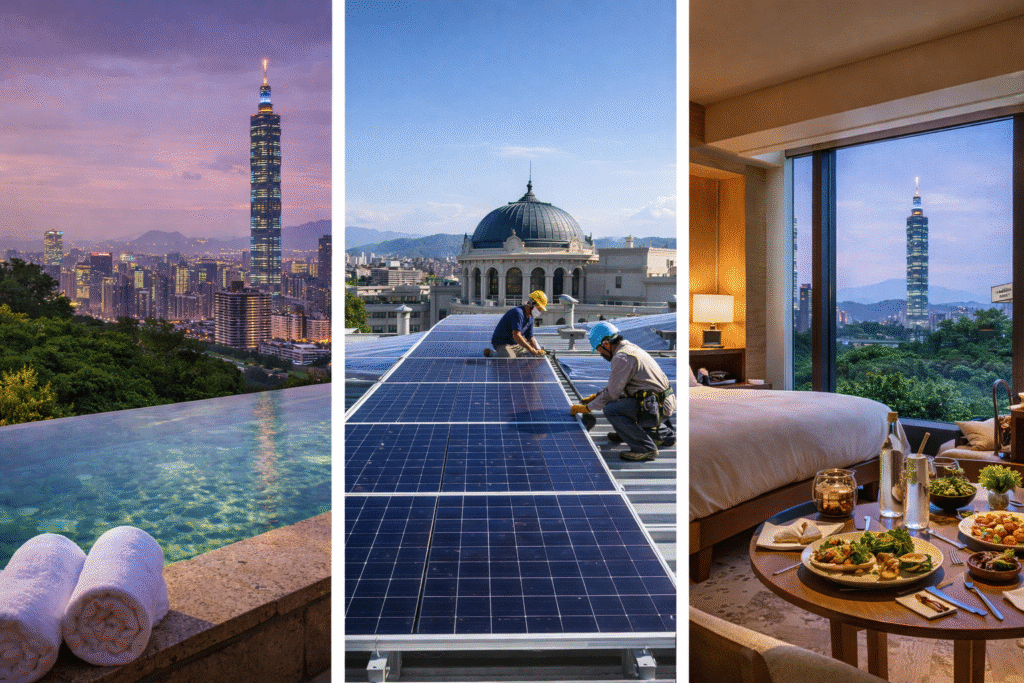
LED lighting has become standard across hotel interiors and exteriors, significantly lowering electricity use. Many properties have also incorporated renewable energy solutions such as solar panels to offset power demand. Water conservation systems, including low-flow fixtures and smart monitoring, further reduce resource consumption without affecting guest experience.
These innovations demonstrate how luxury hotels in Taipei are shifting from resource-intensive operations to smarter, more efficient models that align with global climate goals.
Waste Reduction and Circular Practices
Waste management is another area where Taipei’s luxury hotels are setting benchmarks. Comprehensive recycling programs are now embedded into daily operations, with clear systems for sorting and processing waste. Guests are actively encouraged to participate, making sustainability a shared responsibility rather than a back-of-house initiative.
Food waste reduction has become a priority across hotel restaurants and banquet operations. Smaller portion options, flexible menus, and improved inventory planning help minimize excess. Surplus food is increasingly redirected through community channels, supporting social initiatives while reducing landfill contributions.
Reusable amenities, digital check-ins, and paperless communication have further reduced waste, reflecting a holistic approach to sustainability that extends beyond visible gestures.
Sustainable Dining and Local Sourcing
Taipei’s green luxury movement extends into hotel dining experiences. Many high-end hotels prioritize locally sourced ingredients, working closely with regional farmers and producers. This reduces emissions linked to food transport while supporting local agriculture and culinary traditions.
Organic produce, seasonal menus, and plant-forward dining options are becoming increasingly common, catering to health-conscious and environmentally aware travelers. Sustainable seafood practices and responsible sourcing further enhance the ethical profile of hotel restaurants.
By integrating sustainability into gastronomy, Taipei’s luxury hotels offer guests an authentic connection to local culture while minimizing environmental impact.
Eco-Conscious Design and Architecture
Sustainability is also embedded in the physical design of Taipei’s luxury hotels. New developments and renovations emphasize green architecture, incorporating natural materials, energy-efficient glazing, and intelligent ventilation systems. The use of natural light reduces reliance on artificial lighting, while green roofs and landscaped spaces improve insulation and urban biodiversity.
These design choices enhance guest well-being by creating healthier indoor environments with improved air quality and comfort. At the same time, they reduce the environmental footprint of large hospitality structures in a dense urban setting.
Shaping the Future of Luxury Travel in Asia
Taipei’s leadership in sustainable luxury hospitality reflects a broader shift in traveler expectations. Modern luxury is increasingly defined by responsibility, authenticity, and purpose rather than excess alone. By responding to this shift, Taipei’s hotels have gained a competitive advantage in the regional and global tourism market.
The city’s approach offers a blueprint for other destinations seeking to balance tourism growth with environmental stewardship. Through collaboration between government, industry, and local communities, Taipei has demonstrated that sustainability can enhance, rather than limit, the luxury travel experience.
A New Standard for Sustainable Tourism
As Asia’s tourism landscape continues to evolve, Taipei stands out as a destination where sustainability and sophistication go hand in hand. Luxury hotels across the city are proving that high standards of comfort, service, and design can be achieved while significantly reducing environmental impact.
For travelers seeking meaningful, responsible, and refined experiences, Taipei represents the future of luxury tourism. Its green hotels are not only reducing their footprint but also reshaping perceptions of what premium travel can and should be. In doing so, Taipei is setting a powerful example for sustainable tourism development across Taiwan and beyond.
For more travel news like this, keep reading Global Travel Wire