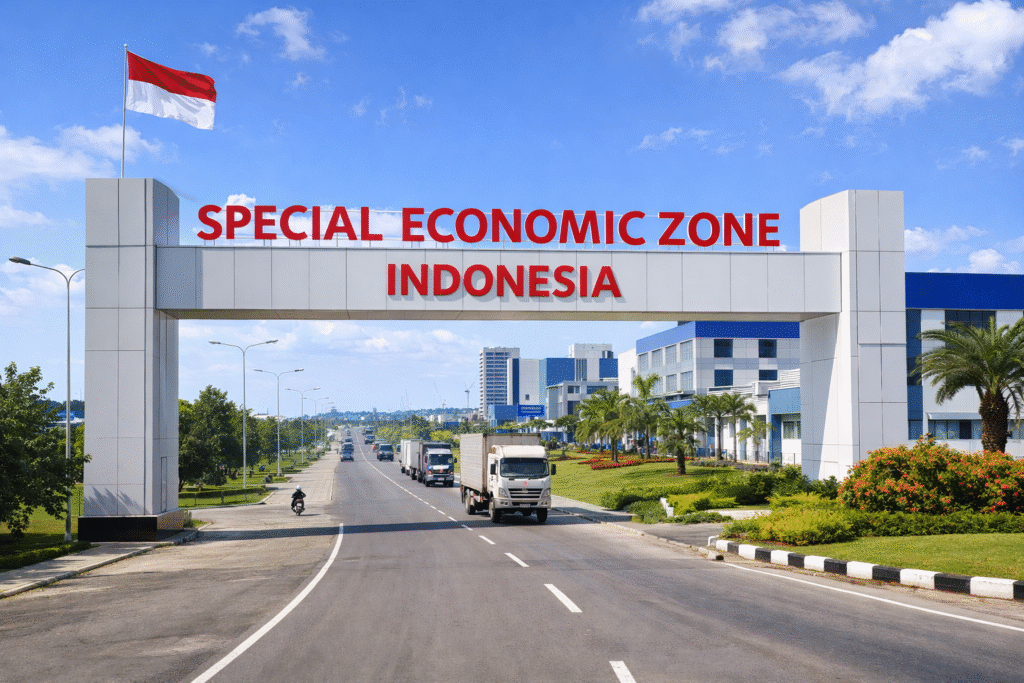
Indonesia is rapidly strengthening its position as a leading destination for foreign investment in Southeast Asia, driven by the strategic expansion of its Special Economic Zones (SEZs). With a renewed focus on manufacturing, technology, and export-oriented industries, these zones are redefining the country’s economic landscape and placing Indonesia in direct competition with established regional investment hubs such as Vietnam, Thailand, and Malaysia.
Long viewed as incentive-based industrial enclaves, Indonesia’s SEZs are now being transformed into integrated engines of growth. The shift reflects a broader national strategy aimed at boosting industrial productivity, encouraging technology transfer, and building a resilient economy that can compete on a global scale.
A New Vision for Special Economic Zones
Indonesia’s approach to SEZs has evolved significantly in recent years. Rather than functioning solely as tax-friendly zones for foreign companies, the government is repositioning them as comprehensive industrial ecosystems. These zones are designed to support manufacturing, logistics, digital services, and advanced technologies while remaining deeply connected to domestic supply chains.
This transformation reflects Indonesia’s ambition to move up the global value chain. By encouraging higher value-added production and innovation-driven industries, SEZs are becoming platforms for long-term investment rather than short-term cost advantages. The focus is on sustainability, productivity, and integration with global trade networks.
Competing in a Crowded ASEAN Investment Landscape
Southeast Asia has become one of the world’s most competitive regions for foreign direct investment, particularly in manufacturing and technology. Vietnam has emerged as a major electronics and export manufacturing base, Thailand has long been a regional automotive and industrial hub, and Malaysia continues to attract high-tech and semiconductor investments.
Indonesia’s SEZ strategy is designed to ensure the country remains competitive in this dynamic environment. Its large domestic market, strategic maritime location, and abundant labor force provide natural advantages. By pairing these strengths with modern SEZ infrastructure and targeted incentives, Indonesia is positioning itself as a compelling alternative for investors seeking scale, stability, and long-term growth.
Incentives Designed for Long-Term Investors
A cornerstone of Indonesia’s SEZ appeal lies in its comprehensive incentive framework. These incentives are structured to reduce initial investment barriers while encouraging sustained business operations. Companies operating within SEZs can benefit from tax reductions, customs duty exemptions, and simplified administrative processes, particularly during the early stages of investment.
Importantly, incentives are tailored based on the size of investment, industry sector, and strategic importance of the project. High-priority sectors such as advanced manufacturing, electronics, renewable energy, and digital technologies are receiving particular attention. Over time, businesses transition to Indonesia’s standard corporate tax regime, balancing investor incentives with fiscal sustainability.
This structured approach provides clarity and predictability, which are critical factors for multinational firms making long-term investment decisions.
Infrastructure and Connectivity at the Core
Beyond fiscal benefits, Indonesia is investing heavily in the physical and digital infrastructure that supports its SEZs. Upgraded ports, industrial estates, transport corridors, and logistics facilities are improving connectivity between SEZs and international markets. These developments are especially important for export-oriented industries that rely on efficient supply chains.
Equally significant is the push toward digital infrastructure. Smart logistics systems, data connectivity, and Industry 4.0 technologies are being integrated into SEZ development. This positions Indonesia not only as a manufacturing base but also as an emerging hub for digital transformation and technology-driven production.
Strengthening Links with the Domestic Economy
A defining feature of Indonesia’s SEZ strategy is its emphasis on integration with the broader national economy. Rather than operating in isolation, SEZ-based industries are encouraged to work closely with local suppliers, small and medium enterprises, and service providers.
This integration helps create a more resilient industrial ecosystem, ensuring that economic benefits extend beyond zone boundaries. It also supports job creation, skills development, and regional economic growth, reinforcing public support for SEZ expansion.
Investing in Human Capital
Human capital development plays a critical role in Indonesia’s competitiveness. Recognising that skilled labor is essential for advanced manufacturing and technology sectors, the government is investing in vocational training, technical education, and industry-aligned skills programs.
SEZs are increasingly becoming centers for workforce development, where education institutions and private companies collaborate to meet evolving industry needs. This focus on skills ensures that investors have access to a capable and adaptable workforce while improving employment opportunities for local communities.
Implications for Business Travel and Economic Tourism
The rise of SEZs is also influencing business travel and economic tourism. Increased foreign investment brings a steady flow of executives, engineers, consultants, and professionals traveling to Indonesia for project development, factory setup, and regional management. This has positive spillover effects for hospitality, transport, and urban development in SEZ-adjacent regions.
Over time, SEZ-driven growth is expected to enhance Indonesia’s profile as a destination for international conferences, trade events, and corporate travel.
Looking Ahead
Indonesia’s Special Economic Zones represent a strategic pivot toward a more competitive, innovation-driven economy. By combining incentives, infrastructure, workforce development, and domestic integration, the country is building a strong foundation for sustained foreign investment.
As global companies reassess supply chains and seek diversified manufacturing bases, Indonesia’s SEZs are emerging as powerful alternatives within ASEAN. With continued policy support and infrastructure investment, these zones are set to play a central role in positioning Indonesia as a leading manufacturing and technology hub in the region and beyond.
For more travel news like this, keep reading Global Travel Wire