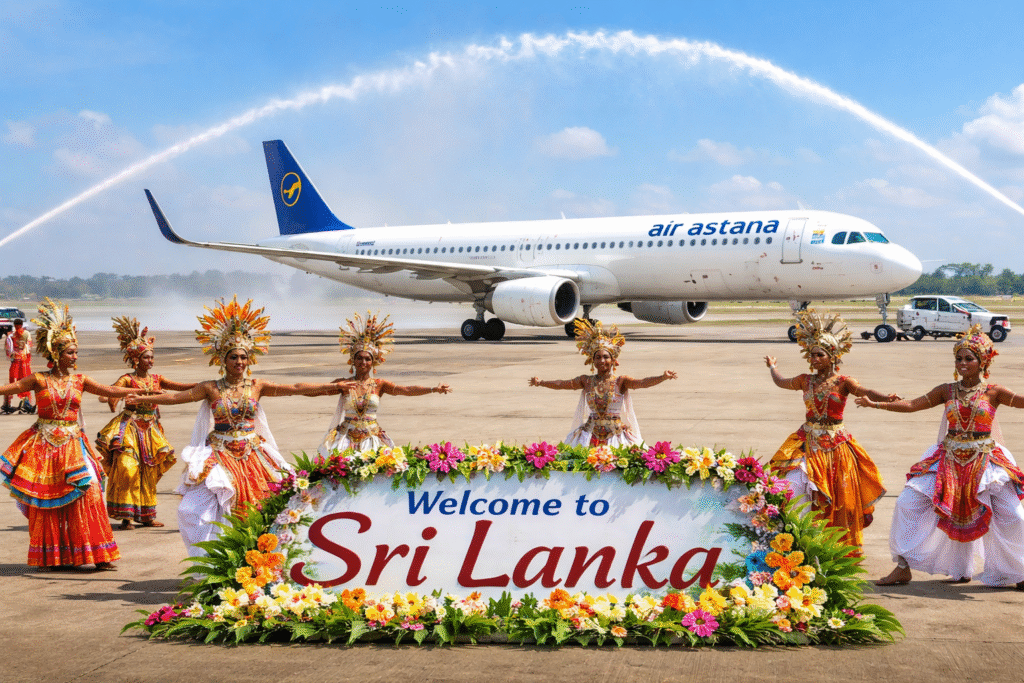
Sri Lanka’s tourism industry reached an exciting milestone with the launch of Air Astana’s first direct flights from Kazakhstan. The inaugural service, which began on December 25, 2025, has opened a new gateway between Almaty and Colombo, bringing travelers from Central Asia closer to the island’s tropical charm. The twice-weekly flights, operating every Monday and Thursday until March 2026, mark a strategic expansion that strengthens Sri Lanka’s international air connectivity.
This new air link represents a growing partnership between Air Astana and Sri Lanka’s tourism authorities, highlighting the nation’s steady recovery and its ambition to attract more global travelers. The inaugural flight’s arrival was celebrated at Bandaranaike International Airport with a vibrant welcome ceremony featuring traditional dances and cultural performances — a reflection of Sri Lanka’s famous hospitality.
Boosting Winter Tourism and Visitor Arrivals
The first flight carried 166 passengers aboard an Airbus A321, officially kicking off Sri Lanka’s 2025/2026 winter tourism season. With temperatures in Kazakhstan dropping below freezing during this period, the island’s warm weather and scenic beauty offer an appealing escape. The new service is expected to attract both leisure travelers and adventure enthusiasts from Central Asia.
For many visitors, Sri Lanka provides the perfect mix of relaxation and exploration — from golden beaches and wildlife parks to UNESCO-listed heritage sites and lush hill-country tea estates. The new flights are expected to help Sri Lanka achieve its goal of attracting over 2.5 million international visitors in 2026.
Strengthening Sri Lanka’s Position on the Global Travel Map
This new air route underlines Sri Lanka’s growing reputation as a globally accessible destination. Improved air connectivity has been a key focus of the government’s tourism strategy, aiming to diversify visitor markets and reduce reliance on traditional sources such as India, Russia, and Western Europe.
The connection with Kazakhstan opens doors to a region showing increasing interest in tropical destinations. Central Asian travelers, with their appetite for culture, adventure, and family holidays, represent a promising new demographic for Sri Lanka’s tourism economy.
A Year-Round Destination for Every Traveler
Sri Lanka is one of the few destinations that can truly claim to be a year-round travel haven. The island’s unique geography means that while one coast enjoys sunshine, the other is cooled by monsoon rains — allowing tourists to plan beach vacations, wildlife safaris, and mountain treks at any time of year.
Visitors from Kazakhstan can now explore a country that offers something for everyone. They can unwind on the southern beaches of Mirissa and Unawatuna, explore ancient cities like Anuradhapura and Polonnaruwa, or hike through the misty trails of Ella and Nuwara Eliya. The island’s compact size makes it easy for travelers to experience its diversity within a short stay.
Economic Growth and Community Benefits
The arrival of Air Astana’s flights is expected to bring tangible economic benefits to Sri Lanka’s tourism and hospitality sectors. Increased visitor arrivals will create more opportunities for hotels, restaurants, tour operators, and local artisans. The demand for travel services, excursions, and cultural experiences will also stimulate small and medium enterprises across the country.
Tourism remains a vital pillar of Sri Lanka’s economy, contributing significantly to foreign exchange earnings and employment. This new route will help strengthen the recovery of the travel industry, which continues to rebuild following global challenges in recent years.
Enhancing Connectivity and Travel Experience
The Sri Lankan government and private sector have been investing heavily in tourism infrastructure to ensure a world-class visitor experience. Upgrades to airports, new hotel developments, and improved transport networks are part of a nationwide effort to position Sri Lanka as a premier travel destination in Asia.
In addition, simplified visa processes and traveler-friendly initiatives have made it easier for international tourists to visit the island. The collaboration with Air Astana supports this broader vision of making Sri Lanka more accessible and appealing to travelers from new and emerging markets.
Sustainable Tourism and Future Growth
As Sri Lanka’s tourism industry continues to expand, sustainability remains a top priority. The focus is on promoting responsible travel, preserving cultural heritage, and protecting the island’s unique ecosystems. Authorities are encouraging eco-tourism, community-based tourism, and green hospitality practices to ensure long-term benefits for both visitors and locals.
Looking ahead, Sri Lanka plans to attract new airlines and expand its network across Asia, Europe, and the Middle East. The success of Air Astana’s inaugural route could inspire similar partnerships with other carriers, further strengthening Sri Lanka’s position as a leading destination in South Asia.
A Bright Future for Sri Lankan Tourism
The launch of Air Astana’s flights from Kazakhstan symbolizes more than just improved air travel — it marks the start of a new chapter for Sri Lanka’s tourism industry. The route reflects growing international confidence in the island as a safe, exciting, and accessible destination.
With breathtaking landscapes, rich cultural experiences, and unmatched hospitality, Sri Lanka is poised to welcome more travelers from around the world. As global tourism trends shift toward authentic, nature-driven, and sustainable experiences, the island is ready to shine on the world stage.
Conclusion:
The arrival of Air Astana’s inaugural flight from Kazakhstan marks a defining moment in Sri Lanka’s tourism journey. It strengthens global connectivity, stimulates economic growth, and reinforces the country’s position as a year-round paradise for international travelers. With this new partnership, Sri Lanka steps confidently into a future filled with promise, adventure, and opportunity.
For more travel news like this, keep reading Global Travel Wire