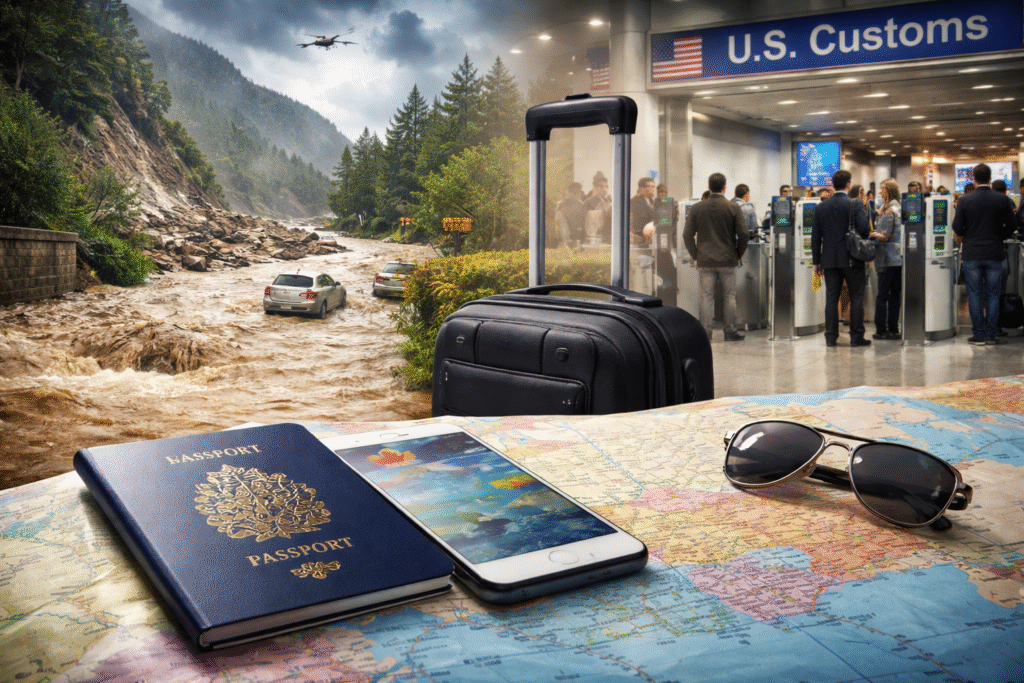
The Canadian government has issued an updated travel advisory for citizens planning trips to the United States. The advisory, revised on December 24, 2025, maintains the overall assessment of the U.S. as a destination where travelers should take normal security precautions. However, new developments have prompted added warnings that travelers should not ignore.
The update highlights growing climate-related risks in several regions and outlines changes in U.S. airport security procedures. These factors could affect travel plans, border crossings, and overall trip safety for Canadians.
Overall Safety Outlook for Canadian Travelers
The United States remains a popular destination for Canadians. Most visits take place without serious issues. Still, the advisory reminds travelers to stay alert, especially in busy urban centers and tourist hotspots.
Petty crime remains a concern in crowded areas. Pickpocketing and theft occur most often in public transport hubs, shopping districts, and popular attractions. Violent crime rarely targets tourists directly, but it exists in certain neighborhoods. Travelers should research destinations in advance and avoid poorly lit or isolated areas.
Gun violence also appears in the advisory. Firearm ownership rates are higher in the U.S. than in Canada. While incidents involving travelers remain rare, mass shooting events can happen without warning. Staying aware of surroundings and avoiding large, uncontrolled crowds can reduce risk.
Border Entry and Inspection Awareness
The advisory strongly emphasizes border procedures. Canadian travelers must carry valid passports or approved travel documents at all times. Border officials in the United States hold wide authority to question travelers and inspect belongings.
Electronic devices may also face inspection at ports of entry. Travelers should cooperate fully and answer questions clearly. Failure to meet entry requirements may result in delays or denial of entry.
Advance preparation can help reduce stress at the border. Confirm document validity before departure and allow extra time for inspections.
Severe Weather and Climate-Related Travel Risks
A major addition to the updated advisory focuses on natural disasters. Severe weather events now pose a growing risk in several parts of the United States, particularly in California.
Heavy rainfall has caused widespread flooding and dangerous mudslides in multiple counties. Emergency declarations are in effect across several regions due to road damage, evacuations, and service disruptions.
California Counties Affected by Flooding and Mudslides
The advisory highlights the following counties as high-risk areas:
- Los Angeles
- Orange
- Riverside
- San Bernardino
- San Diego
- Shasta
Flash floods have damaged highways, bridges, and public infrastructure. Mudslides and rockslides continue to threaten hillside communities. Power outages and water service disruptions have also been reported.
Travelers in or near affected regions should avoid flooded roads and unstable terrain. Driving through standing water poses serious danger and can lead to vehicle damage or injury.
Guidance for Travelers During Natural Disasters
Canadians traveling to affected areas should stay informed through local news and weather alerts. Conditions can change rapidly, especially during heavy rainfall.
Authorities may issue evacuation orders with little notice. Travelers should follow all instructions from local emergency services. Ignoring warnings can place lives at risk and complicate rescue efforts.
Those planning upcoming trips to disaster-prone regions should review itineraries carefully. Flexible bookings and travel insurance can provide added protection during unpredictable weather events.
Expanded Biometric Screening at US Airports
Another key update involves airport security policies. The advisory notes expanded biometric screening measures at U.S. airports starting December 26, 2025.
These measures allow authorities to collect additional biometric data from international travelers. The screening may include facial recognition and other identity verification methods. The policy aims to strengthen border security and immigration enforcement.
While officials cite safety reasons, the change raises privacy concerns among travelers. Canadians should expect longer wait times and more detailed screening during airport entry and exit procedures.
What Travelers Should Expect at Airports
Enhanced screening may apply to arrivals, departures, or transit passengers. Travelers should remain patient and cooperative during these procedures.
Carrying proper identification remains essential. Documents such as passports and trusted traveler cards must be easily accessible. Incomplete documentation could result in missed flights or denied boarding.
Planning extra time at airports is now more important than ever, especially during peak travel periods.
Practical Tips for Canadians Visiting the US
The updated advisory offers clear guidance for safer travel:
Stay Weather-Aware
Monitor forecasts and avoid travel to regions facing active flooding or landslides.
Prepare for Border Checks
Carry valid documents and expect enhanced biometric screening at airports.
Practice Situational Awareness
Remain alert in crowded places and avoid high-risk neighborhoods.
Follow Emergency Instructions
Comply with evacuation orders and local authority guidance during disasters.
Staying Prepared Makes All the Difference
The revised Canadian travel advisory underscores the need for awareness and preparation. Climate risks and evolving security measures can impact travel with little warning. Staying informed helps travelers adapt quickly and safely.
Canadians heading to the United States should plan carefully, remain flexible, and stay alert throughout their journey. With the right precautions, travelers can reduce risks and enjoy a safer, smoother travel experience despite current challenges.
For more travel news like this, keep reading Global Travel Wire