Eurostar passengers traveling between the United Kingdom and France continue to face disruption as services recover from a major power failure in the Channel Tunnel. Although some trains have resumed operations, delays and cancellations remain likely for several days. Travel authorities urge passengers to plan carefully and expect ongoing schedule changes.
The disruption has unsettled thousands of travelers during a busy travel period. Many passengers now face uncertainty as operators work to restore full service capacity across the tunnel.
Power Failure Triggers Widespread Channel Tunnel Disruption
The disruption began after a failure struck the overhead power supply inside the Channel Tunnel. This system powers trains traveling between the UK and mainland Europe. Without it, operators could not maintain safe operations.
The situation worsened when a LeShuttle train broke down inside the tunnel. This incident blocked the route completely and halted all traffic. Eurostar and LeShuttle services both stopped while engineers assessed the damage.
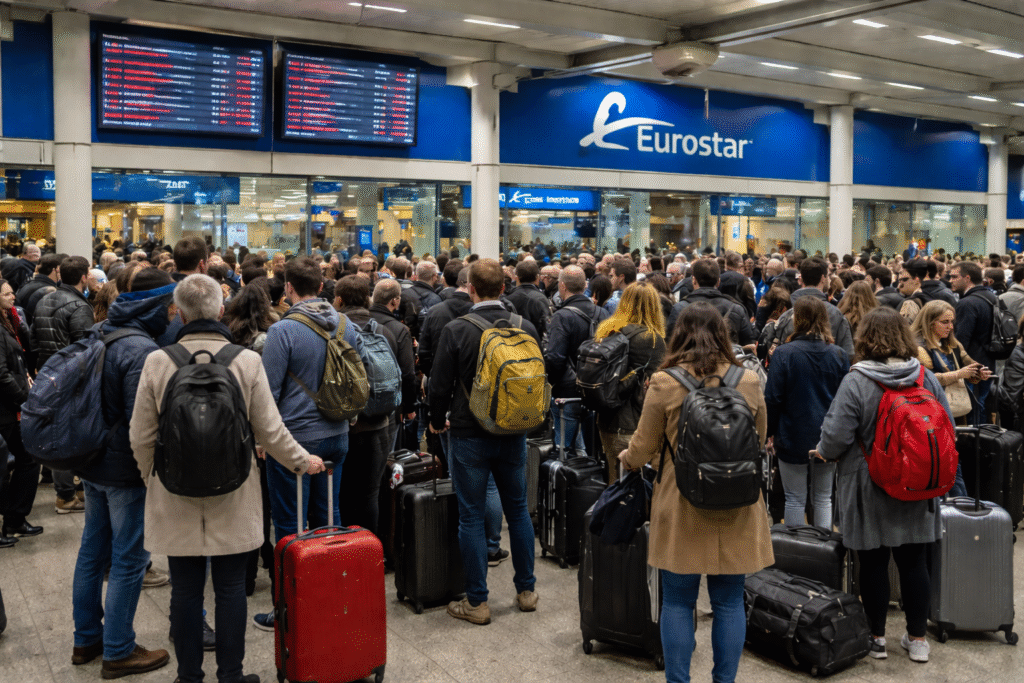
Passengers became stranded at major terminals, including London St Pancras and Paris Gare du Nord. Others waited inside stations with limited information as the disruption unfolded.
Gradual Service Resumption Fails to End Delays
Eurostar resumed limited services after several hours of repairs. However, trains now operate on reduced capacity due to ongoing infrastructure issues. Only one tunnel track remains available for traffic.
This reduced capacity limits the number of trains that can run each day. Even scheduled services may face last-minute cancellations or delays. Eurostar has warned passengers to expect disruption to continue.
Overnight inspections revealed further technical challenges. These issues slowed the return to normal operations and increased passenger frustration.
Early Morning Cancellations Add to Passenger Uncertainty
On Wednesday morning, Eurostar canceled the first scheduled departure from London to Paris. This cancellation affected passengers hoping for an early start. Many had already endured previous delays earlier in the week.
Although later services appeared as scheduled, confidence remained low. Travelers worried about further changes as conditions continued to evolve. Many adjusted plans or delayed travel entirely.
Station staff worked to manage crowds and provide updates. However, high demand stretched resources at key locations.
LeShuttle Services Face Uneven Recovery
LeShuttle services between Folkestone and Calais also suffered from the disruption. Initial delays reached several hours at both terminals. Conditions improved slightly in the UK, with waiting times reduced by Wednesday morning.
In France, long queues continued to affect vehicle travelers. Drivers faced delays of up to six hours at the Calais terminal. Operators advised passengers to check in as planned but remain prepared for waiting.
Traffic congestion built up on approach roads near Folkestone. The backlog affected local travel and increased stress for drivers.
Passenger Experience Reflects Ongoing Strain
At London St Pancras, long queues formed as passengers waited for updates. Some travelers rebooked journeys or requested refunds. Others searched for alternative routes at short notice.
Eurostar staff distributed water to ease discomfort during long waits. Many passengers expressed frustration over limited information and shifting schedules.
Vehicle travelers experienced similar strain. Long lines and slow processing added to the disruption, especially for families traveling with cars.
Channel Tunnel Infrastructure Under Scrutiny
The Channel Tunnel serves as a vital link between the UK and Europe. It supports both high-speed rail and vehicle transport. This incident exposed vulnerabilities within the tunnel’s power and rail systems.
Engineers continue inspections to prevent further failures. Safety checks remain a priority before restoring full capacity. Operators stress that safety must come before speed.
Transport officials continue coordination efforts to stabilize operations. Recovery depends on successful testing and infrastructure reliability.
What Travelers Should Expect in the Coming Days
Passengers should prepare for continued disruption across Eurostar and LeShuttle services. Even confirmed departures may change with short notice. Travel flexibility remains essential.
Passengers should allow extra time for connections and onward travel. Those with flexible plans may benefit from delaying trips until conditions stabilize.
Accommodation plans should remain adaptable. Travelers should prepare for possible overnight stays due to delays.
Practical Advice for Affected Travelers
Passengers should monitor official service updates frequently. Only travel with confirmed bookings and avoid stations without departure confirmation.
Travelers should keep essentials available during long waits. Mobile devices should remain charged for real-time updates.
Those using alternative transport should expect high demand. Ferries and flights may experience congestion as displaced passengers seek options.
Outlook for Full Service Restoration
Eurostar continues repair and recovery efforts across tunnel infrastructure. Engineers aim to restore full operations once systems meet safety standards. However, timelines remain uncertain.
Travel authorities urge patience as repairs continue. Operators promise regular updates as conditions improve.
For now, UK and France travelers should remain informed and flexible. Prepared planning remains the best way to manage ongoing uncertainty during recovery.
If you want this rewritten for breaking news, short-form mobile, or international tourism audiences, just tell me the number.
For more travel news like this, keep reading Global Travel Wire