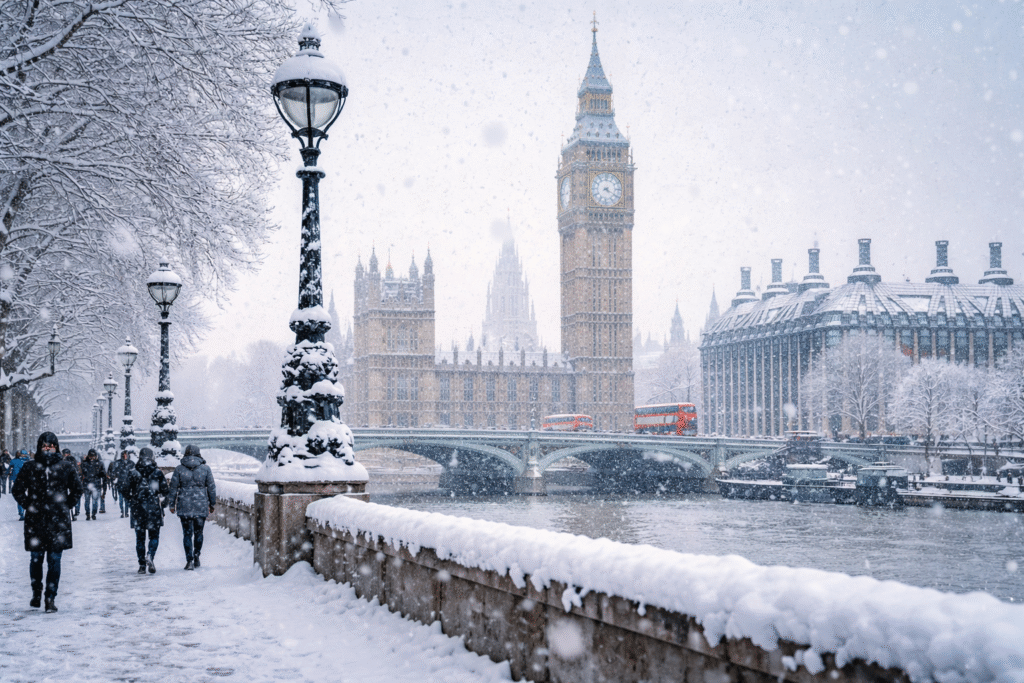
England has entered the New Year under an unusual and severe cold-health alert. Arctic air has pushed temperatures to extreme lows, with some regions recording figures close to minus ten degrees Celsius. The conditions mark one of the coldest starts to a year in recent memory.
Health authorities have raised concern over the impact of prolonged cold on daily life, travel, and tourism. Snow, ice, and freezing fog now affect large parts of the UK. These conditions are expected to continue through the first week of January.
The weather shift has placed England on high alert, with authorities urging residents and visitors to take extra care during travel and outdoor activities.
What a Cold-Health Alert Means for Daily Life and Visitors
A cold-health alert signals serious risk to public health. It highlights the danger of exposure to low temperatures over several days. The alert covers all regions of England and reflects a nationwide concern.
Many homes may struggle to maintain safe indoor temperatures. This risk rises in older buildings, care homes, and temporary accommodation. Cold exposure increases the likelihood of respiratory illness, heart strain, and reduced mobility, especially among older adults.
Tourists may also feel the impact. Visitors unused to harsh winter weather could face added risk when walking outdoors or using public transport.
Snow and Ice Create Challenges for Winter Tourism
The cold snap has arrived during a traditionally busy travel period. Many visitors choose early January for sightseeing, winter breaks, and cultural events. Snow and ice now threaten those plans.
Icy pavements, frozen steps, and reduced visibility could limit access to popular attractions. Outdoor landmarks and walking tours face the greatest disruption. River cruises, open-air markets, and countryside excursions may also see cancellations.
Hotels, museums, and indoor attractions remain open in many areas. However, visitors should expect shorter operating hours and possible last-minute changes.
Major Tourist Destinations Affected by the Freeze
London and Greater London
London faces icy roads and frosted walkways. Iconic landmarks remain popular, but access may slow due to safety checks. Public transport could run on reduced schedules during early mornings and late evenings.
Northern England Cities
Cities such as Manchester and York are experiencing snowfall and freezing fog. Historic streets with stone paving become slippery quickly. Sightseeing requires caution, especially after sunset.
Scotland and Northern Regions
Colder air moving south from Scotland has intensified the freeze. Highland and rural areas face deeper snow and strong winds. Travel through mountainous routes may prove difficult.
Countryside and National Parks
The Lake District and similar regions expect heavy snowfall at higher elevations. Hiking routes and scenic drives may close for safety reasons.
Travel Disruptions Across the UK Transport Network
Snow and ice have already started to affect roads, railways, and airports. Journey times may increase across England, Wales, Scotland, and Northern Ireland.
Rail services may face delays due to frozen tracks and points. Road travel could slow as gritting teams work to manage icy conditions. Airport operations may also experience minor delays, especially during early departures.
Tourists should allow extra travel time and remain flexible with plans. Overnight frost increases the risk of early-morning disruption.
Essential Safety Advice for Tourists During Extreme Cold
Dress for Severe Winter Conditions
Layered clothing offers better insulation. Waterproof boots with grip reduce the risk of slips. Gloves, hats, and scarves help prevent heat loss.
Limit Outdoor Exposure
Shorter outings reduce cold-related strain. Indoor attractions provide safer alternatives during peak cold hours.
Stay Aware of Local Conditions
Weather can change quickly. Snowfall may intensify overnight and freeze by morning.
Watch for Slippery Surfaces
Ice often forms on steps, bridges, and shaded areas. Walk slowly and use handrails where possible.
Plan Transport Carefully
Check schedules before travel. Keep warm supplies handy during longer waits.
Pressure on Services and Hospitality
Cold weather increases demand on public services. Transport staff, emergency responders, and healthcare teams remain under pressure. Hospitality businesses also adapt to weather challenges.
Hotels may see higher demand for extended stays due to delayed travel. Restaurants and indoor venues could become busier as visitors avoid outdoor exposure.
Tourism operators continue to adjust schedules to balance safety and visitor experience.
What to Expect in the Days Ahead
Forecasts suggest the cold pattern may persist into the first full week of January. Further snowfall and freezing nights remain possible. Icy conditions could redevelop each evening even after daytime thawing.
Travelers should expect ongoing winter disruption rather than rapid improvement. Flexibility remains key for anyone planning sightseeing or intercity travel.
Final Outlook for Winter Travel in England
This rare Arctic cold spell serves as a reminder of how quickly winter conditions can reshape travel plans. England remains open to visitors, but safety must come first.
Tourists can still enjoy museums, historic interiors, and winter scenery with the right preparation. Warm clothing, careful planning, and realistic expectations will help ensure a safer experience.
As winter tightens its grip, staying informed and cautious will make all the difference for a successful and enjoyable UK visit.
For more travel news like this, keep reading Global Travel Wire