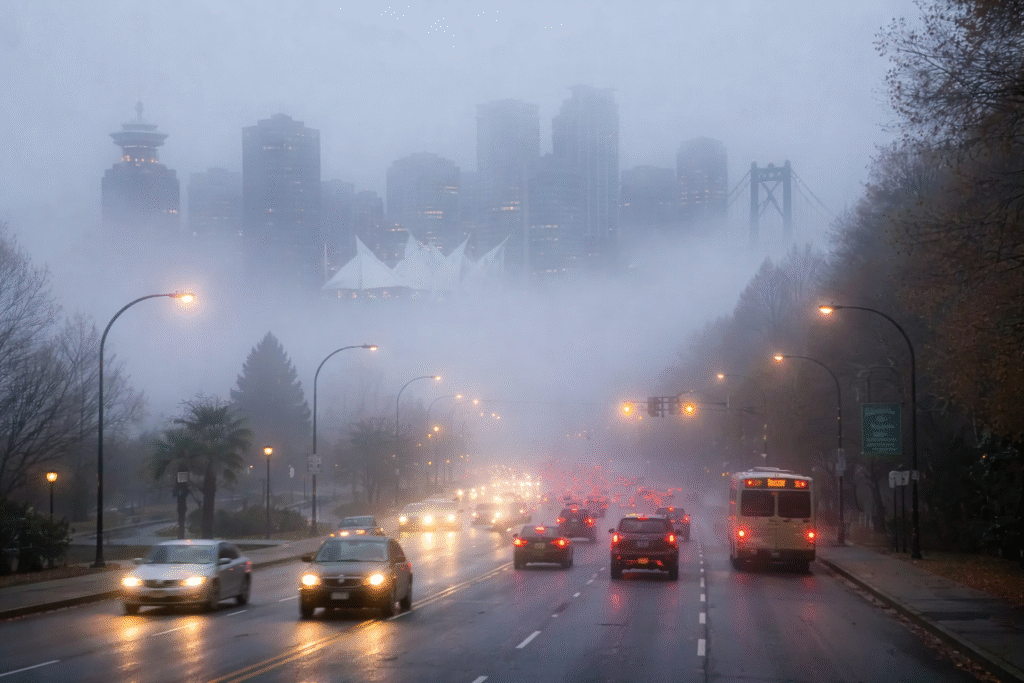
Metro Vancouver welcomed the final days of the year under a blanket of dense fog. Visibility dropped sharply across several parts of the Lower Mainland. Roads, bridges, and low-lying areas faced the biggest impact. Drivers and travelers encountered challenging conditions during peak movement hours.
The fog settled due to a stable winter weather pattern. It created near-zero visibility in pockets of the region. Daily routines slowed. Commuters adjusted schedules. Visitors faced unexpected delays. The situation highlighted how quickly weather can disrupt travel in Canada’s coastal cities.
Why Vancouver Is Prone to Heavy Fog
Fog is not unusual in coastal British Columbia. Vancouver’s geography plays a key role. Cold marine air often drifts inland from the Pacific Ocean. When warmer air sits above it, the cooler air becomes trapped.
This temperature imbalance forms a lid in the atmosphere. Moisture collects near the surface. Fog thickens and spreads. Winter months make this process more common. Short daylight hours slow atmospheric mixing. Calm winds allow fog to linger longer.
These conditions can persist overnight and into the morning. In some cases, fog lasts well into the afternoon.
Impact on Roads, Airports, and Tourism
Travel safety became the top concern during the fog event. Reduced visibility increased accident risks on highways and city streets. Intersections became harder to navigate. Pedestrians and cyclists were less visible.
Air travel also faced challenges. Fog can delay takeoffs and landings at regional airports. Even minor delays affect connecting flights and holiday travel plans. Tourists unfamiliar with local weather patterns often face added stress.
Public transport continued to operate. However, buses and trains moved cautiously. Schedules saw minor delays in fog-prone corridors.
Drivers Urged to Adjust Travel Habits
Authorities urged drivers to take extra care. Slower speeds reduced collision risks. Headlights helped improve visibility but high beams were discouraged. Sudden braking increased danger in dense fog.
Travelers were advised to allow more time. Rushing often leads to poor decisions in low-visibility conditions. Officials also reminded drivers to keep windshields clear and defrosters working.
Simple precautions played a major role in preventing accidents during the advisory period.
Understanding Canada’s Weather Alert System
Canada uses a color-based alert system to communicate weather risks. The fog alert for Metro Vancouver fell under a yellow-level advisory. This level signals caution rather than emergency.
Yellow advisories warn of conditions that may cause inconvenience or localized danger. They help residents prepare without causing panic. Even so, authorities stress that yellow alerts still deserve attention.
Fog-related incidents often occur during these moderate warnings. Short-term disruptions can still lead to serious consequences if ignored.
When Will Visibility Improve?
Fog usually lifts as daytime temperatures rise. Sunlight warms the surface air. This process helps mix the air layers. Once mixing begins, fog thins and eventually clears.
In coastal regions, improvement can vary by location. Areas near rivers, inlets, or valleys may remain foggy longer. Travelers in these zones must remain cautious even after conditions improve elsewhere.
Weather officials continue to monitor changes closely. Updates are issued as conditions evolve.
Government Efforts to Improve Weather Readiness
Canadian weather agencies continue to refine forecasting tools. Improved satellite data and local sensors now detect fog formation earlier. This allows alerts to reach the public faster.
Transportation authorities also invest in safety measures. Better road lighting, reflective signage, and real-time traffic updates help reduce risks. Airports use advanced landing systems to operate safely in low visibility.
Public awareness campaigns encourage weather preparedness. These efforts aim to reduce accidents and travel disruptions year-round.
Climate Patterns and Future Fog Events
Experts expect fog events to remain common in coastal Canada. Changing climate patterns influence moisture levels and temperature stability. Warmer oceans can increase humidity near shorelines.
Urban growth also plays a role. Expanding cities alter airflow and heat retention. These changes may affect how fog forms and dissipates.
Authorities stress the need for long-term planning. Better infrastructure and public education remain key priorities.
Tips for Travelers Visiting Vancouver
Visitors should plan with weather in mind. Winter travel in Vancouver often includes fog and rain. Checking local forecasts before heading out helps avoid surprises.
Morning travel may face more fog-related delays. Flexible schedules reduce stress. Guided tours and indoor attractions offer safer alternatives during low visibility.
Hotels and tourism operators often provide updates to guests. Travelers should ask for advice when conditions change.
Staying Safe During Weather Disruptions
Fog serves as a reminder of nature’s influence on travel. Even modern cities remain vulnerable to weather shifts. Staying informed makes a clear difference.
Authorities encourage residents and visitors to monitor alerts regularly. Prepared travelers make better decisions. Simple actions can prevent serious outcomes.
As Metro Vancouver adapts to evolving weather patterns, awareness remains the strongest defense. Caution, patience, and preparation help ensure safe journeys, even when visibility fades.
For more travel news like this, keep reading Global Travel Wire