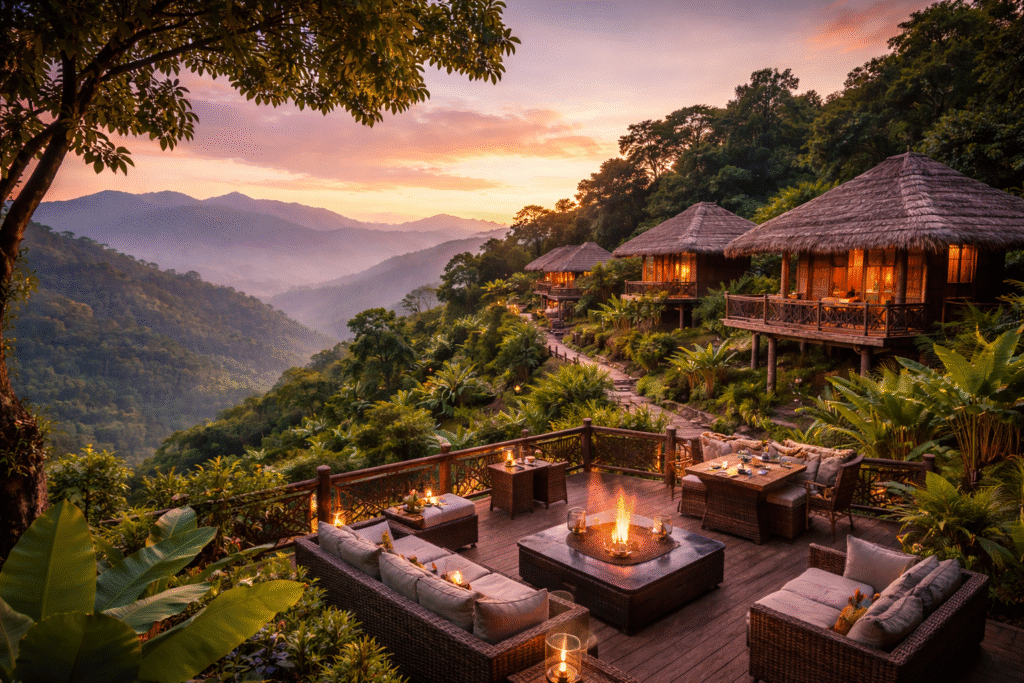
Bangladesh continues to strengthen its sustainable tourism ambitions through new community-led projects. Ala Mi Tlang Eco Resort now rises in Susuang Para in Bandarban at an elevation of two thousand one hundred feet. The location sits near the foothills of Keokradong, one of the country’s highest peaks.
The project marks a major milestone for eco-friendly tourism in Bangladesh. Developers designed the resort to protect nature and empower local communities. The initiative reflects a growing national focus on responsible tourism development.
Bandarban already attracts adventure travelers, hikers, and nature lovers. Ala Mi Tlang Eco Resort adds value by offering structured, low-impact accommodation. The resort positions the region as a leading eco-tourism destination.
Community-Led Tourism Supports the Bawm People
The Bawm community plays a central role in the Ala Mi Tlang Eco Resort project. Local residents will manage daily operations and guest services. This structure ensures direct economic benefits for the community.
Tourism revenue will support education, healthcare, and social programs. Community leaders plan to reinvest earnings into long-term development initiatives. This model promotes financial independence and social resilience.
Employment opportunities will include hospitality roles, guiding services, and maintenance work. Young community members will gain skills through training programs. These opportunities reduce migration pressures and strengthen local livelihoods.
Community-led tourism also protects cultural identity. Guests will experience Bawm traditions, cuisine, and storytelling. Cultural exchange creates respect and deeper understanding between visitors and hosts.
Eco-Friendly Design Preserves the Natural Environment
Ala Mi Tlang Eco Resort follows strict environmental guidelines. Designers selected sustainable building materials to reduce ecological impact. Structures blend with the surrounding landscape rather than dominate it.
Energy-efficient systems support daily operations. Solar solutions and low-energy lighting reduce reliance on conventional power. Water conservation practices help protect mountain water sources.
Waste management remains a priority. The resort plans to reduce single-use plastics and promote recycling. Organic waste will support composting initiatives for local agriculture.
Developers also prioritize biodiversity protection. The project avoids sensitive habitats and native vegetation. Nature conservation remains central to the resort’s operating philosophy.
Low-Impact Experiences Define the Guest Journey
The resort focuses on low-impact tourism activities. Guided nature walks allow guests to explore forests responsibly. Trekking routes emphasize safety and environmental awareness.
Cultural experiences form a key attraction. Visitors can participate in traditional crafts and community events. These interactions create meaningful travel experiences.
Wildlife observation follows ethical guidelines. Guides educate guests about local ecosystems and conservation. This approach promotes respect for nature rather than exploitation.
The resort avoids mass tourism models. Limited accommodation capacity ensures minimal environmental pressure. Quality experiences take priority over visitor volume.
Bandarban Emerges as a Sustainable Tourism Hub
Bandarban continues to gain attention for eco-tourism development. Government tourism strategies emphasize hill district preservation and community participation. Ala Mi Tlang Eco Resort aligns with these national priorities.
Infrastructure improvements now support responsible tourism growth. Better access roads and safety initiatives enhance visitor confidence. Authorities continue to promote sustainable destination planning.
The region’s scenic landscapes attract domestic and international travelers. Mountain views, waterfalls, and forest trails offer unique experiences. Eco-resorts help manage tourism demand responsibly.
Ala Mi Tlang strengthens Bandarban’s tourism identity. The resort adds credibility to the region’s eco-tourism offerings. It also encourages further responsible investment.
Economic Growth Through Sustainable Tourism
Sustainable tourism offers long-term economic stability for remote regions. Ala Mi Tlang Eco Resort creates year-round income opportunities. Seasonal tourism fluctuations become easier to manage.
Local supply chains benefit from the project. Farmers and artisans can supply food and crafts. This integration strengthens the regional economy.
Tourism revenue also supports infrastructure development. Improved sanitation and clean water systems benefit the wider community. These improvements enhance overall living standards.
Sustainable tourism reduces dependency on external aid. Communities gain control over their economic future. This independence fosters confidence and resilience.
A Model for Responsible Tourism Development in Bangladesh
Ala Mi Tlang Eco Resort sets a strong example for future projects. The community-led approach ensures shared benefits and accountability. Environmental protection remains a core principle.
Other regions can adopt similar models. Eco-tourism can support conservation and economic growth simultaneously. Careful planning ensures long-term success.
The project demonstrates how tourism can empower marginalized communities. Ethical tourism practices create shared value for hosts and visitors. This balance supports sustainable development goals.
Bangladesh continues to promote responsible tourism policies. Eco-resorts play a vital role in this strategy. Ala Mi Tlang represents a practical and scalable solution.
A Sustainable Path Forward for Bangladesh Tourism
The Ala Mi Tlang Eco Resort reflects a shift in tourism priorities. Sustainability, culture, and community now guide development decisions. This approach meets changing traveler expectations.
Eco-conscious travelers increasingly seek meaningful destinations. Bandarban offers authenticity, natural beauty, and cultural richness. Ala Mi Tlang enhances this appeal.
The project strengthens Bangladesh’s global tourism image. Responsible tourism attracts higher-value visitors and longer stays. These trends support national economic goals.
Ala Mi Tlang Eco Resort stands as a symbol of progress. It proves that tourism growth can respect people and nature. The future of Bangladesh tourism now looks more sustainable and inclusive.
For more travel news like this, keep reading Global Travel Wire