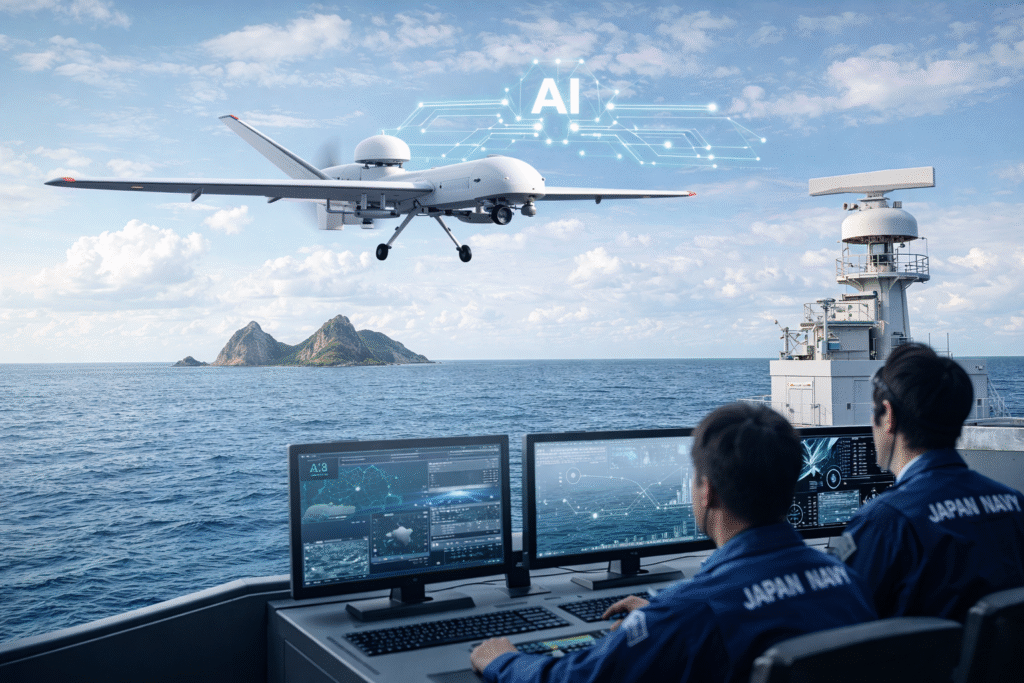
Japan has entered a new era of maritime surveillance with the large-scale implementation of artificial intelligence–enabled autonomous drone systems to monitor its remote islands and vast Exclusive Economic Zone. As the country faces increasing security, environmental, and economic challenges across its surrounding seas, this advanced technological approach reflects a decisive shift toward proactive and data-driven maritime governance.
The move underscores the growing strategic importance of ocean monitoring for an island nation that depends heavily on secure sea lanes, fisheries protection, and uninterrupted global trade. With thousands of islands scattered across distant waters, traditional patrol methods alone are no longer sufficient to ensure continuous oversight. The integration of autonomous aerial systems is now redefining how Japan protects its maritime interests.
Advanced Technology Transforming Maritime Surveillance
At the core of this initiative is the deployment of long-endurance unmanned aerial vehicles equipped with high-resolution optical cameras, infrared sensors, and real-time data transmission capabilities. These drones are capable of operating for extended hours, far surpassing the range and endurance of manned patrol aircraft.
Controlled remotely from advanced command centers, the drones can conduct wide-area surveillance missions deep into Japan’s Exclusive Economic Zone. The continuous stream of data they generate allows maritime authorities to monitor vessel movements, sea conditions, and coastal activity with unprecedented accuracy. This capability significantly enhances early detection of illegal fishing operations, smuggling routes, and unauthorized vessel incursions.
Strengthening Protection of Remote Islands
Japan’s remote island chains play a crucial role in defining national boundaries and economic rights. Many of these islands are located far from the mainland and are exposed to harsh weather, making routine inspections both costly and complex. Autonomous drones now provide a reliable solution for monitoring these areas without the need for constant ship or aircraft deployments.
Through regular aerial surveys, authorities can assess changes in coastline conditions, identify unauthorized landings, and monitor infrastructure integrity. The technology also supports environmental monitoring by tracking erosion, coral reef health, and marine pollution. This dual-use capability strengthens both national security and environmental stewardship, ensuring that these isolated territories remain protected and well-documented.
Artificial Intelligence at the Core of Operations
Artificial intelligence plays a central role in maximizing the effectiveness of drone surveillance. AI-powered analytics systems are trained to recognize different types of maritime activity, allowing routine commercial shipping to be filtered out while highlighting unusual or suspicious behavior. This automated classification significantly reduces the workload on human operators and improves response times.
In addition, predictive algorithms analyze historical movement patterns to identify high-risk zones and anticipate potential incidents. These capabilities enhance not only security patrols but also search and rescue operations. By calculating drift patterns and analyzing ocean currents, AI systems can assist in locating missing vessels, debris, or survivors more efficiently during maritime emergencies.
Regional Stability and Strategic Significance
The adoption of autonomous surveillance technology carries broader geopolitical implications. By strengthening its monitoring capabilities, Japan reinforces its commitment to maintaining maritime order and the rule of law in surrounding waters. The enhanced visibility provided by AI-driven systems acts as a deterrent against illegal activities while contributing to transparency in a region of growing strategic competition.
The data gathered through these patrols can also support cooperation with regional partners, enabling information sharing that promotes safe navigation and collective maritime awareness. While firmly defensive in nature, the program reflects a long-term strategy to protect economic interests, fisheries resources, and international shipping routes essential to Japan’s prosperity.
Building the Infrastructure Behind the Technology
Supporting a sophisticated drone fleet requires extensive operational infrastructure. Specialized facilities have been developed to house, maintain, and deploy unmanned aircraft, alongside secure data centers capable of processing large volumes of real-time information. Personnel are undergoing advanced training in remote flight operations, systems maintenance, and AI-based data analysis.
Significant investment has been allocated to ensure fleet readiness, system reliability, and continuous technological upgrades. Collaboration between government agencies, research institutions, and private-sector technology firms plays a key role in advancing sensor performance, communication systems, and energy efficiency.
Looking Ahead: The Future of Autonomous Maritime Defense
Japan’s vision for maritime security extends beyond aerial surveillance. Research is underway to integrate underwater drones and autonomous surface vessels with existing systems, creating a multi-layered monitoring network that spans air, sea, and sub-surface environments. This interconnected approach aims to provide comprehensive situational awareness across all maritime domains.
Beyond security applications, these technologies hold promise for disaster response, environmental conservation, and scientific research. Autonomous systems could assist in monitoring marine ecosystems, responding to oil spills, or supporting emergency operations following natural disasters.
As Japan continues to modernize its maritime defense and monitoring capabilities, the integration of artificial intelligence and autonomous systems marks a decisive transition from reactive patrols to intelligent, continuous surveillance. This evolution not only strengthens national security but also positions the country as a leader in advanced maritime governance in the Indo-Pacific region.
For more travel news like this, keep reading Global Travel Wire