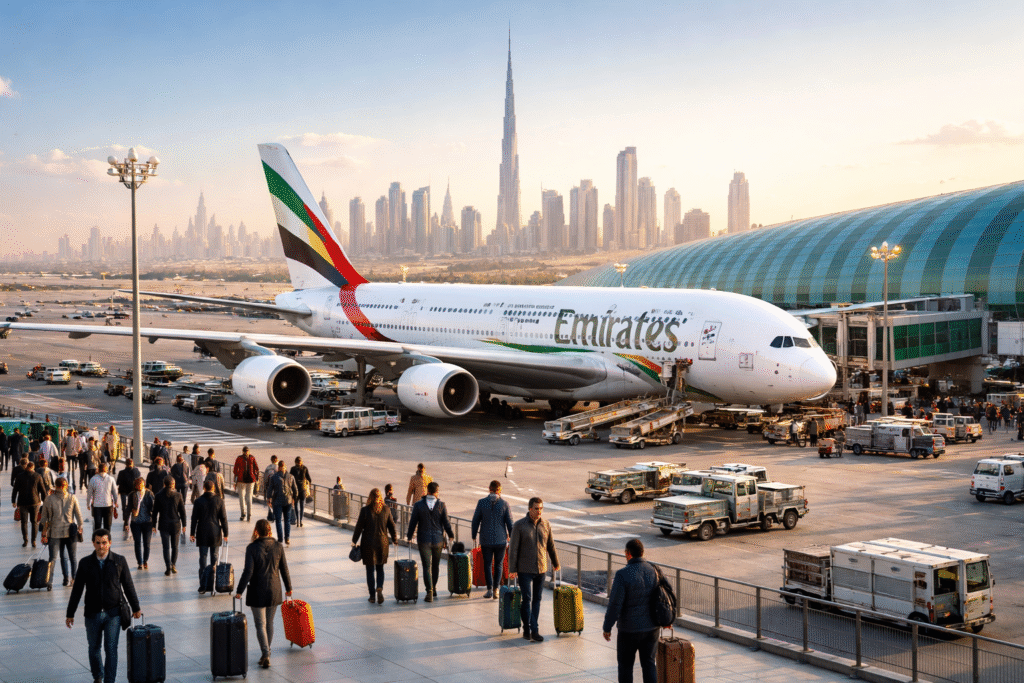
Emirates is preparing for a sharp rise in passenger traffic between January 2 and January 5, 2026. The airline expects one of its busiest travel windows as the New Year begins. Millions of travelers will move through Dubai after holiday celebrations end. Many will return home, while others will start fresh journeys for work or leisure.
This surge reflects strong global confidence in air travel. Early 2026 demand shows steady growth across leisure and business segments. Dubai, as a major global aviation hub, will play a central role during this intense travel period.
January 2 to 5 Marked as Peak Travel Days
Emirates has identified January 2 to January 5 as a high-pressure travel period. Passenger volumes during these days are expected to exceed recent post-holiday trends. Airports usually remain busy after New Year, but this year demand is set to rise further.
Several factors drive this spike. Holiday travelers will return after year-end breaks. Corporate travel will also restart as businesses resume operations. International conferences, trade activities, and regional meetings add to the demand.
The overlap of leisure and business travel creates sustained pressure across departures and arrivals. Emirates plans to manage this flow with advanced operational planning and capacity deployment.
Dubai Remains a Key Global Transit Hub
Dubai’s strategic location connects East and West efficiently. During peak travel periods, this advantage becomes even more visible. Emirates expects strong traffic between Dubai and destinations across Europe, Asia, Africa, Australia, and the Americas.
The airline will operate additional frequencies on high-demand routes. Long-haul destinations will see the highest load factors. Transit passengers will also contribute significantly, as Dubai remains a preferred stopover city.
Dubai International Airport is preparing for this influx with coordinated airport-wide planning. Immigration, baggage handling, and passenger movement systems are aligned to support smooth operations.
Airbus A380 Deployed on High-Demand Routes
To manage the surge, Emirates will rely heavily on its Airbus A380 fleet. These aircraft offer high seating capacity and efficient space utilization. Emirates plans to deploy A380s on routes with consistently strong demand.
The aircraft help absorb peak passenger volumes without excessive schedule disruptions. Their size allows Emirates to transport more travelers on fewer flights, easing pressure on airport slots.
Passengers on these flights will also benefit from enhanced onboard comfort. Spacious cabins, advanced entertainment systems, and improved inflight services remain key highlights.
Focus on Premium and Seamless Travel Experience
Emirates is also strengthening its premium services during this period. Business and first-class travelers can expect smoother airport processes. Dedicated check-in areas and priority boarding will reduce wait times.
Lounge services in Dubai will operate at full capacity. Emirates aims to maintain comfort even during peak hours. Ground staff will actively manage passenger flow to avoid congestion.
Premium passengers often travel during early January for business reasons. Emirates is aligning services to meet these expectations without compromising service quality.
Enhanced Airport Staffing and Ground Operations
To support higher volumes, Emirates has increased staffing levels across critical touchpoints. Customer service teams, ground handlers, and operational staff will be present in greater numbers.
Check-in counters will operate for extended hours. Baggage handling systems have been optimized to reduce delays. Additional self-service kiosks will support faster processing.
Frequent flyers and loyalty members will benefit from expedited services. Emirates aims to keep processing times predictable, even during the busiest hours.
Upgraded Onboard Services for High Passenger Loads
Inflight operations will also see enhancements. Emirates has planned increased catering supplies to match passenger demand. Cabin crews will receive additional briefings to ensure service consistency.
Meal choices will reflect diverse passenger preferences. Beverage service frequency will remain unchanged despite higher loads. Comfort remains a priority on long-haul flights.
The airline’s entertainment systems will offer updated content libraries. This ensures passengers remain engaged throughout their journey.
A Strong Start to Global Travel in 2026
The January 2 to 5 travel surge signals a strong start for global aviation in 2026. Emirates’ preparations highlight confidence in sustained demand growth. Strategic aircraft deployment, staffing increases, and service upgrades form the backbone of this plan.
For travelers, the period promises busy airports but organized operations. Whether flying home after holidays or starting new journeys, passengers can expect efficient handling.
As the year unfolds, this surge may set the tone for continued travel growth. Emirates’ readiness reflects broader optimism across the global tourism and aviation sectors.
For more travel news like this, keep reading Global Travel Wire