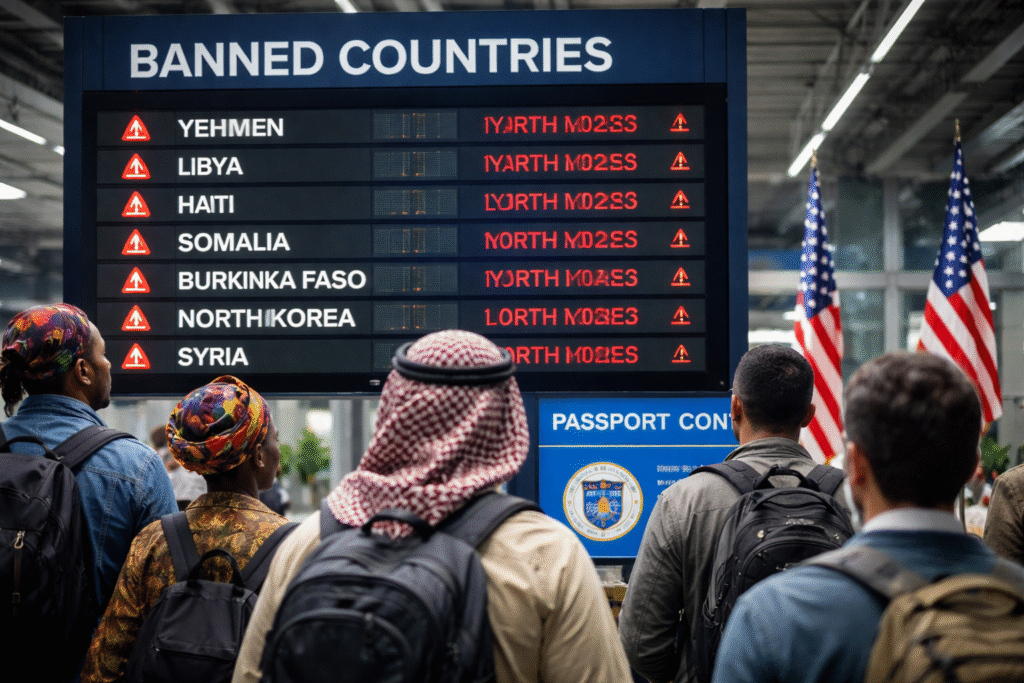
The United States has expanded its travel restrictions again. As of January 1, 2026, Yemen has officially joined a growing list of countries facing full U.S. travel bans. The move marks a major shift in America’s immigration strategy and sends strong signals across the global tourism and travel sector.
Yemen now stands alongside Libya, Haiti, Somalia, Iran, Burkina Faso, Chad, Burma, Mali, Laos, South Sudan, and several other nations under the most restrictive entry rules. Nationals from these countries can no longer obtain U.S. visas, effectively blocking tourism, family visits, education travel, and many business trips.
Travel Ban Takes Effect Nationwide
The expanded travel ban applies to citizens from 39 countries in total. The policy includes both full bans and partial restrictions, depending on country classification. The government first announced the expansion in December 2025, with enforcement beginning at the start of 2026.
Countries under a full travel ban include Afghanistan, Burma, Chad, Republic of the Congo, Equatorial Guinea, Eritrea, Haiti, Iran, Libya, Somalia, Sudan, Yemen, Burkina Faso, Laos, Mali, Niger, Sierra Leone, South Sudan, and Syria. Individuals holding travel documents issued by the Palestinian Authority also fall under the full restriction category.
Under this status, affected nationals cannot apply for new U.S. visas, regardless of travel purpose.
Partial Restrictions Affect More Destinations
Several other countries face partial travel bans, which impose tighter screening, limited visa categories, or stricter approval requirements. These nations include Angola, Antigua and Barbuda, Benin, Burundi, Côte d’Ivoire, Cuba, Dominica, Gabon, The Gambia, Malawi, Mauritania, Nigeria, Senegal, Tanzania, Togo, Tonga, Venezuela, Zambia, and Zimbabwe.
Travelers from these countries may still enter the U.S. under specific conditions, though approvals are expected to remain limited and closely reviewed.
Exemptions Provide Limited Relief
The policy does not apply to everyone. Individuals already inside the United States before January 1, 2026, remain unaffected. Travelers holding valid U.S. visas issued prior to that date may also continue to enter.
Other exemptions apply to certain diplomats, international athletes, and eligible dual nationals. Each exemption requires strict compliance with U.S. entry rules and security checks.
Tourism and Aviation Face Wider Disruption
The expanding travel ban is already reshaping global tourism patterns. Airlines, travel agencies, and tour operators face sudden route disruptions, canceled bookings, and rising uncertainty. Family travel, cultural exchanges, academic mobility, and diaspora tourism are among the hardest hit segments.
For many travelers from banned nations, the U.S. was a key long-haul destination. The restrictions now redirect travel demand toward Europe, Asia, and regional hubs, altering global travel flows in 2026.
African Nations Push Back with Countermeasures
Several African countries have responded strongly. Mali, Burkina Faso, and Niger have announced reciprocal travel restrictions on U.S. citizens. These countermeasures reflect growing diplomatic tensions and highlight how immigration policy can quickly spill into tourism and international relations.
Such responses may further reduce inbound and outbound tourism between affected regions and the United States.
Immigration Fees Rise Alongside Travel Ban
The new travel restrictions arrive alongside higher immigration-related fees. From January 1, 2026, several application costs increased across the U.S. immigration system.
The annual asylum application fee rose slightly from $100 to $102. Employment authorization fees also climbed. Initial employment authorization applications now cost $560, up from $550. Renewals and extensions increased to $280.
Temporary Protected Status applications rose to $510, while parole authorization renewals now cost $280. These adjustments aim to support immigration system operations amid rising demand and backlogs.
Some Fees Remain Stable
Not all fees changed. The asylum application form fee remains at $100. Certain employment authorization renewals still cost $275. Special immigrant juvenile applications also remain unchanged at $250.
Despite these exceptions, overall costs for migrants, students, and temporary workers continue to rise.
Impact on Travelers and Global Mobility
The expanded U.S. travel ban and higher fees represent one of the most restrictive shifts in recent immigration history. The changes affect millions from countries already facing conflict, instability, or economic hardship.
For travelers, the impact extends beyond borders. Families face prolonged separation. Tourism businesses lose access to key markets. Airlines rethink network planning. Governments reassess diplomatic ties.
As 2026 unfolds, global tourism and mobility will continue to adapt to this new reality, with lasting effects on international travel, migration trends, and cross-border cooperation.
For more travel news like this, keep reading Global Travel Wire