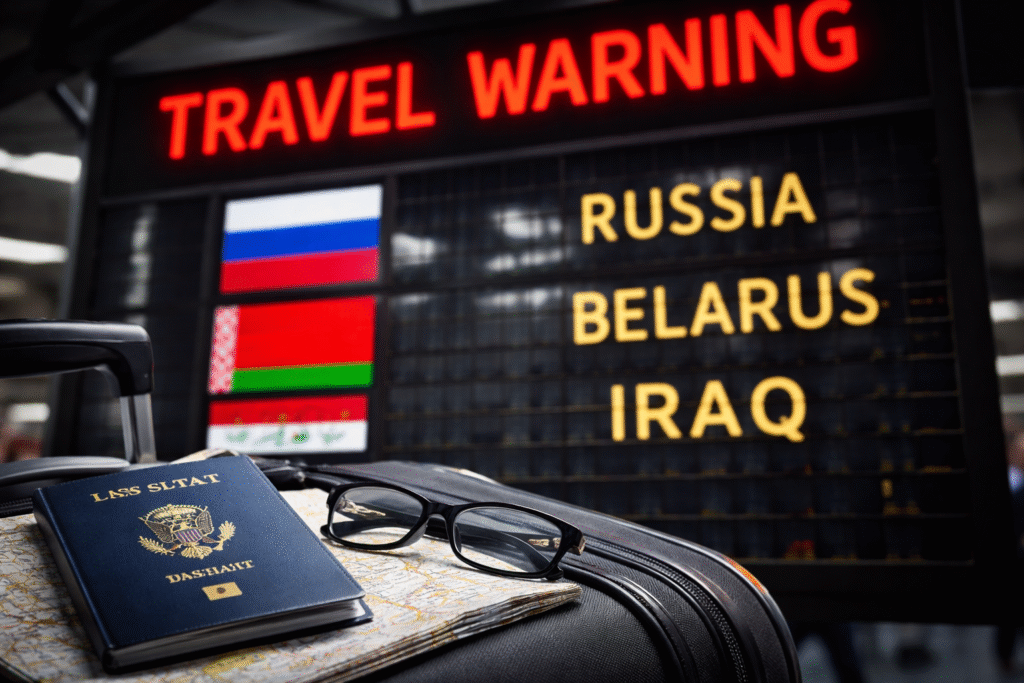
The United States has issued a renewed and urgent travel advisory for Russia, Belarus, and Iraq. The warning highlights serious risks for American citizens. These include arbitrary detention, terrorism, civil unrest, and limited government support. Authorities urge Americans to avoid travel and leave immediately if already present.
The advisory reflects growing instability across all three destinations. Political tensions, security crackdowns, and regional conflicts continue to raise safety concerns. For travelers, the risks now outweigh the benefits.
Why the Advisory Matters for Travelers
Travel advisories guide citizens on safety conditions abroad. In this case, the alert signals extreme risk. Americans may face detention without clear charges. Access to legal help and consular services remains limited. Exit options can also change without warning.
Tourism operators and travel planners are watching the situation closely. Airlines, insurers, and tour providers often adjust services after such advisories. Travelers should factor this into future plans.
Russia Faces Heightened Risks for Foreign Visitors
Russia remains a high-risk destination for US citizens. The ongoing conflict with Ukraine has tightened internal security. Authorities have expanded surveillance and enforcement powers.
Arbitrary Detention and Legal Uncertainty
American travelers face a real risk of detention. Authorities have detained foreigners on vague or disputed charges. In many cases, consular access remains delayed or denied. Legal processes often lack transparency.
Dual nationals face added challenges. Russia does not recognize dual citizenship. Individuals with Russian ties may face travel restrictions or military obligations.
Terrorism and Security Threats
Major cities have seen violent incidents in recent years. Attacks linked to extremist groups have targeted public venues. Security operations remain intense, especially near transport hubs and borders.
Digital Surveillance Concerns
Travelers should assume full monitoring of phones and laptops. Authorities may review personal data, messages, and social media activity. Content stored or accessed abroad can still lead to questioning or arrest.
Belarus Remains Unsafe for American Travelers
Belarus continues to pose severe risks for foreign visitors. Political repression has intensified since the disputed elections of recent years. The country maintains close alignment with Russia on security matters.
Detention and Harassment Risks
American citizens face possible detention without explanation. Authorities have targeted journalists, activists, and even casual observers. Questioning can happen at borders, hotels, or public spaces.
Consular support remains extremely limited. Embassy operations are suspended, leaving citizens with little assistance during emergencies.
Crackdowns on Speech and Assembly
Public protests often face swift and forceful responses. Even online expression can attract scrutiny. Foreigners risk arrest for sharing opinions or attending gatherings.
Surveillance of Travelers
Electronic monitoring remains widespread. Border officials may inspect devices and online accounts. Travelers should expect little privacy during their stay.
Iraq Continues to Rank Among the Most Dangerous Destinations
Iraq remains under the highest level of travel warning. The country faces ongoing security challenges tied to terrorism and political instability.
Persistent Terrorism Threats
Extremist groups continue to operate across several regions. Attacks involve explosives, small arms, and drones. Public places, transport routes, and government buildings remain vulnerable.
Foreigners may face heightened risk due to perceived political affiliations. Western citizens often draw unwanted attention.
Kidnapping and Militia Activity
Kidnapping remains a serious concern. Armed groups have targeted foreign workers and travelers for ransom or leverage. Some militias openly oppose US interests.
Civil unrest also disrupts daily life. Protests can erupt quickly and turn violent. Road closures and service disruptions often follow.
Limited Emergency Support
US government assistance remains restricted. Travel outside select zones involves major risk. Medical facilities may not meet international standards, especially outside major cities.
Air travel options remain unpredictable. Flight cancellations and border closures occur with little notice.
Impact on Tourism and Travel Planning
These advisories affect more than individual travelers. Airlines may reduce routes. Travel insurance policies may exclude coverage. Tour operators often suspend programs entirely.
Travelers should reassess plans involving the wider region. Neighboring countries may see increased demand as safer alternatives. Governments and tourism boards elsewhere continue to emphasize safety and preparedness.
Key Safety Advice for US Citizens
Americans should avoid non-essential travel to these destinations. Those already present should consider immediate departure. Travelers must monitor official updates and maintain flexible plans.
Preparation remains essential. Secure documents, emergency contacts, and exit strategies matter more than ever. Travelers should also brief family members and employers.
Final Outlook for International Travelers
The latest US travel advisory sends a clear message. Russia, Belarus, and Iraq present serious and ongoing dangers for American citizens. Security conditions remain volatile, and support options are limited.
While global travel continues to recover, safety remains the top priority. Travelers should choose destinations with stable conditions and reliable support. In the current climate, avoiding high-risk regions remains the wisest choice.
For more travel news like this, keep reading Global Travel Wire