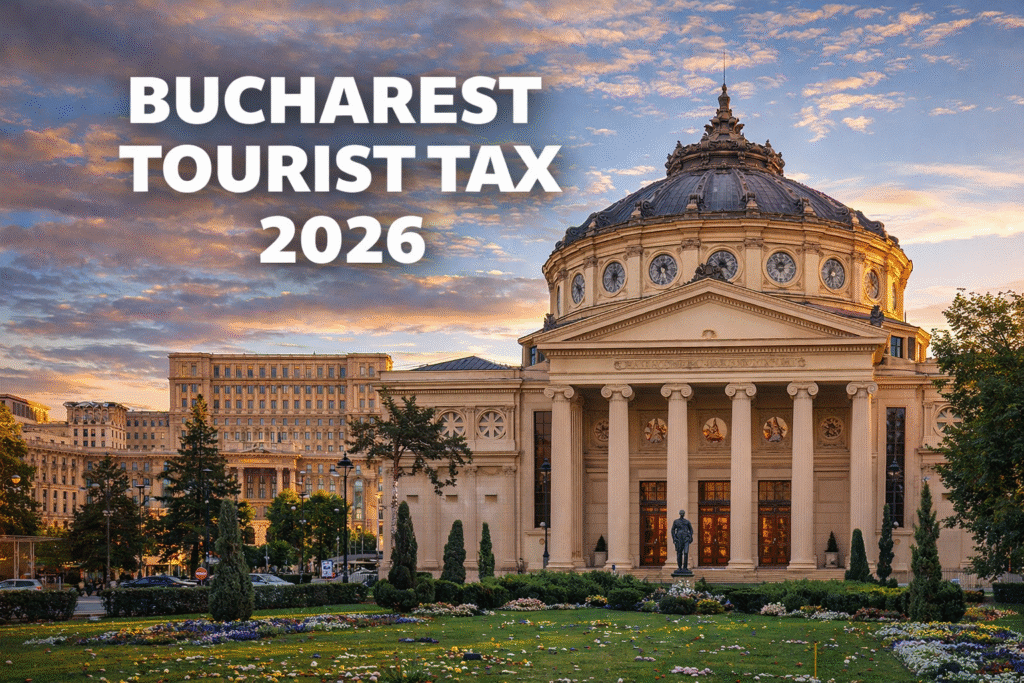
Bucharest is preparing for a major shift in its tourism strategy as Romania’s capital moves to introduce a new tourist tax starting in January 2026. The decision marks a bold step toward strengthening the city’s international profile and improving visitor services, positioning Bucharest as a more competitive destination among Europe’s leading capitals.
From 2026 onward, travelers staying overnight in Bucharest will pay a tourism levy of RON 10 per night, equivalent to approximately €2. The fee will be added to accommodation bills across all paid lodging types, including hotels, hostels, guesthouses, and short-term rentals. City authorities see the measure as a necessary investment in the long-term development of Bucharest’s tourism economy.
A Strategic Move to Boost Tourism Investment
The new tax was approved by Bucharest’s General Council in late 2025 and is designed to create a dedicated funding stream for tourism promotion and infrastructure improvements. Officials estimate the levy will generate around RON 15 million annually, funds that will be earmarked for marketing campaigns, visitor information services, cultural preservation, and the modernization of tourism facilities.
Bucharest has long been regarded as one of Eastern Europe’s most affordable capital cities, attracting travelers drawn to its mix of history, architecture, nightlife, and cultural life. City leaders believe that a modest visitor contribution will not deter demand, but instead support upgrades that enhance the overall travel experience and raise the city’s international visibility.
Aligning with European Tourism Trends
Tourist taxes are already common across Europe, particularly in major capitals where visitor numbers place pressure on infrastructure and public services. By introducing a nightly fee, Bucharest joins a growing list of cities that use tourism levies to fund destination management and promotion.
Local authorities argue that the tax will help the city compete more effectively with destinations that already benefit from strong global branding and sustained tourism investment. The goal is not only to attract more visitors but also to encourage longer stays, higher spending, and repeat travel.
Bucharest’s tourism strategy increasingly focuses on cultural tourism, city breaks, business travel, and events. Revenue from the new levy is expected to support targeted international campaigns that showcase the city’s historic Old Town, museums, green spaces, and expanding culinary and creative scenes.
Industry Reaction and Calls for Transparency
The announcement of the tax has sparked debate within Romania’s hospitality sector. Hotel operators and accommodation providers have expressed concerns over the speed of the decision and the lack of extensive consultation prior to approval. Industry groups have emphasized the importance of transparency in how the funds will be managed and allocated.
Hospitality leaders have warned that even small increases in costs can influence price-sensitive travelers, particularly those comparing destinations within Central and Eastern Europe. They have called on city authorities to clearly demonstrate how the levy will directly benefit tourism services, marketing, and infrastructure improvements.
Despite these concerns, many industry professionals acknowledge that reinvestment in tourism is necessary if Bucharest is to continue growing as an international destination. Clear reporting and visible improvements will be key to maintaining industry support.
What the Tax Means for Visitors
For most tourists, the RON 10 nightly fee will represent a relatively minor addition to overall travel costs. However, travelers staying several nights should factor the charge into their accommodation budgets. The tax will be collected by accommodation providers and integrated into booking systems, ensuring a straightforward process for visitors.
Authorities have emphasized that the levy is intended to enhance the visitor experience rather than create barriers to travel. Improvements funded by the tax are expected to include better tourist signage, upgraded visitor centers, digital tourism tools, and stronger promotion of cultural events and attractions.
As travelers increasingly seek destinations that offer quality experiences, safety, and accessibility, city officials believe that reinvestment will strengthen Bucharest’s appeal rather than diminish it.
Supporting Long-Term Tourism Growth
The new tourist tax forms part of a broader vision for Bucharest’s economic and urban development. Tourism plays a growing role in Romania’s capital, supporting jobs across hospitality, transport, culture, and retail sectors. By reinvesting visitor contributions, the city aims to create a more sustainable tourism model that benefits both residents and travelers.
Improved infrastructure and international promotion are expected to drive higher visitor numbers over time, increasing economic impact while distributing tourism more evenly across the city. This approach aligns with wider European efforts to balance tourism growth with urban quality of life.
Looking Ahead to 2026 and Beyond
As implementation approaches, city leaders are expected to outline detailed plans for how the revenue will be used and how results will be measured. Clear communication will be essential in building trust among businesses and visitors alike.
While the introduction of the tourist tax may initially face resistance, many observers see it as a necessary step toward modernizing Bucharest’s tourism sector. If managed effectively, the levy could help transform Romania’s capital into one of Europe’s most competitive and well-promoted city destinations.
By combining affordability with improved services, cultural investment, and stronger international marketing, Bucharest is signaling its ambition to move confidently onto the global tourism stage in 2026 and beyond.
For more travel news like this, keep reading Global Travel Wire