Venezuela’s tourism sector is facing one of its most severe crises in decades. Thousands of foreign tourists remain stranded as escalating conflict involving the United States disrupts air travel, maritime routes, and regional connectivity. What began as a geopolitical confrontation has now spilled into global tourism, affecting travelers across the Americas, Europe, and Asia.
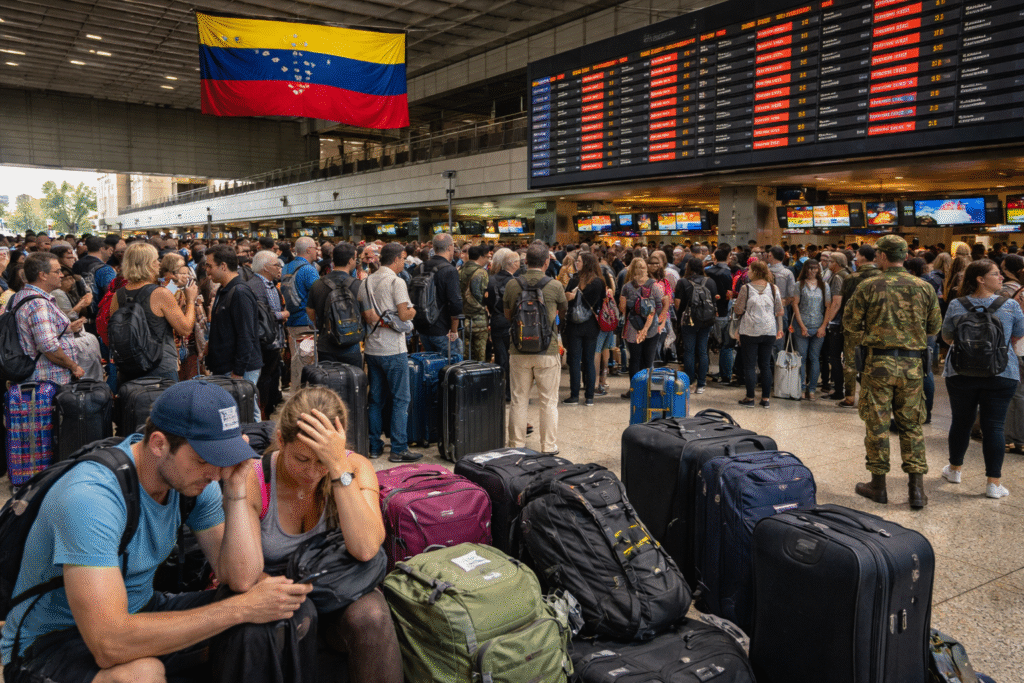
Airspace closures, flight suspensions, and security restrictions have left visitors unable to leave the country. Airports are overcrowded, transport options are shrinking, and uncertainty continues to grow with each passing day.
Airspace Closures Ground International Travel
The immediate trigger for the tourism breakdown came with the closure of Venezuelan airspace to several international carriers. Aviation authorities imposed strict restrictions following military developments in and around Caracas. These measures forced airlines to cancel or reroute flights at short notice.
Flights connecting North America, South America, and the Caribbean now face longer routes and limited availability. Airlines are prioritizing safety, but the result has been mass cancellations and missed connections. Tourists who expected smooth post-holiday returns now face indefinite delays.
Domestic flights within Venezuela have also suffered. Several routes to and from Caracas remain suspended, cutting off key exit points for visitors.
Airports Overwhelmed and Struggling to Operate
Venezuela’s main international gateways are operating under extreme pressure. Simón Bolívar International Airport has seen repeated delays, sudden cancellations, and long queues at security checkpoints. Power outages and staff shortages have slowed check-in, baggage handling, and security screening.
Passengers report confusion due to limited announcements and unreliable communication systems. Food outlets and airport shops have reduced operations, adding to traveler discomfort. Many tourists have spent days inside terminals waiting for updates that never arrive.
The post-Christmas travel surge has worsened the situation. Airports were already crowded before the conflict escalated, leaving little capacity to absorb disruptions of this scale.
Tourists Trapped With Limited Exit Options
Foreign tourists who entered Venezuela for holidays or business now find themselves trapped. Many arrived expecting short stays but now face extended accommodation costs, safety concerns, and dwindling resources.
Land borders into neighboring countries remain difficult to cross. Heightened security checks, delays, and restricted movement have slowed exits through Colombia and Brazil. Some travelers report being stopped at checkpoints or turned back due to unclear rules.
For many, commercial evacuation options do not exist. With embassies operating at reduced capacity or closed, travelers must rely on local authorities or private arrangements.
Cruise Tourism Feels the Impact
The crisis has also disrupted cruise tourism in the southern Caribbean. While most cruise ships do not dock in Venezuela, its coastline sits close to major cruise routes. As tensions rise, cruise operators have adjusted itineraries to avoid nearby waters.
Passengers face delayed departures, altered ports of call, or full cancellations. Cruise companies are prioritizing safety, but travelers lose planned destinations and shore experiences. Holiday cruise travelers have been among the hardest hit, with limited alternatives during peak season.
These disruptions affect not only passengers but also regional ports that depend on cruise tourism for revenue.
Regional Travel Ripple Effects Grow
The travel disruption extends far beyond Venezuela. Airports in Colombia, Panama, Miami, and parts of the Caribbean are dealing with stranded transit passengers. Rerouted flights are creating congestion across major hubs.
Tourism-dependent economies are preparing for losses as visitor confidence weakens. Travel advisories and uncertainty discourage new bookings. Hotels, tour operators, and airlines across Latin America face cancellations and revenue drops.
The timing adds to the strain. The crisis has unfolded during one of the busiest travel periods of the year, amplifying its economic and operational impact.
International Travelers Face Growing Uncertainty
Tourists from the United States, Canada, Mexico, Europe, Japan, and other regions remain affected. Many depend on complex international connections that no longer operate as planned. Rerouted journeys add hours or days to travel times, while some routes remain unavailable altogether.
Governments have urged citizens to avoid non-essential movement and stay informed. Evacuation planning remains challenging due to limited air access and security risks. Travelers face a fluid situation with few clear timelines.
The lack of reliable information has increased anxiety among tourists already dealing with logistical and financial stress.
Tourism Industry Under Severe Pressure
Venezuela’s tourism industry was already fragile before the conflict. This crisis now threatens long-term recovery. Hotels report rising cancellations. Tour operators struggle to manage stranded guests. Airlines face rising operational costs and reputational risks.
The situation highlights how quickly geopolitical tensions can destabilize tourism. Even countries not directly involved feel the consequences through disrupted networks and reduced traveler confidence.
What Lies Ahead for Venezuela Tourism
As the conflict continues, the outlook remains uncertain. Restoring airspace access and regional coordination will be critical for recovery. Until then, tourists must remain flexible, cautious, and prepared for sudden changes.
The Venezuela tourism crisis serves as a stark reminder of the vulnerability of global travel. In an interconnected world, conflict in one country can strand thousands and disrupt journeys far beyond its borders.
For more travel news like this, keep reading Global Travel Wire