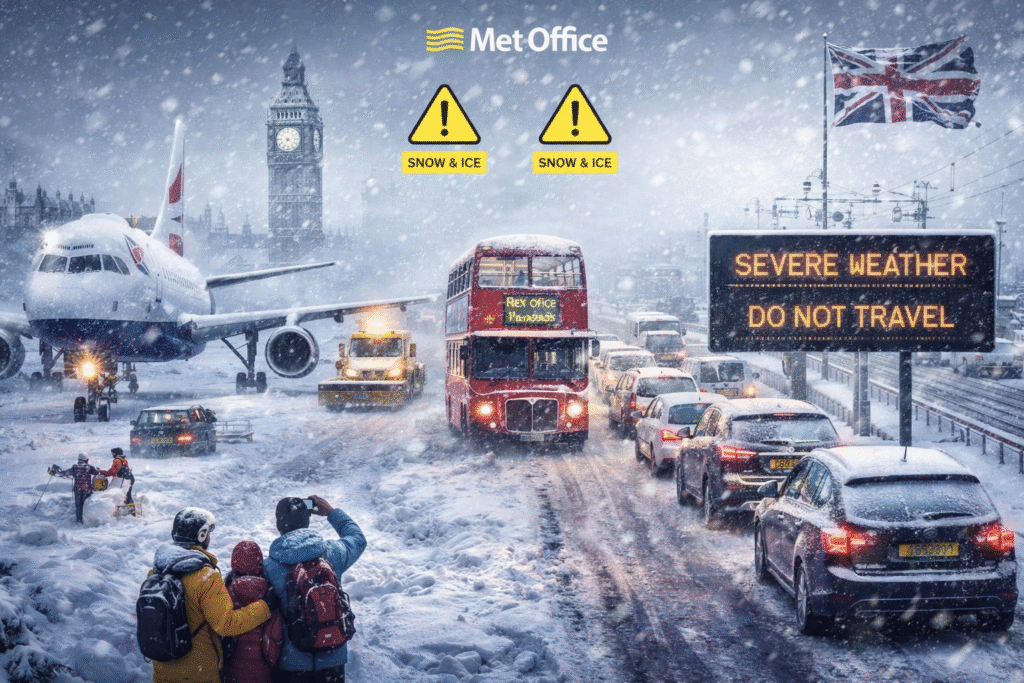
The United Kingdom is currently facing one of its most disruptive weather events in recent years as a severe snowstorm continues to impact travel and daily life across the nation. With heavy snowfall, plummeting temperatures, and widespread ice warnings, transport systems have been thrown into chaos. From grounded flights to blocked roads and delayed rail services, travellers are experiencing significant disruption.
The intense storm, sweeping from Scotland through to southern England and across Wales and Northern Ireland, has blanketed many regions with snow up to 40 centimetres deep. The Met Office has issued multiple weather warnings, urging caution and warning of further hazardous conditions expected to last into the beginning of next week.
National Weather Alerts in Effect
The Met Office has put much of the UK under yellow weather warnings for snow and ice, highlighting a high risk of slippery surfaces and difficult travel conditions. These warnings stretch across northern and western parts of England, as well as large areas of Wales, Northern Ireland, and most of Scotland.
Some highland areas in Scotland are already buried under thick snow, with up to 40 cm reported. Meanwhile, parts of England and Wales have received lighter accumulations of around 5 cm, enough to cause travel disruption and treacherous road conditions. Daytime temperatures have remained low, mostly in the single digits, while some regions are experiencing sub-zero conditions even during the day.
Overnight temperatures are expected to plummet further, dipping to -6°C to -8°C in northern Scotland, with rural regions in England and Wales possibly seeing lows around -4°C or colder. These icy conditions will significantly increase the risk of accidents on untreated roads, pavements, and cycle paths.
Travel Impact: Roads, Rail, and Air Affected
Transport services across the country have been severely affected. Motorists are encountering snow-covered and icy roads, making driving dangerous and slow. Key roads in both urban and rural areas have reported closures or gridlock conditions, with emergency services responding to accidents linked to black ice and reduced visibility.
Public transport is also struggling. Bus services in several cities have been suspended or rerouted, while railway operators are advising passengers to expect delays, reduced timetables, or cancellations due to frozen tracks and signalling issues.
Airports are grappling with flight delays and cancellations, particularly in regional hubs where snow clearance operations have slowed down air traffic. Some smaller airports have temporarily suspended operations due to runway conditions.
Key Areas of Disruption
- Road Closures and Delays: Major routes across Scotland, northern England, and parts of the Midlands have seen closures and bottlenecks. Local authorities are working to grit main roads, but minor roads remain untreated and hazardous.
- Train Service Interruptions: Rail operators have reported cancellations and delays on lines running through snow-affected regions. Frozen switches and blocked tracks are common.
- Flight Delays: Passengers are experiencing significant delays and some flights have been cancelled, particularly from regional airports. Travellers are urged to check with airlines before heading to the airport.
Public Safety and Travel Advice
Authorities are strongly advising people to limit travel unless absolutely necessary. Those who must venture out are encouraged to prepare for delays and bring emergency supplies such as warm clothing, water, snacks, and mobile phone chargers.
Motorists should check that their vehicles are winter-ready—ensuring tires are properly inflated, windows are defrosted, and fuel tanks are full. An emergency kit is also recommended, including:
- A thermal blanket or sleeping bag
- High-visibility vest
- De-icer and scraper
- Torch and extra batteries
- Warning triangle
- First aid kit
Pedestrians and cyclists are being advised to use main roads and walkways, which are more likely to be gritted. Icy patches remain a major hazard, especially in shaded or untreated areas.
Travel Tips During Snow Disruption
- Plan Ahead: Check weather forecasts and travel updates before leaving home.
- Leave Early: Allow extra time to reach destinations to avoid rushing.
- Use Main Roads: These are more likely to have been cleared or treated.
- Stay Informed: Monitor announcements from transport authorities and airlines.
- Delay Travel if Possible: Postpone non-essential journeys until conditions improve.
Emergency Services on Alert
Emergency services are on high alert as they respond to increasing numbers of traffic incidents and weather-related accidents. Local councils have deployed gritting vehicles and snow ploughs across key transport routes, although constant snowfall is making progress slow.
Hospitals and healthcare facilities are also advising people to only attend in emergencies due to difficulty in reaching medical centres during the storm.
Winter Weather Set to Continue
Meteorologists predict that snow showers and freezing temperatures will persist through the weekend and into the early part of next week. With further snowfalls possible, the public is urged to remain cautious and follow guidance from local authorities.
Looking Ahead
As the United Kingdom endures this fierce winter storm, the resilience of its infrastructure and public services is once again being tested. While the snow offers picturesque views and seasonal charm, it comes with serious travel risks and logistical challenges.
Travellers are advised to remain patient, prioritise safety, and stay prepared as conditions continue to evolve. With cooperation and caution, the nation can weather the storm and ensure the safety of its citizens and visitors alike.
For more travel news like this, keep reading Global Travel Wire