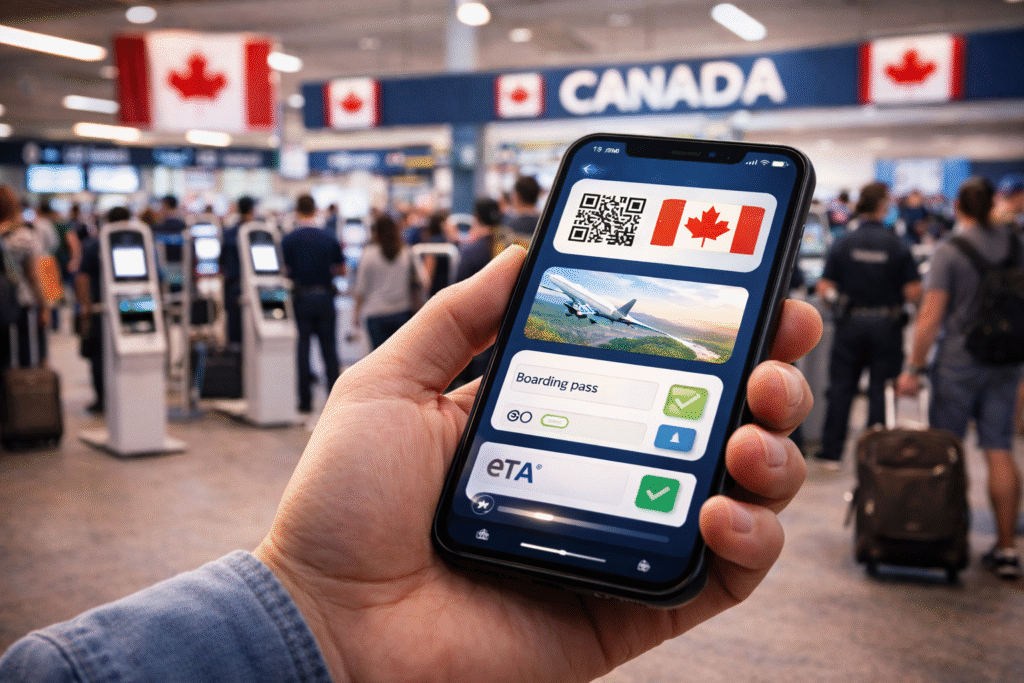
Canada is redefining travel in 2026. The country has embraced advanced technology across borders, airports, and transportation networks.
Federal agencies, airports, and tourism authorities share a unified vision. They aim to deliver faster travel, stronger security, and lower environmental impact.
The Government of Canada has prioritized digital transformation across travel and tourism. This strategy places Canada among the world’s most advanced travel markets.
Biometrics Reshape Border and Airport Experiences
Biometric technology now stands at the center of Canadian travel. Airports and border crossings use facial recognition to verify identity quickly.
Travelers move through checkpoints faster. Officers rely on automated systems that reduce manual document checks.
Canada’s traveler modernization program supports digital identities. Travelers submit documents before arrival, reducing processing time on entry.
The country plans to replace older trusted traveler programs such as NEXUS. Biometric credentials will deliver a unified and secure alternative.
Digital Travel Authorizations Simplify Entry
Canada continues upgrading its entry authorization systems. Visa-exempt travelers benefit from faster digital approvals.
The ArriveCAN platform now supports customs declarations and travel data submission. Travelers complete formalities before landing.
This digital-first approach reduces congestion at airports. It also improves accuracy during inspections.
Canada aligns with international digital border standards. These systems support seamless movement between trusted countries.
Airports Embrace Smart Passenger Technology
Canadian airports have invested heavily in passenger experience technology. New security scanners use advanced imaging systems.
Passengers keep laptops and liquids inside bags. Security lines move faster during peak travel periods.
Airports also deploy artificial intelligence to manage crowds. These systems adjust staffing and lane assignments in real time.
Biometric boarding gates now appear at major hubs. Airlines such as Air Canada use facial recognition to speed boarding.
Next-Generation Rail and Mobility Solutions
Canada is modernizing ground transportation alongside aviation. High-speed rail planning continues in the Québec City to Toronto corridor.
This corridor connects major population centers. Faster rail service offers a low-emission alternative to short flights.
The project remains under development. However, it signals long-term commitment to sustainable mobility.
Canada also explores future transport concepts. Hyperloop research continues through feasibility studies and academic partnerships.
These initiatives position Canada for long-term transportation leadership.
Artificial Intelligence Transforms Trip Planning
Artificial intelligence now plays a major role in Canadian travel systems. AI tools analyze traveler behavior and infrastructure data.
Travelers receive personalized recommendations based on preferences and timing. Systems adjust routes during disruptions.
Predictive analytics improve flight delay forecasting. Travelers gain clearer expectations and smoother journeys.
Tourism authorities also use data to manage destinations. Smart systems distribute visitor flows to reduce overcrowding.
This approach protects communities and enhances visitor satisfaction.
Digital Borders Create Seamless Travel
Canada continues building an integrated digital border ecosystem. Travel authorization, identity verification, and screening now connect seamlessly.
Digital credentials replace paper-heavy processes. Travelers experience fewer checkpoints and shorter wait times.
Security agencies benefit from stronger risk assessment tools. Automated systems flag concerns before arrival.
This structure improves both security and efficiency. Canada sets a model for future border systems worldwide.
Sustainability Drives Every Innovation
Canada places sustainability at the core of travel transformation. The country expands electric vehicle infrastructure nationwide.
Tourists find more charging stations along highways and in cities. Electric rental cars now offer practical options.
Public transit systems continue transitioning to low-emission fleets. Rail investments further reduce aviation reliance.
Tourism authorities promote responsible travel practices. Smart systems help protect natural and cultural sites.
These efforts align with national climate goals and global sustainability commitments.
Research Shapes the Future of Travel
Canada invests heavily in research that supports future travel systems. Universities and technology firms explore secure digital communication.
Quantum research aims to protect data integrity. These advances support digital borders and financial transactions.
Canadian innovation also supports health security. Predictive analytics platforms monitor global risks and travel trends.
Such tools may guide future travel advisories and response planning.
A New Era for Travelers in Canada
Canada’s 2026 travel transformation reflects long-term vision. Technology enhances safety, efficiency, and environmental responsibility.
Travelers move faster through borders and airports. Digital systems reduce uncertainty and stress.
Sustainable transport options expand across the country. Visitors enjoy cleaner and more connected journeys.
Canada has positioned itself as a global leader in smart tourism. The 2026 travel experience reflects innovation with purpose.
For travelers worldwide, Canada offers a glimpse into the future of modern travel.
For more travel news like this, keep reading Global Travel Wire