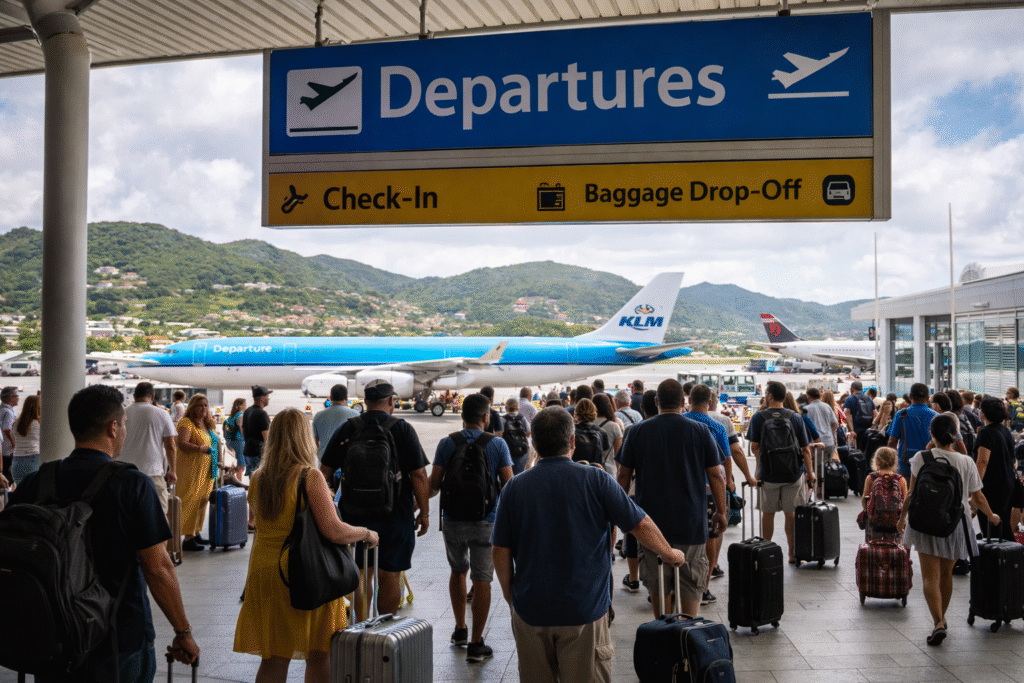
Princess Juliana International Airport in St. Maarten has returned to normal operations. Flight schedules have stabilized after several days of regional disruption. Airport authorities confirmed full operational status beginning January 4, 2026. However, travelers should expect heavier passenger volumes as airlines clear backlogs.
Disruptions Triggered by Regional Airspace Restrictions
The disruption began on January 3, 2026. Authorities imposed temporary airspace restrictions across parts of the Caribbean. The action followed heightened regional security developments involving Venezuela. These restrictions forced airlines to ground hundreds of flights across the region.
Caribbean Airports Felt Immediate Impact
Princess Juliana Airport faced immediate operational challenges. Flights to and from key Caribbean hubs stopped abruptly. Airports in Puerto Rico, Aruba, St. Thomas, and neighboring islands also faced closures. Travelers experienced cancellations, missed connections, and overnight delays.
Airport Authorities Activate Recovery Measures
Airport management responded quickly to stabilize operations. Teams coordinated with airlines, air traffic controllers, and regional authorities. Ground staff adjusted schedules to support returning flights. Passenger services expanded to handle increased demand once operations resumed.
Operations Resume on January 4
Princess Juliana Airport reopened fully at 7:00 AM on January 4, 2026. Aircraft movements resumed across domestic and international routes. Airlines restarted scheduled services throughout the day. Despite the reopening, recovery traffic increased congestion.
Why Passenger Traffic Remains High
Passenger volume remains higher than normal due to rescheduled travel. Many travelers postponed trips after cancellations. Others rebooked flights within a short recovery window. Airlines also consolidated flights to manage capacity constraints.
Airlines Adjust Schedules to Clear Backlogs
Airlines continue adjusting schedules during recovery. Some carriers added extra sections to move stranded passengers. Others prioritized long-haul connections first. These adjustments create temporary bottlenecks at check-in and security areas.
What Travelers Should Expect at the Airport
Passengers should prepare for longer wait times. Check-in counters may experience crowding during peak hours. Security screening queues may move slower than usual. Baggage handling teams continue operating at elevated capacity.
Key Advice for Departing Passengers
Passengers with confirmed tickets should arrive on time. Early arrival helps reduce stress during busy periods. Travelers should confirm flight status before leaving for the airport. Airline notifications provide the most accurate updates.
Guidance for Disrupted Travelers
Passengers affected by earlier cancellations should contact airlines directly. Travelers without confirmed rebookings should avoid traveling to the airport. Airline customer service teams can assist with alternative arrangements. This approach helps reduce terminal congestion.
Travel Waivers Provide Rebooking Flexibility
Airlines have introduced temporary travel waivers. Passengers impacted between January 3 and January 6 may rebook without fare penalties. Rebooking remains available through January 9, 2026. The waiver covers multiple Caribbean destinations.
Destinations Included in Rebooking Options
The waiver applies to travel involving San Juan, St. Thomas, Aruba, Bonaire, and Curaçao. Additional coverage includes Antigua, Barbados, Grenada, St. Kitts, St. Vincent, and St. Lucia. These destinations experienced similar disruptions during the airspace closure.
How the Airport Manages Passenger Flow
Airport teams remain deployed across all terminals. Additional staff support security, immigration, and baggage services. Signage and announcements guide passengers through busy areas. Coordination with airlines continues throughout the day.
Safety and Service Remain Top Priorities
Airport leadership emphasizes safety and efficiency. All recovery measures follow aviation safety standards. Passenger comfort remains a central focus. Emergency services remain on standby during peak traffic periods.
Impact on St. Maarten Tourism
Tourism plays a vital role in St. Maarten’s economy. Short-term disruptions affected hotel arrivals and cruise connections. Tour operators adjusted schedules to accommodate delays. The recovery supports the return of normal visitor flows.
Regional Aviation Shows Gradual Stabilization
Air traffic across the Caribbean continues stabilizing. Most airports have resumed full operations. Residual delays may persist for several days. Airlines continue monitoring regional airspace conditions.
What Travelers Can Do to Reduce Stress
Travelers should remain flexible during recovery. Packing essentials in carry-on bags helps during delays. Staying informed reduces uncertainty. Patience remains essential during high-traffic recovery periods.
Outlook for the Coming Days
Airport officials expect traffic levels to normalize soon. Airlines will complete backlog clearance within days. Passenger volumes should gradually return to seasonal averages. Weather and regional conditions will influence recovery speed.
Final Takeaway for Caribbean Travelers
Princess Juliana International Airport has restored normal operations. High passenger traffic reflects ongoing recovery from regional disruptions. Travelers should confirm flights and allow extra time. With cooperation and planning, travel through St. Maarten should remain smooth as recovery continues.
For more travel news like this, keep reading Global Travel Wire