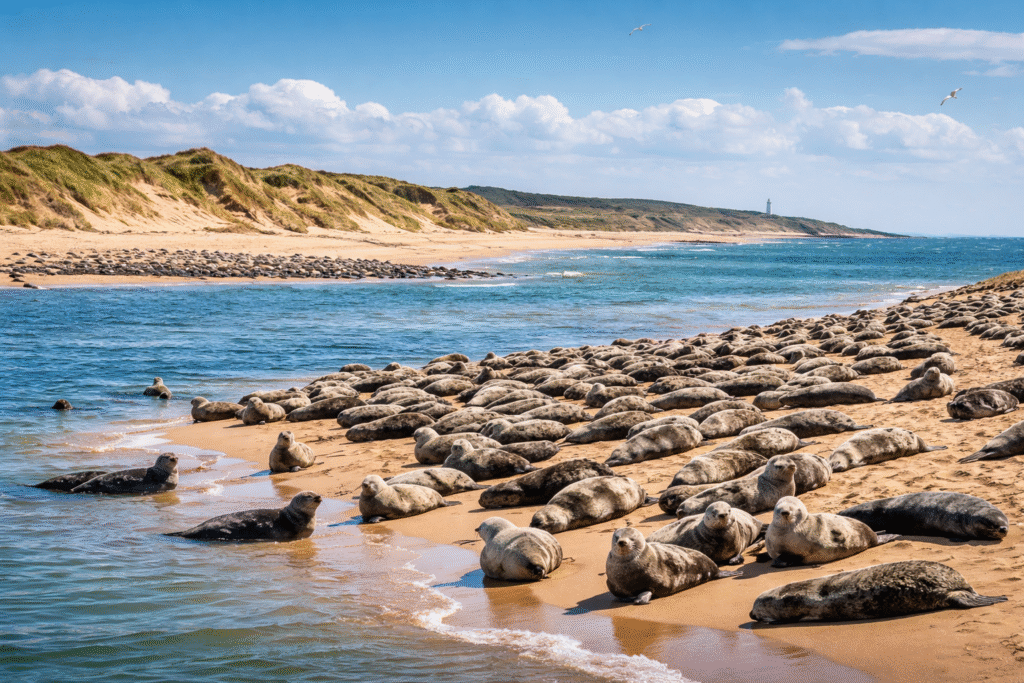
Newburgh Beach in Aberdeenshire is fast gaining recognition as one of Scotland’s most distinctive wildlife tourism destinations, offering visitors a rare opportunity to observe seals in their natural coastal habitat. What sets this location apart from other seal-watching spots is not just the scale of its seal population, but the innovative use of artificial intelligence to balance conservation with growing visitor interest. As global demand for ethical and sustainable travel rises, Newburgh Beach is positioning itself as a forward-looking model for the future of wildlife tourism.
Stretching along the rugged northeast coast of Scotland, Newburgh Beach is home to large numbers of grey and common seals that haul out on its sands throughout the year. The beach’s expansive dunes and tidal flats provide an ideal environment for these marine mammals, making sightings frequent and accessible without the need for boats or intrusive activities. For tourists, this means a rewarding wildlife experience that feels authentic, calm, and deeply connected to nature.
Beyond its appeal to visitors, Newburgh Beach holds major scientific and ecological importance. The area has long been recognised as a key site for studying seal behaviour, breeding patterns, and population health. Researchers and conservation specialists have used the beach to better understand how seals interact with their environment and how external pressures, including tourism and climate change, influence their wellbeing. As visitor numbers increase, ensuring that tourism does not disturb these sensitive animals has become a priority.
This is where artificial intelligence has begun to play a transformative role. Researchers working in the area are increasingly using AI-powered monitoring systems to analyse seal populations more efficiently and accurately than ever before. Traditional wildlife surveys often require long hours of manual observation and data processing. AI significantly reduces this workload by rapidly analysing images and video footage collected from fixed observation points.
Through AI-based analysis, scientists can monitor seal numbers, track movement patterns, and measure how long seals remain ashore. The technology can also detect subtle behavioural changes that might indicate stress or disturbance. These insights allow conservation teams to assess how human presence affects the seals and to adjust visitor management strategies accordingly. In simple terms, AI helps ensure that seals remain protected even as tourism grows.
For visitors, the integration of technology into conservation efforts enhances the overall experience. Seal-watching at Newburgh Beach is increasingly framed as an educational activity rather than a passive sightseeing stop. Visitors gain a deeper understanding of seal behaviour, marine ecosystems, and the importance of responsible tourism. Interpretive signage, guided talks, and community-led initiatives informed by research findings help transform a beach visit into a meaningful learning opportunity.
This approach reflects a wider shift in Scotland’s tourism strategy, which emphasises sustainability, environmental stewardship, and community benefit. Rather than focusing on high-volume tourism, destinations like Newburgh Beach aim to attract visitors who value nature, conservation, and low-impact travel. By doing so, the area supports local economies while preserving the natural assets that make it special in the first place.
Looking ahead, the use of AI at Newburgh Beach could influence wildlife tourism practices far beyond Aberdeenshire. As destinations worldwide face the challenge of protecting fragile ecosystems while meeting tourism demand, data-driven technologies are becoming essential tools. AI enables faster decision-making, better resource allocation, and more responsive conservation strategies, all of which are critical in sensitive wildlife areas.
Newburgh Beach also demonstrates how tourism and science can work together for mutual benefit. Visitor interest helps justify continued research investment, while scientific findings improve the quality and sustainability of the visitor experience. This symbiotic relationship strengthens the case for responsible wildlife tourism as a driver of both economic growth and environmental protection.
The broader impact on the wildlife tourism sector could be significant. As travellers become more conscious of their environmental footprint, destinations that can demonstrate genuine conservation commitments are likely to gain a competitive advantage. AI-powered monitoring offers transparency and credibility, reassuring visitors that their presence is not harming the wildlife they have come to admire.
In the long term, Newburgh Beach has the potential to become an international reference point for eco-tourism innovation. Its combination of rich natural biodiversity, cutting-edge technology, and sustainable visitor management provides a blueprint for other coastal and wildlife destinations. By proving that tourism, technology, and conservation can coexist, Newburgh Beach is helping to shape a more responsible future for the global travel industry.
As eco-tourism continues to grow, places like Newburgh Beach will play an increasingly important role in redefining how people interact with nature. Through thoughtful planning and intelligent use of technology, this Aberdeenshire coastline is showing that protecting wildlife and welcoming visitors do not have to be opposing goals. Instead, they can work together to create tourism experiences that are enriching, ethical, and sustainable for generations to come.
For more travel news like this, keep reading Global Travel Wire