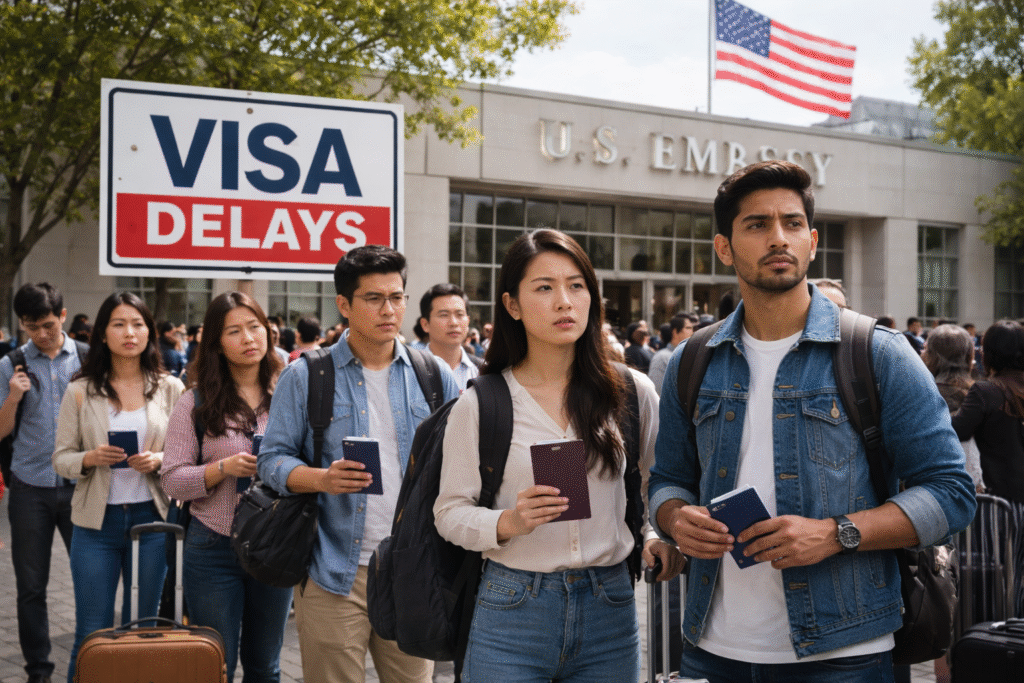
International travel to the United States has become more challenging for millions of travelers across Asia. Thailand and India now join China, South Korea, Japan, Indonesia, Malaysia, Bangladesh, and several other nations in facing major US visa delays. Stricter screening rules, deeper background checks, and expanded social media scrutiny are reshaping how travelers plan visits for tourism, education, and business.
The latest changes in US non-immigrant visa processing have triggered long appointment backlogs at American consulates. High-demand countries now see waiting periods stretching from weeks to many months. These delays affect tourists, students, skilled workers, and corporate travelers alike.
Why the US Tightened Visa Regulations
The US government has revised visa policies to strengthen border security and protect immigration integrity. Authorities now apply more rigorous applicant screening before issuing non-immigrant visas.
Key policy shifts include enhanced identity verification, deeper background reviews, and closer examination of online behavior. These measures apply across several visa types, including tourist, student, exchange, and work categories.
Officials say the changes aim to improve risk assessment. However, the immediate outcome has been widespread processing delays across Asia.
Expanded Social Media Screening Raises New Concerns
One of the most significant changes involves social media scrutiny. Visa applicants must now disclose online identifiers used on major platforms. Officers may request public access to accounts to assess digital behavior.
This step adds time to application reviews and raises privacy concerns among travelers. Many applicants now face additional questioning related to online activity, affiliations, and past public posts.
The added layer of screening slows approvals and increases the likelihood of administrative processing.
Third-Country Visa Stamping No Longer Reliable
For years, travelers avoided long queues at home by applying for US visa stamps in third countries. That option has now narrowed sharply.
US consulates restrict or suspend third-country visa stamping for many non-immigrant categories. Applicants must often return to their home country to complete the process.
This policy change places heavy pressure on already busy embassies in India, China, Thailand, and Bangladesh. It also removes flexibility for frequent travelers and multinational workers.
Asia Faces Uneven but Widespread Delays
Visa delays now affect nearly every major Asian travel market. Countries with large outbound travel volumes face the steepest backlogs.
India reports some of the longest waits, particularly for visitor and skilled worker visas. In major cities, appointment availability extends far into the future. China experiences moderate tourist visa delays, while petition-based visas often require additional processing time.
Bangladesh and Pakistan face long queues for visitor visas, while Gulf-based applicants experience spillover effects from restricted stamping options. Southeast Asian nations, including Thailand, Indonesia, and the Philippines, report growing wait times as demand rebounds.
Even traditionally faster-processing locations such as Japan and South Korea now face noticeable delays.
Impact on Tourism, Education, and Business Travel
The visa slowdown affects more than paperwork. Tourism flows to the US risk disruption as travelers delay or cancel trips. Families planning vacations face uncertainty over approval timelines.
Students applying for academic programs must now factor in longer processing windows. Missed intake deadlines and deferred admissions are becoming more common.
Business travel also suffers. Skilled professionals face postponed work start dates, while companies struggle to plan international assignments. Conferences, trade events, and corporate meetings feel the ripple effect.
Pressure Builds on US Consulates
US embassies across Asia operate under heavy workloads. Increased application volumes, combined with stricter vetting, stretch staffing and resources.
Officers must review more documents, conduct longer interviews, and complete additional security checks. Limited appointment slots worsen backlogs, especially in high-demand cities.
Operational challenges continue as travel demand rebounds after global disruptions.
Travelers Adjust Plans and Expectations
As delays persist, travelers adjust strategies. Many now apply earlier than ever and prepare for longer timelines. Some explore alternative destinations for study, tourism, or business expansion.
Travel advisors urge applicants to ensure accurate documentation and transparent online profiles. Small errors can trigger administrative processing and further delays.
Flexibility has become essential for anyone planning US travel in 2025 and beyond.
What Lies Ahead for US-Bound Travelers
The US visa environment remains complex and uncertain. While security-driven policies show no sign of easing, authorities continue refining procedures to manage demand.
Travelers from Thailand, India, and across Asia must plan well in advance. Realistic timelines, careful preparation, and patience now define the US visa journey.
As global mobility evolves, these changes mark a turning point in how international travelers access the United States.
For more travel news like this, keep reading Global Travel Wire