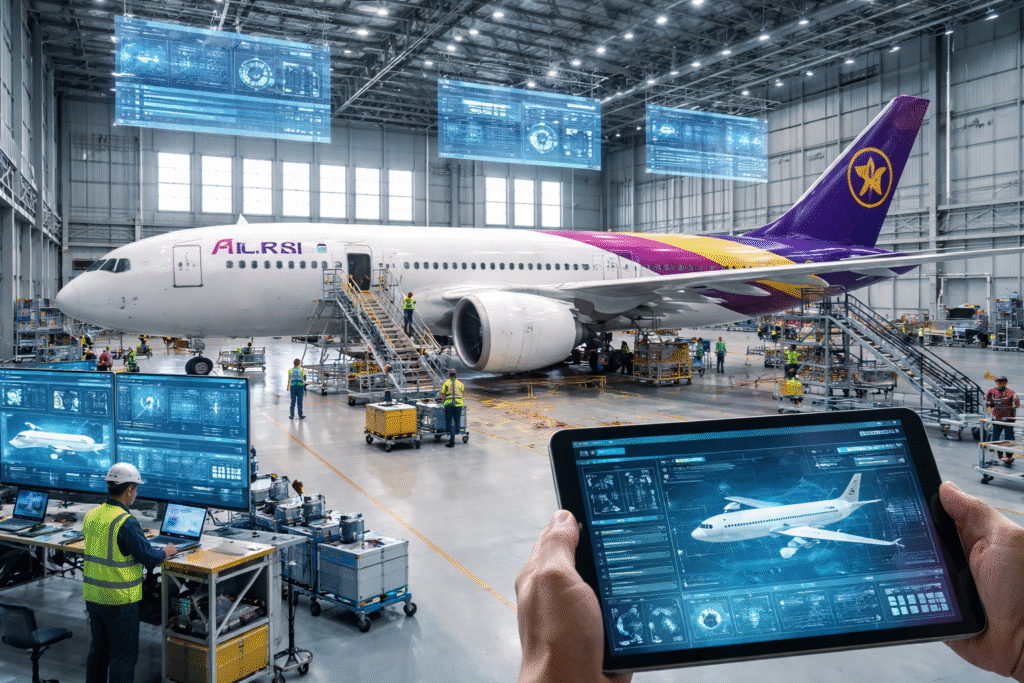
Thai Airways has taken a decisive step toward modernizing its aircraft maintenance ecosystem with a large-scale digital transformation of its Maintenance, Repair and Overhaul (MRO) operations. The initiative signals a renewed focus on operational efficiency, safety, sustainability, and long-term fleet resilience as the airline strengthens its position in a highly competitive global aviation market.
The transformation introduces advanced digital tools to replace legacy systems and manual workflows. This shift reflects a broader aviation industry trend, where airlines increasingly rely on data-driven systems to manage complex fleets, reduce downtime, and enhance reliability.
Digital-First Strategy to Strengthen MRO Operations
At the core of the initiative is the deployment of an enterprise-grade digital MRO management platform designed to centralise and streamline maintenance processes. The new system integrates maintenance planning, inventory control, engineering data, compliance tracking, and real-time reporting into a single digital environment.
This unified approach gives Thai Airways engineers and maintenance teams instant access to critical aircraft data. Staff can now retrieve records, log tasks, and track maintenance status from multiple locations, improving coordination across departments and stations worldwide.
The digital-first strategy reduces dependency on paper-based documentation. It also improves data accuracy and speeds up decision-making across maintenance cycles.
Automation Brings Faster Turnarounds and Higher Accuracy
Automation plays a key role in the new MRO framework. Routine tasks that once required manual input now run through automated workflows. These include defect reporting, task scheduling, parts tracking, and compliance checks.
By reducing manual intervention, Thai Airways lowers the risk of human error. Engineers can focus more on technical execution rather than administrative processes. Faster data processing also leads to shorter aircraft ground times, improving fleet utilisation and schedule reliability.
The airline expects improved turnaround times, particularly during line maintenance and scheduled checks, which directly supports smoother flight operations.
Advanced Maintenance Forecasting Enhances Fleet Availability
Alongside core MRO digitisation, Thai Airways has introduced advanced maintenance forecasting tools to support long-term planning. These systems analyse aircraft usage, component life cycles, and historical performance data to predict future maintenance needs with higher accuracy.
Improved forecasting helps the airline plan heavy maintenance events well in advance. This reduces operational disruption and ensures aircraft availability aligns with network demand. Better planning also helps optimise hangar capacity and workforce deployment.
As a result, Thai Airways can balance safety requirements with commercial priorities more effectively.
Artificial Intelligence Improves Maintenance Decision-Making
Artificial intelligence has become a central feature of the digital transformation. AI-powered analytics assist in defect resolution, trend analysis, and maintenance prioritisation.
These tools identify recurring issues, flag potential risks, and recommend corrective actions before problems escalate. Predictive insights allow maintenance teams to act proactively instead of reactively.
AI-driven automation also accelerates workflow approvals and task assignments. This shortens response times and improves overall maintenance reliability.
Cloud-Based Systems Enable Scalability and Flexibility
The new digital architecture operates on secure cloud-based infrastructure. This setup allows Thai Airways to scale its systems as fleet size, aircraft types, or operational demands change.
Cloud access ensures consistent system performance across international stations. It also supports future technology integration, including new aircraft platforms and regulatory updates.
The flexible design ensures that the airline remains agile as aviation technology and maintenance standards evolve.
Supporting Sustainability and Environmental Goals
Digitalisation also supports Thai Airways’ sustainability objectives. Reducing paper usage lowers resource consumption and waste. More efficient maintenance planning reduces unnecessary component replacements and optimises fuel efficiency by keeping aircraft in peak condition.
Improved reliability leads to fewer delays and cancellations, which further reduces environmental impact across the network.
Sustainability has become a critical priority for global airlines, and digital MRO solutions play a growing role in meeting environmental commitments.
Strengthening Safety and Regulatory Compliance
Safety remains the foundation of all aviation operations. The digital MRO system enhances regulatory compliance by ensuring accurate record-keeping and real-time audit readiness.
Maintenance data remains securely stored and easily retrievable for inspections and certifications. Automated alerts help teams stay ahead of compliance deadlines and service intervals.
This structured approach supports international aviation standards and strengthens operational oversight.
A Strategic Step Toward Long-Term Competitiveness
Thai Airways’ digital transformation represents more than a technology upgrade. It reflects a strategic commitment to modern aviation practices and long-term operational excellence.
By investing in advanced MRO systems, the airline improves fleet reliability, reduces costs, and enhances passenger confidence. Efficient maintenance directly supports on-time performance and service quality, both critical for brand reputation.
As global travel demand continues to recover and evolve, airlines with strong digital foundations will gain a competitive edge.
Setting a Benchmark for Airline Maintenance Modernisation
The transformation of Thai Airways’ MRO operations highlights the growing importance of digital innovation in aviation. Modern airlines must manage increasingly complex fleets while meeting strict safety, efficiency, and sustainability standards.
With this initiative, Thai Airways positions itself as a forward-looking carrier ready to meet future challenges. The airline’s investment in technology-driven maintenance ensures stronger operational performance and supports its broader growth ambitions in the global aviation landscape.
For more travel news like this, keep reading Global Travel Wire