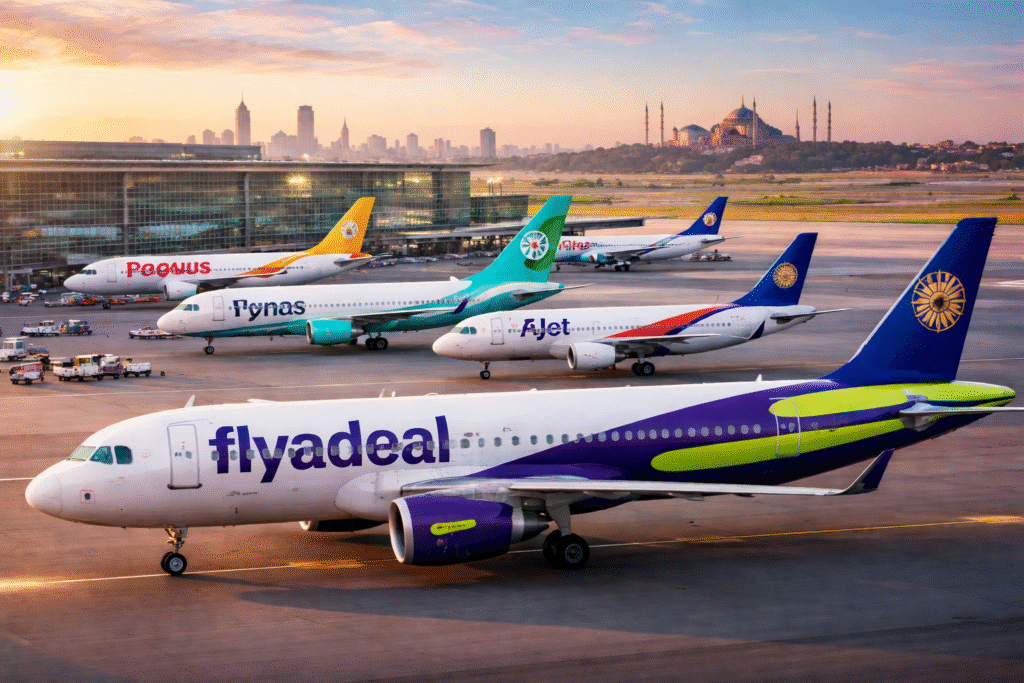
Middle Eastern and Turkish carriers are preparing for a major shift in regional aviation. Flyadeal, AJet, Flynas, Pegasus, Air Samarkand, and others are set to reshape travel between Saudi Arabia and Turkey. Their combined expansion provides more affordable choices, stronger route networks, and smoother tourism flows. Travelers stand to benefit from added frequencies, competitive pricing, and improved airport access.
The year 2026 marks a turning point as low-cost carriers gain influence, while legacy airlines continue to serve premium passengers. This dual-track approach strengthens both tourism and business travel between the two countries.
Flyadeal Takes the Lead with New Istanbul Sabiha Gökçen Flights
Flyadeal is at the center of the 2026 transformation. The Saudi budget carrier has confirmed new direct flights linking Jeddah and Madinah to Istanbul Sabiha Gökçen Airport. Operations begin in January 2026. These routes introduce long-awaited affordable access for Saudi travelers heading to Türkiye’s most visited city.
Flyadeal’s model prioritizes low fares and efficient turnarounds. At the same time, it upholds reliable onboard services for passengers who want value without paying premium prices. With this launch, Flyadeal becomes the first Saudi budget airline to open direct links to Istanbul SAW from two major Saudi cities.
Flynas Strengthens Competition with Existing Istanbul Services
Flynas will continue to operate flights between Jeddah and Istanbul Sabiha Gökçen in 2026. The airline has built a loyal customer base through flexible fare classes, including both economy and premium offerings. Although Flynas has not yet announced Madinah departures to SAW, its ongoing Jeddah presence signals persistent demand.
Flynas and Flyadeal now form a Saudi low-cost duo, poised to challenge legacy carriers and stimulate price competition across popular routes.
Pegasus and AJet Expand Turkish Low-Cost Options
On the Turkish side, Pegasus Airlines remains a major player on the Jeddah–Istanbul SAW route. Travelers favor Pegasus for its cabin upgrade options, baggage flexibility, and extensive route network beyond Istanbul. With higher connectivity across Europe and Central Asia, Pegasus becomes a practical choice for travelers seeking onward connections.
AJet, formerly operating as a Turkish charter carrier, is also expanding capacity. Its Jeddah–SAW services target group travelers, tour operators, and leisure segments. Charter airlines often deliver more customized schedules, creating flexibility for seasonal tourism peaks such as summer holidays and school breaks.
Air Samarkand Eyes Istanbul Potential as Regional Tourism Climbs
Air Samarkand, a rising Uzbek carrier, is signaling interest in expanding toward Istanbul in the near future. While not yet confirmed for Saudi routes, Istanbul remains a strategic gateway for Central Asian airlines due to strong cultural ties, tourism demand, and business travel. If Air Samarkand introduces direct Jeddah–SAW flights, passengers will gain new alternatives for multiregional itineraries that combine pilgrimage travel, trade, and tourism.
Middle Eastern Legacy Airlines Continue to Serve Premium Demand
As low-cost carriers grow, legacy airlines such as Flydubai, Qatar Airways, Etihad Airways, and Emirates remain influential. Their hubs support luxury cabins, regional lounges, and expansive global networks. While these carriers currently focus on Istanbul’s main airport or other strategic hubs, their presence ensures premium travelers retain upgraded service standards and long-haul connection options.
Turkish Airlines Maintains Wide Network Through Istanbul IST
Turkish Airlines continues to dominate Istanbul’s airspace with one of the world’s largest route networks. Its primary focus remains Istanbul Airport (IST). Travelers flying from Saudi Arabia can still connect to Istanbul SAW via short transfers. While not directly targeting the SAW market for 2026 expansions, Turkish Airlines strengthens the region’s long-haul access and tourism flows.
Why These Routes Matter for Tourism and Vision 2030
The Saudi–Turkey corridor is more than a leisure market. It contributes to regional tourism, business relations, and cultural exchange. Saudi Arabia’s Vision 2030 initiative aims to welcome tens of millions of international tourists annually. Affordable flights support this national strategy by enabling easier inbound and outbound travel.
Turkey remains one of the world’s most visited tourism destinations. Istanbul alone attracts millions each year for shopping, history, food culture, and leisure experiences. New routes make weekend trips, package vacations, and business visits more feasible.
Economic Impact and New Travel Behavior
Growing competition pushes fares down and increases seat availability. Businesses gain improved logistics and broader options for meetings and trade. Tourism operators on both sides are expected to benefit from package deals and group travel demand.
With younger travelers prioritizing affordability, low-cost connectivity aligns with shifting travel preferences. Flexible booking, digital check-in, and no-frills pricing are becoming standard expectations.
A New Era of Saudi–Turkish Air Travel
The 2026 flight expansions mark the beginning of a more connected era. Flyadeal, Flynas, Pegasus, AJet, and others are turning the Saudi–Turkey market into one of the most dynamic aviation corridors in the region. Passengers will enjoy more choices, better pricing, and faster travel times. Both nations stand ready to secure long-term tourism and economic benefits through enhanced air connectivity.
For more travel news like this, keep reading Global Travel Wire