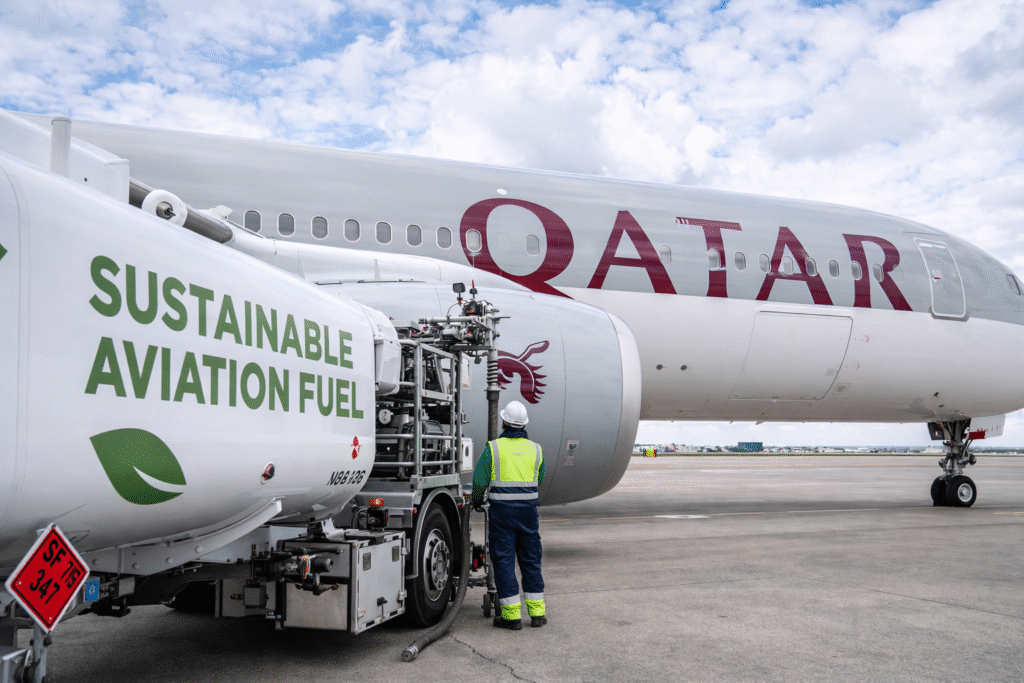
The global aviation industry is entering a transformative chapter as Sustainable Aviation Fuel gains momentum in international climate strategies. In a major development supporting this transition, Paul Griffiths, CEO of Dubai Airports, has been appointed CEO Champion of the Sustainable Markets Initiative’s SAF Pathfinder Initiative. His appointment marks an important milestone in the worldwide push toward reducing aviation emissions and fostering a more sustainable travel ecosystem.
Aviation forms the backbone of modern tourism, connecting travelers, destinations and hospitality economies across every continent. As the tourism sector rebounds, climate concerns have intensified the need for cleaner skies. Sustainable Aviation Fuel, commonly referred to as SAF, is emerging as the most promising near-term solution for decarbonizing flight operations. SAF can reduce lifecycle emissions by as much as 80% compared to conventional jet fuel, depending on feedstock and production technology. It allows airlines to cut emissions without modifying existing aircraft engines or infrastructure, making it a highly practical pathway for greener aviation.
Paul Griffiths Takes a Global Leadership Role
Paul Griffiths’ appointment underscores international recognition of the urgent need to scale SAF production and adoption. With long-standing experience guiding one of the world’s busiest aviation hubs, Griffiths brings both operational insight and strategic influence to the initiative. Dubai Airports manages thousands of weekly flights and millions of international passengers, all of whom represent the tourism flows and economic opportunities tied to sustainable aviation development.
Despite SAF’s promise, it currently represents less than 1% of global jet fuel usage. Commercial production remains limited by cost, supply chain complexity and regulatory gaps. Griffiths’ leadership through the SAF Pathfinder Initiative aims to address these systemic challenges by uniting airlines, fuel producers, financial institutions, airport operators and policymakers under a coordinated global framework.
A Global SAF Framework to Fuel Tourism’s Green Transition
The SAF Pathfinder Initiative will focus on mobilizing investment, stimulating market demand and encouraging supportive policy environments that enable SAF to scale. Expanding SAF production requires new infrastructure, technology investments, feedstock supply chains and financial models that reduce cost barriers. The Initiative also seeks to harmonize certification standards, enabling airlines to operate more sustainably across borders without navigating fragmented regulatory systems.
Such efforts will directly influence tourism sustainability. As destinations implement climate strategies and travelers increasingly value eco-conscious options, airlines that operate on lower-emission fuels stand to gain competitive advantage. Several national tourism boards have already integrated aviation sustainability into their long-term policy frameworks, acknowledging that decarbonizing air transport is essential for maintaining international visitor confidence.
Dubai Airports’ Sustainability Performance Strengthens the Mission
Paul Griffiths’ leadership in sustainability extends beyond his advisory roles. Dubai Airports has earned international recognition for environmental performance, including Level 4 “Transformation” accreditation from Airports Council International. Only a small percentage of airports worldwide have achieved this distinction, highlighting the depth of sustainability improvements implemented at Dubai International Airport and Dubai World Central.
These improvements include reducing emissions from ground operations, investing in biodiesel-compatible vehicle fleets and implementing energy-efficient airport infrastructure projects. Dubai Airports has also worked closely with airline partners to encourage the adoption of more efficient flight procedures that cut fuel burn and emissions during takeoff, landing and taxi operations.
These achievements position Griffiths as a credible advocate for scaling SAF within a global aviation network, reflecting both operational commitment and industry influence.
SAF as a Catalyst for Decarbonizing Global Tourism
The aviation sector has committed to achieving net-zero carbon emissions by 2050, a target endorsed by major international aviation organizations. Achieving this goal requires rapid emission reductions through efficiency measures, as well as alternative fuels like SAF. While long-term technologies such as hydrogen-powered aircraft and electric aviation are advancing, they require new aircraft designs and infrastructure, making them medium- to long-term solutions. SAF, by contrast, can be deployed today.
For the tourism sector, SAF offers a reliable pathway to reconcile the need for global connectivity with climate responsibility. Tourism-dependent economies — including island nations, long-haul destinations and emerging tourism markets — stand to benefit from sustainable aviation, as many rely heavily on international air traffic for revenue and employment.
Looking Ahead: A Turning Point for Sustainable Travel
Jennifer Jordan-Saifi, CEO of the Sustainable Markets Initiative, has stressed the importance of SAF in global decarbonization efforts, noting that its adoption also supports broader sustainable investment and innovation goals. With Griffiths at the helm of the SAF Pathfinder Initiative, momentum is expected to increase as governments, investors and airlines collaborate more closely to expand production capacity.
As the aviation sector looks toward 2026 and beyond, the global tourism industry is preparing for a more climate-aligned future. The appointment of Paul Griffiths reflects a strengthened commitment to scaling clean fuel solutions that will shape the next era of international travel. SAF stands ready to become a cornerstone of aviation’s green transition — enabling the world to stay connected while reducing environmental impact.
For more travel news like this, keep reading Global Travel Wire