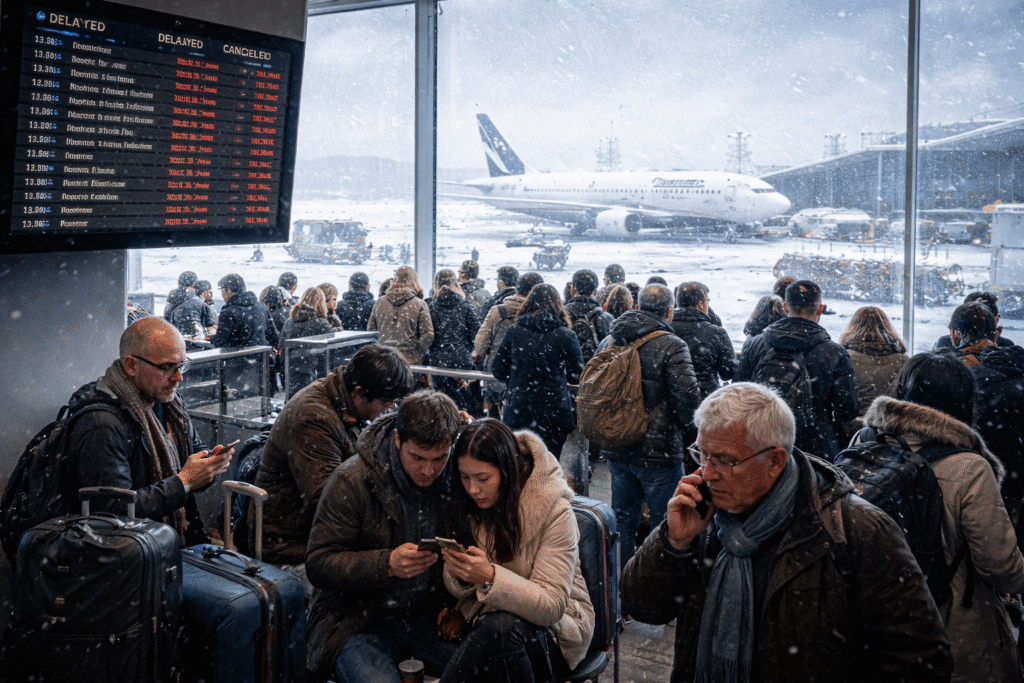
Heavy snow and severe weather disrupted travel plans across Europe as Air France delayed 253 flights and canceled more than 20 departures over the weekend. Travelers in Italy, Spain, Portugal, Germany, and the Netherlands found themselves stranded as airports struggled to maintain operations. The snowstorms arrived during a peak travel period, which increased the severity of the disruptions.
Air France Faces Operational Challenges
Air France attempted to manage complex conditions as snow and low visibility forced air traffic controllers to adjust departure and arrival schedules. Ground crews worked to clear aircraft and runways from snow accumulation, which slowed turnaround times and caused long departure queues. Airports experienced congestion as travelers waited for updates and rebooking options.
The disruptions affected key European hubs, including Paris Charles de Gaulle, Paris Orly, Amsterdam Schiphol, Berlin Brandenburg, and Barcelona International. Aircraft repositioning became more difficult due to airfield constraints, which slowed the restoration of scheduled operations.
Cities Hit Hard by Cancellations and Delays
The disruptions spread across multiple countries as weather fronts moved across Europe. Nantes, Madrid, Malaga, Hamburg, and Berlin experienced some of the highest levels of delays and cancellations. Airport announcements reported full departure lounges and growing rebooking lines as passengers searched for alternatives.
Some travelers attempted to reroute through secondary airports in Italy, Spain, and Germany, but limited seat availability slowed these plans. Travelers heading to holiday destinations faced significant delays, and business travelers saw critical meetings postponed or canceled.
Weather and Visibility Complicate Flight Safety
Heavy snow and low visibility created flight safety challenges that prevented normal operations. Air traffic officials reduced arrival rates to increase separation between aircraft in poor visibility. Snow and ice also covered taxiways and runways. Ground vehicles struggled to move equipment as airports raced to maintain safe handling conditions. Many aircraft required additional deicing procedures, which increased turnaround times.
These disruptions affected not only Air France but also other carriers operating in the region. European airports remain vulnerable to winter weather events that create chain reactions across flight networks. Winter flight schedules include built-in buffers, but major storms often exceed those limits.
Passengers Scramble to Adjust Travel Plans
Passengers trapped in airports faced long waits as they attempted to rebook. Many travelers expressed concern about missing connecting flights outside Europe. Others attempted to secure train seats or rental vehicles to continue their journeys. However, high demand reduced availability, especially in Germany and France.
Airports attempted to manage crowds by opening additional seating and rest areas. Some airports distributed water and snacks as queues for rebooking desks grew longer. Travelers using mobile booking tools obtained faster updates than those waiting at desks. Many travelers opted to delay travel entirely after discovering limited rebooking windows.
Airlines Work to Clear Backlogs
Clearing the backlog of stranded travelers will take several days due to ongoing weather concerns and reduced aircraft rotations. Air France assigned additional customer support staff and increased communication through digital platforms. Travelers could request refunds or rebook flights for later travel dates.
Airlines across Europe coordinated to reduce the compounding effect of cascading delays. Aircraft repositioning plans helped move assets to where they were needed. However, weather forecasts suggested continued snow in northern France and parts of Germany, which raised concerns for further disruption.
Travel Demand Heightens Impact
The storm arrived at a time of strong demand for winter travel. Holiday schedules increased passenger volumes across European hubs. Flight loads reached high capacity levels before the storm, which reduced available seats for stranded travelers. Full flights limited the ability of airlines to rebook disrupted passengers on the same day.
Tourism analysts noted that winter travel demand has increased over recent years due to expanded city break tourism and winter sports travel. Travelers heading to alpine destinations in France, Italy, and Switzerland faced additional delays as road travel slowed under heavy snow.
Airport Infrastructure Faces Seasonal Stress
European airports continue to invest in winter resilience measures. Many hubs maintain snow removal equipment, deicing facilities, and weather monitoring systems. However, rapid snowfall events continue to stress these systems. Runway closures due to snow accumulation represent one of the most significant causes of winter aviation disruption.
Airport officials noted that winter operations demand precise coordination between air traffic control, ground crews, and airline staff. Snow affected airport access roads, which slowed passenger arrivals and crew transport. These effects added further delays to already congested terminals.
Travelers Advised to Monitor Conditions Closely
Tourism experts recommend that travelers monitor winter weather updates during the colder months. Many European destinations rely on strong travel demand from tourists heading to cultural, urban, and sporting attractions during winter. Travelers with flexible itineraries often avoid peak weather disruption dates or book morning departures, which hold lower cancellation risk.
Europe Braces for Ongoing Weather Challenges
The airline industry expects more winter storms before the end of the season. Airlines continue to adjust schedules and deploy larger aircraft to reduce flight shortages. Travel authorities encourage passengers to prepare for potential delays and consider backup plans during winter travel.
These snowstorms highlight the impact of severe weather on European tourism and air travel. As airlines and airports recover from this disruption, travelers across Europe will watch weather forecasts and adjust plans to avoid further complications.
For more travel news like this, keep reading Global Travel Wire