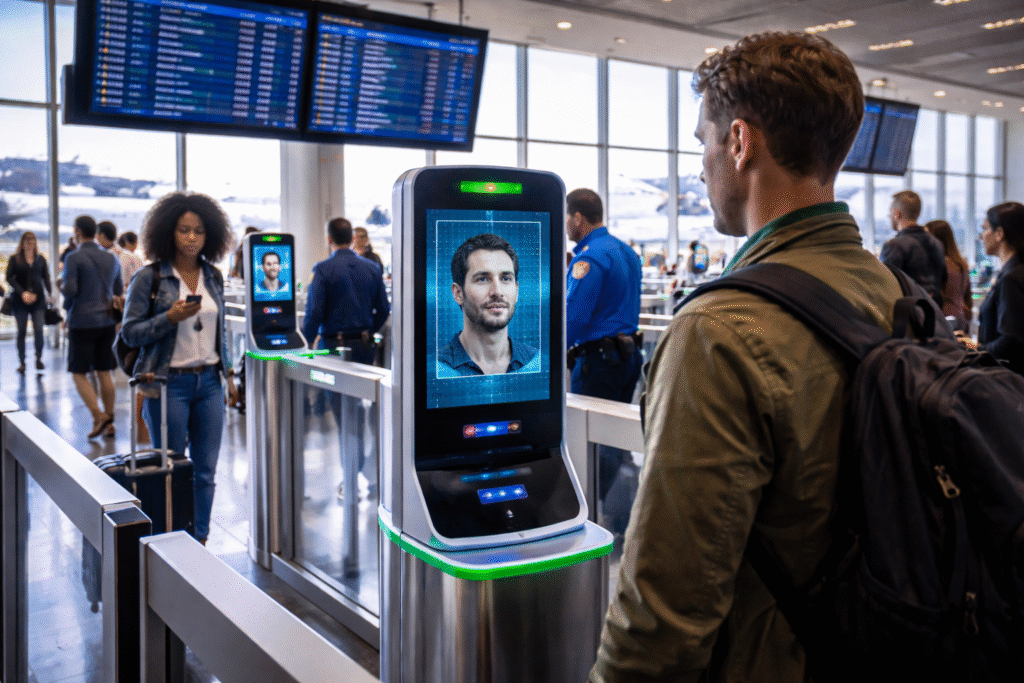
The future of air travel in the United States will take a major step forward in 2026 as Atlanta joins a long list of major airports in deploying TSA PreCheck Touchless ID. This facial recognition system transforms a traveler’s face into a secure digital identity for faster movement through airport checkpoints. Major airports in Chicago, Los Angeles, New York, Miami, Seattle, and Denver will also adopt the technology, along with dozens of other hubs across the country. The shift aims to reduce wait times and improve throughput during peak travel periods.
Travelers will experience a smoother journey without the need to present physical documents at security checkpoints. Airports anticipate reduced lines, improved efficiency, and stronger security accuracy as the new system replaces manual checks that often contribute to delays.
Facial Recognition Replaces Physical Identity Checks
The technology uses facial biometrics to verify a traveler’s identity. Passengers approach a scanning kiosk and allow their face to be captured. The system compares this live scan to stored images from passports or other government-issued documents. The match happens within seconds and enables the traveler to move ahead without providing an ID or boarding pass.
Airports expect that the technology will reduce errors caused by manual verification. It also eliminates the need for physical handling of documents, which supports touchless travel standards that gained popularity during recent public health events.
How TSA PreCheck Touchless ID Operates
TSA PreCheck Touchless ID integrates with airline reservation systems and government databases. Travelers register once through their airline by submitting their photo and passport information. The system stores no new data during the airport interaction. It simply verifies identity against existing documentation. Once verified, passengers can proceed through security with less friction.
The TSA plans to roll out the technology to fifty airports by 2026. The adoption allows millions of U.S. travelers to benefit from a contactless experience that links the travel identity process to digital systems rather than physical paperwork. The rollout aligns with trends in global travel that favor biometric identity management over manual document checks.
Air Travel Demand Supports Technology Expansion
U.S. airline traffic surged during 2025 as both domestic and international markets rebounded. Carriers transported over 84 million passengers during October 2025. Domestic travel accounted for the majority of these journeys, with international traffic also showing solid growth trends. International demand continues to improve due to increased connectivity and renewed interest in long-distance leisure travel.
The TSA views these numbers as validation for biometric investment. Airports with high passenger volume benefit the most from faster security processes. The stronger the demand, the greater the need for efficient security checkpoints that minimize delays and reduce congestion.
Airlines Coordinate Rollout Across Major Airports
Five major U.S. carriers will support the new technology across select airport networks. Alaska Airlines, American Airlines, Delta Air Lines, Southwest Airlines, and United Airlines will introduce the system within their TSA PreCheck programs. Participating airports include top domestic hubs such as Hartsfield-Jackson Atlanta, Chicago O’Hare, Los Angeles International, Miami International, Seattle-Tacoma, and Denver International.
The deployment expands beyond major coastal gateways. Mid-sized airports such as Charlotte, Salt Lake City, Nashville, and Kansas City will also participate. Regional airports in Arkansas, Florida, and South Carolina are included as well. Travelers from small and large markets alike will access biometric verification once the rollout reaches full scale.
Privacy Considerations Remain Part of the Discussion
Facial recognition presents new questions about data security and system transparency. Privacy groups have raised concerns regarding the handling of biometric information. The TSA has responded by clarifying that the facial scan functions as a matching system rather than a storage system. The agency protects data using encryption and restricts use to aviation security.
Officials continue to emphasize that the system exists to verify identity rather than track traveler activity. The TSA also points to reduced fraudulent identity attempts as a benefit of using biometric data rather than physical documents alone.
Impact on U.S. Tourism and Passenger Experience
Tourism analysts predict that biometric travel systems may increase interest in U.S. travel by simplifying airport procedures for domestic and international visitors. The reduction in manual checkpoints offers value for travelers with limited time and tight connections. The technology aligns with global travel trends seen in Europe, the Middle East, and Asia, where biometric border systems continue to expand.
Travelers also gain a more predictable and consistent security experience. By removing document-handling steps, airports can allocate resources toward baggage processing, customer service, and gate operations. Travel companies expect these improvements to reduce missed connections and improve overall airport satisfaction scores.
The Next Phase of Airport Innovation
The biometric rollout marks a major shift in how airports will operate over the next decade. The TSA expects that document-free travel will eventually expand beyond the checkpoint to include boarding gates and customs channels. Travelers may soon check in, drop bags, clear security, and board aircraft without presenting a single paper document.
Atlanta and other major airports will lead this transformation. The shift positions the United States as a competitive player in global airport modernization, with the potential to set standards that other countries may adopt.
For more travel news like this, keep reading Global Travel Wire