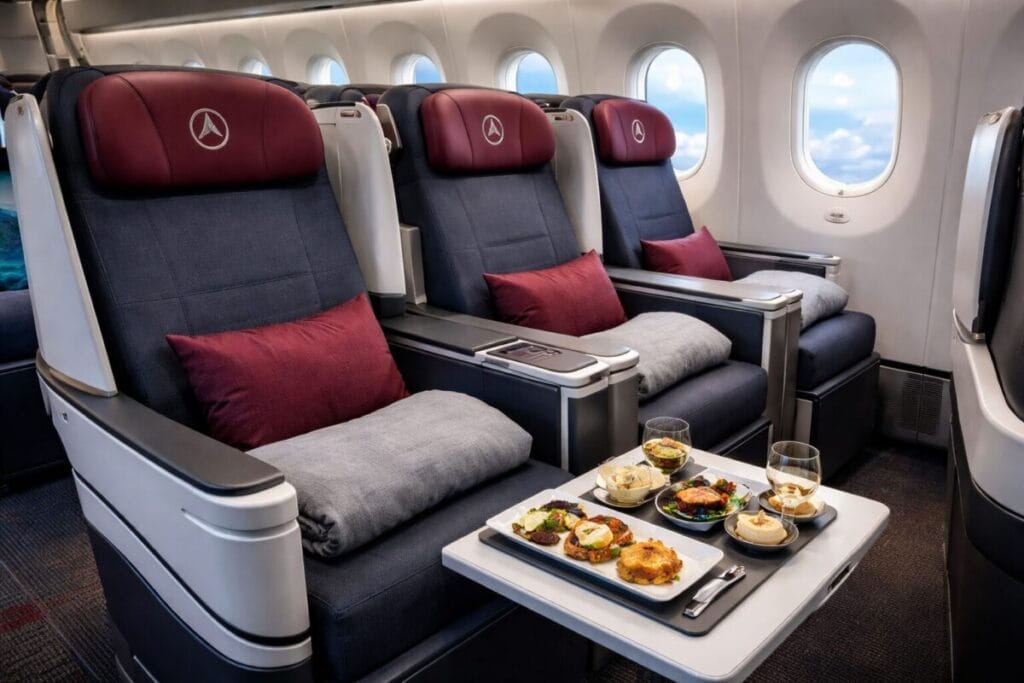
Global tourism has entered a new growth phase defined by longer flight distances, multi-continent travel, and higher passenger comfort expectations. Turkish Airlines is now reassessing a premium economy cabin as part of its long-haul strategy. The move reflects wider trends in aviation, where mid-tier cabin products have become a major revenue stream for carriers targeting leisure and business travelers who seek comfort without business-class fares.
Istanbul has already emerged as one of the largest international transfer hubs. With more travelers connecting between Europe, Asia, Africa, and the Americas, the airline’s product planning has gained new strategic relevance.
Comfort Drives Travel Decisions
Long-haul tourism demand continues to rise. Travelers are booking more flights across continents as remote work flexibility expands and new tourism corridors open. In several regions, governments and tourism ministries have reported stronger visa facilification, increased tourism spending, and growth in premium leisure travel. This shift has made cabin comfort a key decision factor for long flights that can exceed twelve hours.
Premium economy has become the cabin class that bridges the economic gap between standard economy and business class. Travelers benefit from additional personal space, improved dining, and priority advantages without paying luxury fares. For airlines, it offers higher yields than economy without reducing business-class exclusivity.
Revisiting a Mid-Tier Strategy
Turkish Airlines once offered premium economy under the name Comfort Class more than a decade ago. It featured spacious seating and upgraded in-flight amenities. Despite strong passenger satisfaction, the product ended in 2013 as business-class pricing policies evolved.
Today’s aviation environment is far different. Airlines around the world now use premium economy to maximize revenue from travelers who are not willing to upgrade to business but want an enhanced experience. This segment has grown fast as global tourism and corporate travel budgets adjust to post-pandemic constraints.
Several international carriers now report that premium economy performs well on routes over nine hours. These flights include tourism destinations in Australia, Southeast Asia, South America, and North America — markets that Turkish Airlines actively serves or plans to expand into.
Passenger Surveys Indicate Rising Interest
In recent years, Turkish Airlines has used customer surveys and loyalty data to analyze service expectations. Many respondents expressed interest in a mid-tier class, especially on flights exceeding ten hours. Travelers requested more legroom, improved dining, and quieter cabin zones. Their willingness to pay indicates a market opportunity when priced properly.
Tourism analysts have noted similar findings in industry research. Travelers now budget more for comfort than before the pandemic, especially when journeys involve multiple flight legs and long transit times.
Fleet Compatibility and Operational Planning
To reintroduce premium economy successfully, Turkish Airlines must address fleet configuration. In the past, only select aircraft carried Comfort Class. That limited availability created scheduling challenges. Modern rollout strategies favor consistency across wide-body fleets such as Airbus A350-900 and Boeing 787-9.
Several recently delivered aircraft already include premium seating layouts. These frames could enable a faster re-entry into the market. Broader integration would ensure that long-haul routes — especially transpacific and ultra-long-range services — offer uniform cabin experiences.
Istanbul as a Global Aviation Hub
Turkey has identified aviation as a national economic pillar. Tourism remains one of the country’s top industries, contributing billions of dollars in revenue and attracting tens of millions of international visitors annually. The expansion of Istanbul Airport has strengthened Turkey’s geographical advantage as a midpoint between continents.
Introducing premium economy aligns with national tourism goals by improving transit attractiveness. Travelers who fly through Istanbul benefit from shorter route networks and competitive pricing. Enhanced cabin products could boost visitor numbers, encourage stopover tourism programs, and elevate Turkey’s connectivity profile.
Long-Haul Expansion Signals New Opportunities
Turkish Airlines has expanded its long-haul network considerably. Future route planning includes previously unserved tourism markets and ultra-long flights that make comfort essential. Australia has been publicly mentioned as one of the next frontier destinations. Flights of this length would be more competitive with a mid-tier cabin option.
Premium economy also supports corporate travel policies. Many companies cap budgets but still allow comfort upgrades for productivity and well-being on long sectors. This segment could provide reliable year-round demand, helping airlines balance seasonal tourism cycles.
Revenue Dynamics and Industry Trends
From a commercial perspective, premium economy is one of the strongest margin generators in modern aviation. It can increase revenue per seat while expanding the customer base beyond standard economy. Airlines achieve stronger cabin segmentation without diluting premium products.
Turkish Airlines could benefit from this balanced approach. A new premium economy product would reinforce its competitive position against major global carriers that already offer similar cabins. It would also add value to the passenger experience as global tourism keeps shifting toward longer itineraries and higher comfort standards.
Bottom Line
Turkish Airlines is actively evaluating a premium economy comeback. Demand trends, fleet growth, and tourism expansion make the timing favorable. If launched with modern design, smart pricing, and fleet consistency, the product could strengthen Turkey’s aviation ecosystem and reinforce Istanbul’s role as a global hub for long-haul tourism.
For more travel news like this, keep reading Global Travel Wire