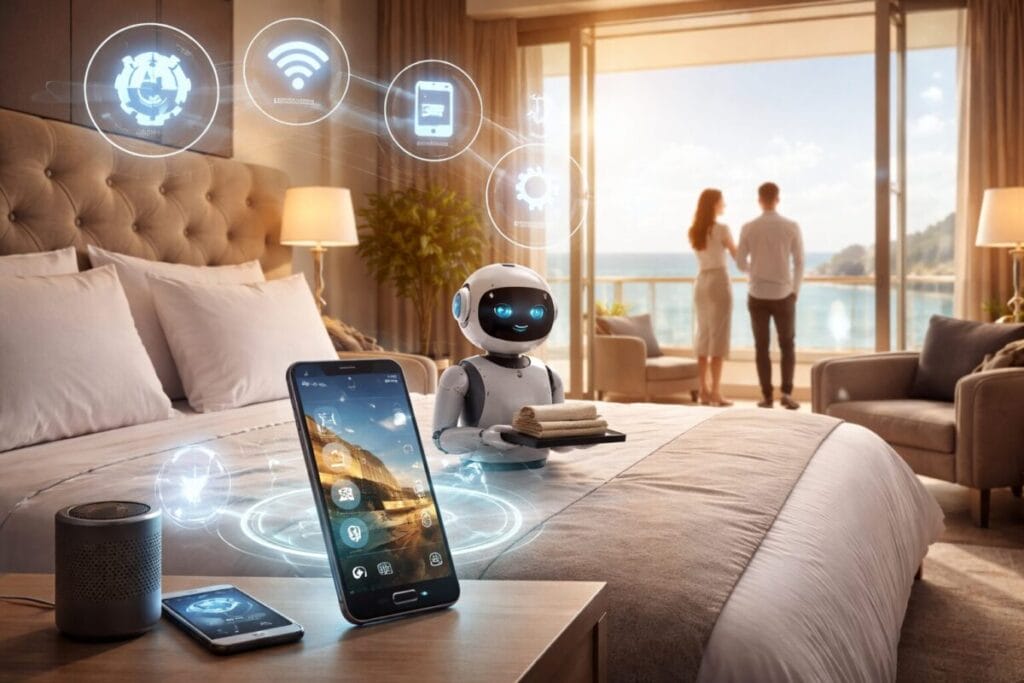
The global hospitality sector is preparing for a new chapter in 2026 as artificial intelligence, mobile engagement, and personalized service models become central to the hotel experience. This shift reflects a decisive move toward integrating guest expectations directly into operational systems, marking a departure from past models in which experience enhancements were often added only after the core operational framework was already in place.
Guest Experience Becomes the Operational Core
Industry analysts expect 2026 to be the year hotels finally treat guest experience as the foundational blueprint of their operations. Instead of viewing service as a separate layer, hotels are aligning decision-making, staffing, and technology to match the guest journey from pre-booking to post-stay feedback. The result is a more coherent environment with fewer breakdowns, faster problem resolution, and streamlined service transitions.
This new structure reduces friction points that previously created inconsistencies between departments. For example, housekeeping, front desk, and room service teams are beginning to coordinate through shared digital platforms, allowing real-time updates and adjustments that match guest movement and preferences.
Personalization Evolves from Luxury to Standard Practice
While personalization has long been a tourism trend, 2026 is expected to introduce a deeper operational form of personalization that goes far beyond welcome notes or preferred pillow types. Data-driven service models now allow hotels to recognize repeat guests, anticipate service needs, and adapt amenities automatically. Instead of guests repeatedly providing the same information, hotels are building profiles that capture preferences such as dietary restrictions, room climate, mobility needs, leisure interests, and scheduling patterns.
Several national tourism boards have encouraged the use of responsible data frameworks to support this evolution. As global travel demand increases, governments emphasize privacy protections and standardized data handling to maintain guest trust. This makes personalization not only more efficient but also more compliant with international tourism regulations.
Mobile Engagement Becomes Strategic, Not Just Convenient
Mobile technology in hotels is no longer limited to digital keys or mobile check-in. In 2026, engagement is expected to focus on timing, relevance, and behavioral insight. Notifications are becoming more intentional—appearing when they add genuine value rather than in high volume. This reduces guest fatigue and increases satisfaction with tech-enabled interactions.
Hotels are incorporating mobile platforms into amenities such as spa appointments, dining reservations, tourism information, and transportation arrangements. This aligns with broader government tourism strategies that encourage digital visitor services to reduce congestion at physical service points, particularly in countries with high inbound tourism.
AI Moves from Insight to Action
Artificial intelligence is becoming indispensable in hotel operations, shifting from passive analytics to active decision support. AI-powered systems can now optimize room pricing, predict peak service demand, and flag operational bottlenecks before they disrupt guests. Human supervisors remain in control, but response times are dramatically improved.
Revenue management teams benefit as AI adjusts pricing against seasonal factors, major events, weather patterns, and regional tourism flows. Many countries have strengthened tourism data-sharing frameworks, allowing hotels to forecast demand more accurately and prepare for fluctuations in visitor arrivals.
A Quieter, More Contextual Approach to Upselling
Traditional upselling relied heavily on scripted campaigns or aggressive offers. In 2026, hotels are refining their commercial approach to be subtle, contextual, and integrated into the service timeline. Recommendations appear only when relevant—such as late checkout offers when guests exhibit slower morning patterns or dining suggestions aligned with on-site events.
This gentler method increases conversions because it aligns with intent rather than pressure. Guests perceive it as helpful rather than intrusive, ultimately supporting sustainable revenue growth.
Distribution Channels Expand and Fragment
Travel bookings are increasingly decentralized. Instead of relying solely on hotel websites or online travel agencies, bookings now originate from map services, AI travel assistants, tourism platforms, and regional discovery apps. This requires hotels to maintain consistent information and availability across a wider digital ecosystem.
Reputation management is also evolving from reactive engagement to operational intelligence. Guest feedback is being incorporated into daily management rather than only post-stay metrics. A single negative trend may trigger internal adjustments in staffing, housekeeping, or amenities before complaints escalate publicly.
Food and Beverage Adapts to Fluid Guest Lifestyles
Hotel dining in 2026 is moving away from fixed restaurant models toward mobile, flexible, and guest-centric experiences. Integrated ordering and payment systems allow guests to dine poolside, in lobbies, in lounges, or in other semi-public areas. The shift aligns with wider tourism trends favoring on-demand, casual dining formats that accommodate varied travel schedules.
Forward-Looking Benchmarking Practices
Benchmarking is no longer limited to comparing historical revenue or occupancy rates. Hotels now use predictive analytics combining guest satisfaction scores, operational data, and real-time sentiment signals to anticipate challenges before they materialize. Stability becomes the goal, not just growth.
A Holistic Future for Hospitality
By 2026, the hospitality industry is expected to operate more intelligently, more sustainably, and more empathetically toward guest needs. Technology will support—not replace—human service, creating hotel environments that feel both efficient and deeply personal. For travelers, this marks the beginning of a new era where the perfect stay is no longer aspirational, but achievable.
For more travel news like this, keep reading Global Travel Wire