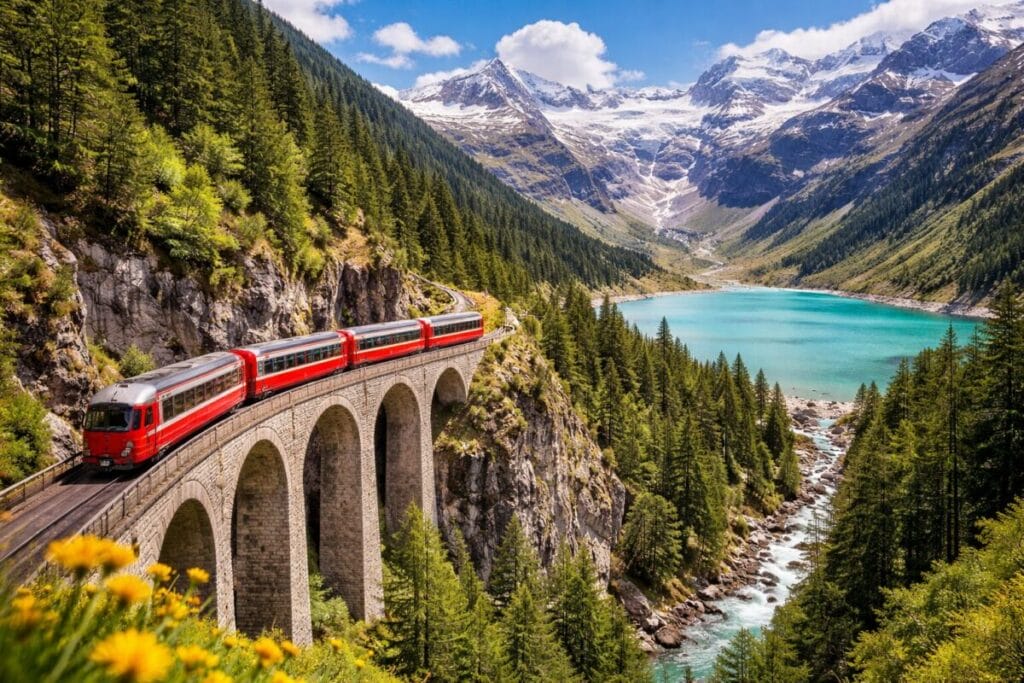
The Bernina Express continues to enchant travelers who seek a scenic and cultural train experience across the Alps. The panoramic route links Thusis in Switzerland with Tirano in northern Italy. The train crosses mountain passes, valleys, and glaciers, offering a uniquely immersive journey from one country to another. Travelers witness engineering brilliance and natural wonder blended into a UNESCO World Heritage rail corridor.
Switzerland and Italy both celebrate this railway for its historical importance and tourism value. The Alpine environment gives the route a dramatic backdrop throughout the year. Snow blankets the peaks in winter, while summer offers lush meadows and blue lakes. This seasonal variety makes the Bernina Express one of Europe’s most photographed rail experiences.
UNESCO Recognition for History and Engineering
UNESCO added the Albula and Bernina sections of the Rhaetian Railway to its World Heritage List in 2008. This recognition highlights the remarkable integration of rail infrastructure with nature. Engineers designed the track to follow the contours of steep valleys and rugged mountains. The result is a rail line that respects heritage while delivering modern mobility.
This UNESCO designation also honors the railway’s cultural legacy. Construction began in the late 19th century and continued into the early 20th century. Engineers built viaducts, tunnels, and bridges to cross terrain once considered inaccessible for rail travel. The line remains fully operational today, allowing passengers to ride across living history rather than view it from afar.
Iconic Structures Along the Route
Travelers experience major engineering landmarks during the 122-kilometer journey. The Landwasser Viaduct stands as one of the most iconic views. The viaduct stretches over the Landwasser River and curves into a tunnel built into a cliff face. The height and curvature create a dramatic moment as the train glides across the limestone pillars.
Farther along the route, the Bernina Pass reaches an elevation of 2,328 meters. This makes the Bernina Express one of the highest railway crossings in Europe. Travelers enjoy sweeping views of glaciers, lakes, and craggy outcrops at this altitude. Lago Bianco, with its blue and green waters, adds another postcard-worthy scene to the journey.
On the descent toward Italy, the Brusio Circular Viaduct takes center stage. The viaduct forms a complete circular loop, allowing the train to reduce altitude in tight mountain space. This spiraling descent remains one of the most celebrated rail features in the world. These feats of design elevate the Bernina Express beyond a scenic ride and into a showcase of engineering mastery.
Panoramic Rail Cars for Immersive Viewing
The Bernina Express uses panoramic coaches designed to maximize visibility. Large windows extend toward the ceiling, allowing uninterrupted views of the surrounding Alps. Passengers can track glacial peaks, wooded valleys, and rushing rivers throughout the journey. The layout creates an open-air feeling without exposure to harsh weather.
The variety of landscapes separates this route from standard scenic trains. The Swiss Alps offer harsh winter peaks, while the Italian side provides Mediterranean colors and warmer climates. The descent into Tirano creates a striking contrast as Alpine scenery transitions into vineyards, sunlit courtyards, and subtropical flora. These changes highlight the geographical diversity of a single cross-border journey.
Cultural and Culinary Connections Between Countries
The route also serves as a cultural link between Switzerland and Italy. Switzerland contributes Alpine heritage, outdoor sports culture, and mountain gastronomy. Italy offers espresso bars, piazzas, and regional cuisine. Travelers can enjoy dumplings and rösti at higher altitudes and later switch to pasta and tiramisu in Tirano. This culinary shift reinforces the sense of a full international passage rather than a simple regional rail trip.
Tirano serves as the arrival point and gateway to the Valtellina region. This area is known for wine production, orchards, and mountain villages. The region attracts hikers, cyclists, and cultural tourists during the warmer months. The Bernina Express links these landscapes in a seamless and scenic format.
Reasons to Add the Bernina Express to Your Travel Plans
The Bernina Express ranks consistently among the world’s most scenic train rides. Travelers gain access to UNESCO rail heritage, high-altitude engineering, and panoramic views. Photography enthusiasts capture glaciers, stone viaducts, and historic tunnels. Nature lovers follow Alpine ecology and glacial geography. Cultural travelers cross an international boundary in a relaxed and enriching way.
Many travelers seek train tourism as an alternative to highway or air travel. Rail journeys offer slower travel speeds, direct sightseeing, and environmental advantages. The Bernina Express uses electric operation, which reduces emissions and supports sustainable tourism across the Alps. This aligns with broader initiatives in Switzerland aimed at promoting eco-conscious mobility.
Preserving Heritage for Future Generations
Sustainability remains central to the Bernina Express story. The Rhaetian Railway invests in infrastructure maintenance, heritage preservation, and ecological stewardship. UNESCO oversight helps ensure responsible tourism as visitor volume grows. This partnership protects Alpine landscapes and maintains the historical integrity of the railway. The Bernina Express therefore serves as both a travel product and a preservation model.
A Journey Worth Remembering
The Bernina Express offers more than a scenic rail excursion. It delivers an Alpine journey rich with heritage, engineering excellence, and multicultural discovery. Travelers enjoy a memorable crossing that blends Swiss precision with Italian warmth. Anyone seeking an immersive, sustainable, and culturally layered experience will find the Bernina Express worth adding to their global travel list.