Jeju Island continues to attract travelers who seek dramatic landscapes, cultural immersion, and outdoor adventure. Known as Korea’s volcanic paradise, Jeju offers crater peaks, waterfalls, lava tubes, beaches, and fertile farmlands shaped by ancient eruptions. Tourism authorities highlight Jeju as one of South Korea’s most valuable travel assets. Visitors arrive from across Asia, Europe, and North America to experience its diverse attractions and pleasant island lifestyle.
Jeju sits off the southern coast of the Korean Peninsula. Travelers enjoy mild year-round weather, rich agricultural products, and a slower pace of life. The island’s volcanic origins shaped its terrain and created many of its landmarks. UNESCO recognizes Jeju’s geological features due to their scientific and cultural significance. This designation supports the island’s tourism branding and boosts international awareness.
Hallasan Mountain Dominates the Island’s Skyline
Hallasan Mountain rises over the island and ranks as South Korea’s highest peak. This dormant volcano provides hiking trails for beginners and seasoned trekkers. The trails lead through alpine forests, volcanic craters, and freshwater springs. Visitors enjoy wildflowers in spring, deep green forests in summer, colorful foliage in autumn, and snow-covered scenery in winter.
Researchers document unique flora and fauna within Hallasan National Park. Many species appear only within Jeju’s ecosystem due to volcanic soil and climate patterns. These ecological traits make the mountain a rewarding destination for nature enthusiasts and eco-tourists.
Waterfalls Add Drama to Jeju’s Coastline
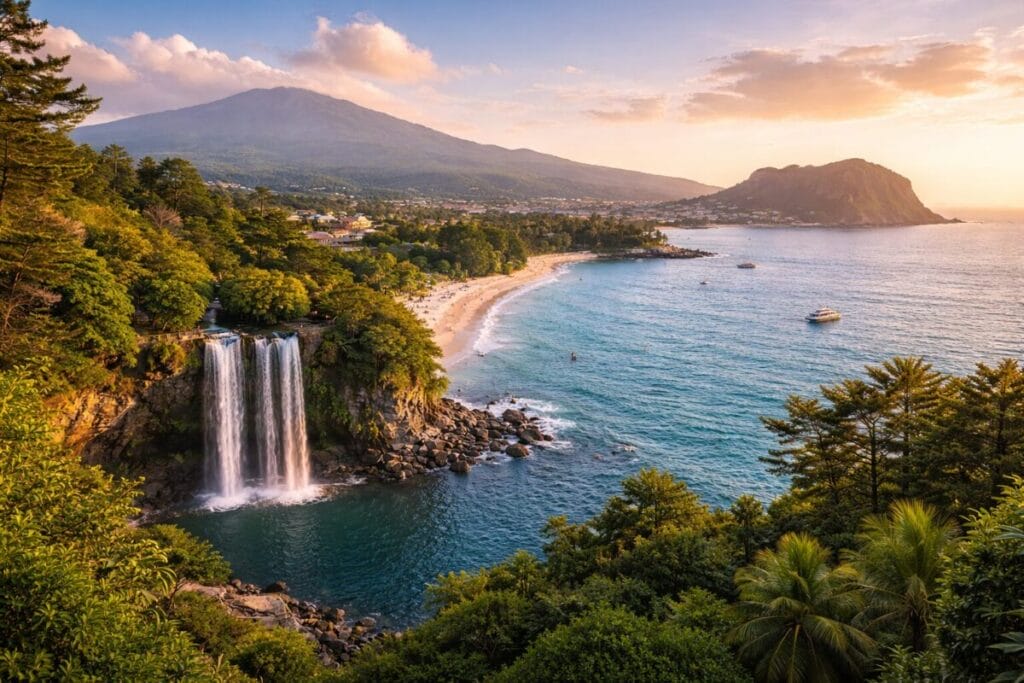
Jeju features several waterfalls that draw travelers who seek scenic viewpoints and calming environments. Jeongbang Waterfall drops directly into the sea, creating a rare coastal waterfall display. Cheonjiyeon Waterfall sits within a forested valley where ponds and walking paths create a peaceful atmosphere. Sojeongbang and Cheonjeyeon Waterfalls add more variety for visitors who plan multi-day sightseeing itineraries. These natural attractions support Jeju’s identity as a landscape-driven destination.
UNESCO Lava Tubes Highlight Jeju’s Volcanic Past
Jeju’s underground world of lava tubes formed during ancient eruptions that shaped the island’s terrain. Manjanggul Cave ranks as one of the longest lava tubes in the world open to visitors. Travelers walk past lava stalactites, dome structures, and rare geological formations. Geomunoreum Lava Tube System provides another highlight for geology enthusiasts and curious explorers.
UNESCO recognizes these formations due to their scientific value and high level of preservation. Jeju’s tourism operators integrate guided walks, educational exhibits, and conservation messaging to enhance the visitor experience.
Haenyeo Women Divers Preserve Cultural Traditions
Jeju’s cultural identity extends beyond landscapes. The island’s Haenyeo represent one of Korea’s most unique heritage symbols. These women dive without modern scuba gear to gather abalone, seaweed, and octopus from coastal waters. Their diving technique requires strength, lung capacity, and skill learned over years. This practice reflects a matriarchal community tradition that shaped Jeju’s coastal economy for centuries.
Visitors learn about the Haenyeo at dedicated museums or by watching live diving sessions at designated coastal points. Many travelers describe the experience as moving due to the cultural pride and resilience displayed by the women.
Jeju’s Beaches Offer Calm Waters and Scenic Sunsets
The island’s beaches provide ideal settings for swimming, paddleboarding, and relaxation. Hyeopjae Beach features white sand, calm surf, and views of Biyangdo Island. Jungmun Saekdal Beach offers wide sands and dramatic sunsets. Woljeongri Beach attracts younger travelers with cafes, surf shops, and photographic viewpoints. During summer, beachgoers enjoy ideal conditions for water sports and coastal recreation.
Local Cuisine Enhances the Travel Experience
Jeju’s food culture stands out due to its volcanic soil and maritime environment. The island produces citrus, black pork, abalone, and barley. Black pork barbecue remains a favorite for Korean travelers. Chefs grill tender cuts over charcoal and serve them with dips and side dishes. Seafood lovers enjoy sliced abalone, sashimi, and sea urchin dishes. Jeonbokjuk, a creamy abalone porridge, appeals to wellness-focused travelers who prefer nourishing meals. Citrus teas and tangerine confections provide sweet souvenirs for visitors.
Travel Itineraries Support Seamless Trip Planning
Travelers often divide their stay into themed days. One popular itinerary includes urban experiences in Jeju City, natural attractions in Seogwipo, and cultural visits across rural villages. A four-day trip can include waterfalls, lava tubes, mountain hikes, museum stops, and beach sunsets. This variety explains Jeju’s appeal among families, honeymooners, solo travelers, and outdoor enthusiasts.
Best Travel Seasons for Jeju Island
Spring and autumn provide mild temperatures and ideal hiking conditions. Summer attracts beach travelers who seek warm water and long daylight hours. Winter appeals to visitors who enjoy snowy landscapes and quieter attractions. Jeju’s weather patterns support year-round tourism and help stabilize the local hospitality economy.
Why Jeju Island Continues to Rise in Global Tourism
Jeju blends natural beauty, cultural heritage, outdoor adventure, and modern comfort. Travelers can summit volcanoes, explore lava caves, watch Haenyeo divers, relax on beaches, and enjoy regional cuisine. This combination creates a compelling tourism product that stands apart within East Asia. As more international travelers seek authentic and nature-driven destinations, Jeju stands ready to claim a larger share of global travel interest.
For more travel news like this, keep reading Global Travel Wire