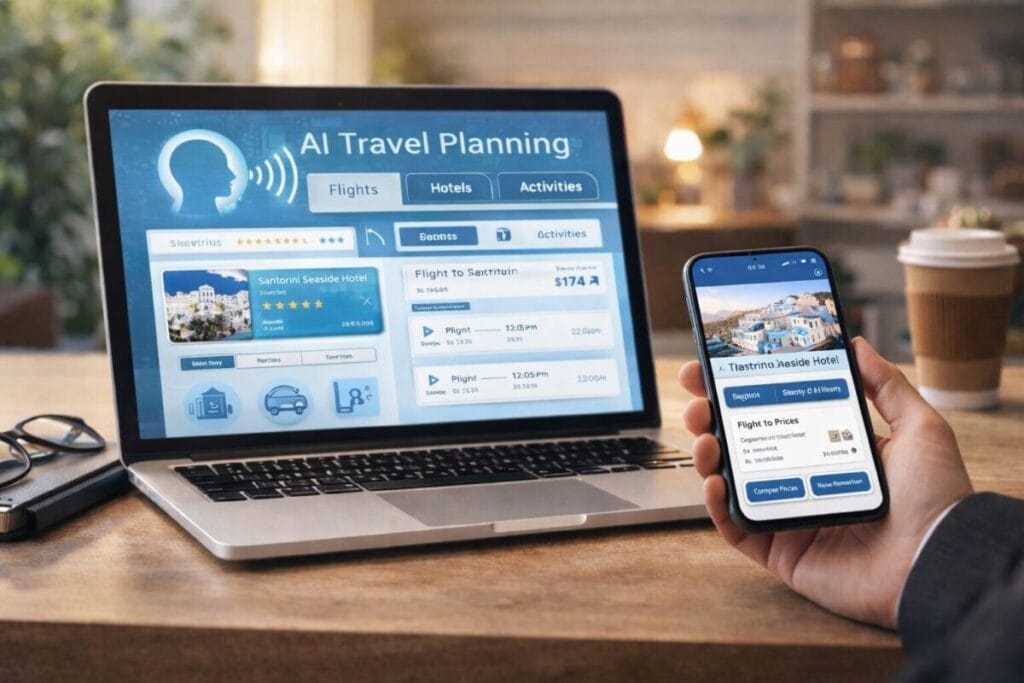
Artificial intelligence is rapidly reshaping how travelers research, plan, and book trips, according to new consumer data highlighting the rising role of AI-driven travel tools. The findings reflect a major shift in traveler behavior, with AI now influencing accommodation preferences, pricing decisions, and purchase confidence across the tourism sector. Although adoption is still in a growth phase, the results suggest AI is emerging as a central component of the future travel journey.
The new report, titled “The Rise of AI-Planned Travel in 2026,” examines the growing relevance of AI-powered hotel discovery tools, recommendation engines, and comparison platforms. Based on feedback from 300 leisure travelers in the United States who booked overnight stays within the past year, the study reveals that AI awareness has reached near-universal levels. Approximately 90 percent of respondents indicated they are familiar with AI tools that support travel planning, demonstrating widespread recognition of how artificial intelligence is integrating into consumer decision-making.
However, despite this high awareness, hesitancy remains. More than half of respondents have not yet used AI to organize their travel, citing accuracy, personalization, and real-time pricing as primary concerns. For many travelers, the ability to trust AI-generated recommendations is still improving. Yet the survey indicates an openness among travelers to engage with emerging tools, particularly if they demonstrate reliability and enhance user control over the travel experience.
Among respondents who have already used AI assistants, hotel booking emerged as the most common use case. According to the report, 86 percent of AI users have leveraged AI tools to help locate or book accommodations. A significant percentage indicated that AI-generated hotel recommendations would influence their choice, with 60 percent reporting they would be “somewhat more likely” to book a hotel highlighted by a trusted AI platform. An additional 23 percent stated they would be “much more likely” to rely on an AI suggestion, signaling growing confidence in automated evaluation tools.
This shift aligns with broader market trends in the tourism sector, where consumers increasingly rely on digital filtering systems to navigate complex booking environments. With hotels, vacation rentals, and boutique lodging options proliferating online, AI tools are emerging as navigational assistants capable of simplifying choice fatigue. Several tourism boards and market analysts have noted that AI-driven recommendations are boosting booking conversions for accommodation providers, particularly those that invest in dynamic pricing and visibility across digital channels.
Beyond hotel selection, price comparison is another key motivator for travelers adopting AI assistants. The report found that 35 percent of respondents view AI as most useful for comparing rates across flights, hotels, and package components. Real-time aggregation and multi-provider analysis allow travelers to locate value faster, especially across competitive markets. With inflation and currency fluctuations influencing travel budgets, price transparency has become a dominant factor associated with consumer satisfaction and booking confidence.
Personalization is also shaping the expectations of modern travelers. Respondents expressed interest in future AI capabilities that offer tailored itineraries, real-time alerts, rebooking support, and recommendations based on prior travel behavior. These desires align with ongoing advancements in predictive travel technology, where AI tools learn from data patterns to suggest superior travel matches. In global tourism research, personalization remains one of the strongest drivers of repeat visitation and loyalty, reinforcing why AI continues to gain momentum among both consumers and service providers.
Despite these positive indicators, the report highlights persistent barriers that operators and technology developers must address. Many travelers remain cautious due to concerns over incorrect recommendations or limited contextual understanding. Personalization gaps, outdated pricing information, and generic results were cited as sources of mistrust. These concerns present opportunities for travel brands, hotels, and online platforms to refine integrations and invest in more accurate AI frameworks.
For the hospitality sector, the rise of AI-assisted hotel discovery represents both an opportunity and a competitive challenge. Properties that ensure strong representation within AI discovery ecosystems stand to benefit from increased visibility and direct booking influence. Meanwhile, operators that fall behind may lose exposure as more travelers rely on AI-driven browsing rather than traditional search or loyalty-driven channels. Tourism analysts suggest that hotel operators able to integrate AI into rate management, guest communication, and booking optimization will be better positioned for long-term success.
Looking ahead, the report suggests that AI will extend beyond planning into real-time travel support. As models improve, travelers may begin using AI tools to manage disruptions, secure upgrades, adjust schedules, and recommend on-trip activities. These predictions align with industry forecasts from business travel and tourism associations, which indicate that AI is expected to become a core component of trip management throughout the next decade.
Ultimately, the data signals a pivotal phase for the tourism industry. While adoption remains gradual, traveler expectations are evolving quickly. AI’s influence on pricing transparency, booking confidence, and personalized recommendations positions it as a defining technology for the next era of travel planning. As tools grow more accurate and intuitive, the industry increasingly anticipates a future where AI becomes an essential companion throughout the travel process, shaping how travelers explore, book, and experience destinations worldwide.
For more travel news like this, keep reading Global Travel Wire