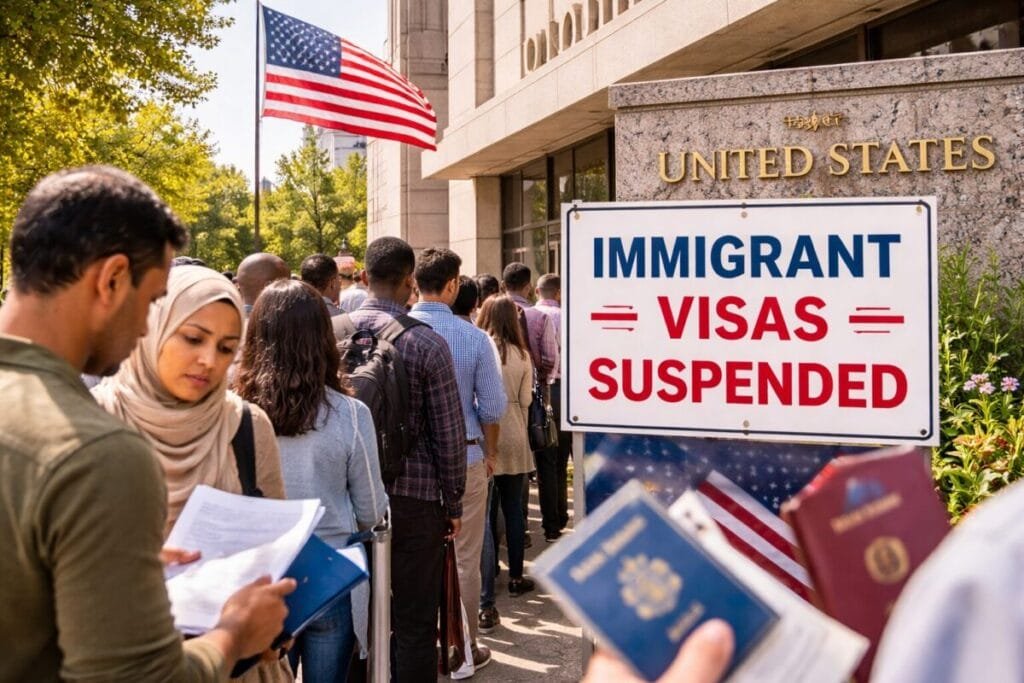
The United States enters 2026 with a major shift in its immigration policy as the government halts immigrant visa processing for applicants from 75 countries. The suspension affects permanent immigration only, leaving tourism, education, and short-term travel untouched. The policy has drawn global attention as families, professionals, and students scramble to understand how their plans may change.
What the Suspension Actually Means
The new policy halts immigrant visa processing for citizens of 75 countries across Latin America, the Caribbean, Africa, South Asia, the Middle East, and parts of Eastern Europe. Immigrant visas allow people to move permanently to the US through family sponsorship, employment opportunities, or other residency pathways.
Short-term visas remain open. Travelers who plan to visit the US for tourism, conferences, business trips, or studies can still apply for non-immigrant visas. Airports also remain open to international visitors who already hold valid visas or electronic travel authorizations.
The suspension targets immigration rather than tourism. The US expects strong tourism and education demand in 2026 as airlines expand routes and universities prepare for increased international enrollment.
The Countries Impacted by the Suspension
The list of 75 affected countries includes large population centers such as Brazil, Nigeria, Pakistan, Russia, Iran, and Egypt. Smaller Caribbean and Pacific nations also appear on the list, along with African and Middle Eastern countries that have high migration flows.
The impact reaches many regions that send family-based immigration applicants to the US. In addition, several of the affected countries rely heavily on international migration as a source of economic opportunity through remittances.
Mixed Reactions Abroad and at Home
The suspension has ignited widespread reactions. Migrant advocacy groups express concern over family separation and prolonged uncertainty. Meanwhile, government officials frame the change as a method of tightening permanent immigration rules and reevaluating economic criteria for new residents.
The administration argues that permanent immigration must align with the ability of newcomers to support themselves without burdening public social systems. Officials also claim the pause will allow policy teams to redesign immigrant visa vetting procedures.
Effects on Families and Professionals
The policy brings immediate consequences to people in the middle of the immigration process. Family members planning reunification face delays. Applicants awaiting employment-based green cards may see opportunities paused. Students who hoped to transition to permanent residence after graduation must adjust their plans.
These disruptions reshape long-term immigration strategies for many families. Some may reconsider destinations such as Canada, the United Kingdom, or Australia, which continue to court skilled migration for demographic and labor needs.
Tourism Remains Open for 2026
While immigrant visas face suspension, the United States continues to promote tourism. The travel and hospitality industries rely on international visitors for revenue across major cities and national parks. Tourism officials expect stronger inbound travel due to the dollar’s moderate value and expanded airline connectivity.
Travelers from the affected countries can still apply for short-term visitors visas, student visas, or business visas. Many nationalities also benefit from consular processing pathways that were not included in the immigrant visa halt.
The decision to keep tourism open reflects the economic value of short-term visitors. International tourists spend billions of dollars annually on accommodations, dining, transportation, and entertainment. Major American cities such as New York, Los Angeles, Miami, Orlando, Las Vegas, and Chicago rely heavily on travel spending.
A New Phase in the US Immigration System
The suspension confirms the administration’s broader goals for immigration reform. The focus has shifted toward reducing long-term immigration flows from specific regions while preserving economic and tourism ties through temporary mobility.
The policy does not restrict refugee admissions or humanitarian parole programs, which operate under separate legal frameworks. However, the change underscores a priority toward controlled and selective immigration criteria.
Global Mobility and Future Uncertainty
The biggest question now centers on duration. The government has not announced a timeline for lifting the suspension. The State Department plans periodic reviews to assess compliance with new economic and security objectives. The lack of clarity frustrates applicants who invested time and money into visa filings, background checks, and medical examinations.
Meanwhile, immigration attorneys expect case backlogs to grow. When processing resumes, applicants could face multi-year queues. Families may experience long separations as they wait for new guidance.
What Travelers Should Expect Next
Travelers planning a vacation, conference, or study program do not face significant obstacles under the new policy. Airports, universities, and tourism agencies continue to welcome visitors. Application processing may experience minor delays due to administrative workload, but entry remains possible.
Would-be immigrants face a more complex picture. Without clarity on review schedules, applicants from the affected 75 countries must prepare for extended waiting periods.
A Policy That Will Shape Migration Trends in 2026
The suspension marks one of the most significant immigration adjustments of the decade. Its implications extend beyond domestic politics and into global mobility patterns. Many countries with large diasporas in the US will watch the policy closely as they consider their own diplomatic and economic responses.
For now, tourism continues uninterrupted while immigration stands paused, creating a clear divide between those who visit and those who plan to stay.
For more travel news like this, keep reading Global Travel Wire