Sabah prepares to elevate its eco-tourism profile in 2026 as Tambunan positions the Kolopis River Waterfall as a flagship nature attraction for adventure travelers. The region, known for cool mountain air and lush valleys, draws increasing interest from conservation groups and state officials who see the waterfall as a model for low-impact nature tourism. For visitors who seek pristine landscapes and community-based experiences, Tambunan offers a window into a quieter Malaysia where forest culture remains intact.
A Hidden Gem in the Crocker Range
Tambunan sits in the interior of Sabah between rolling hills and the Crocker mountain corridor. Locals call the district the “Switzerland of the East” due to its temperate climate and scenic highlands. Kolopis River Waterfall rests in Kampung Sunsuron, a rural village that maintains cultural and agricultural traditions central to Kadazan-Dusun communities.
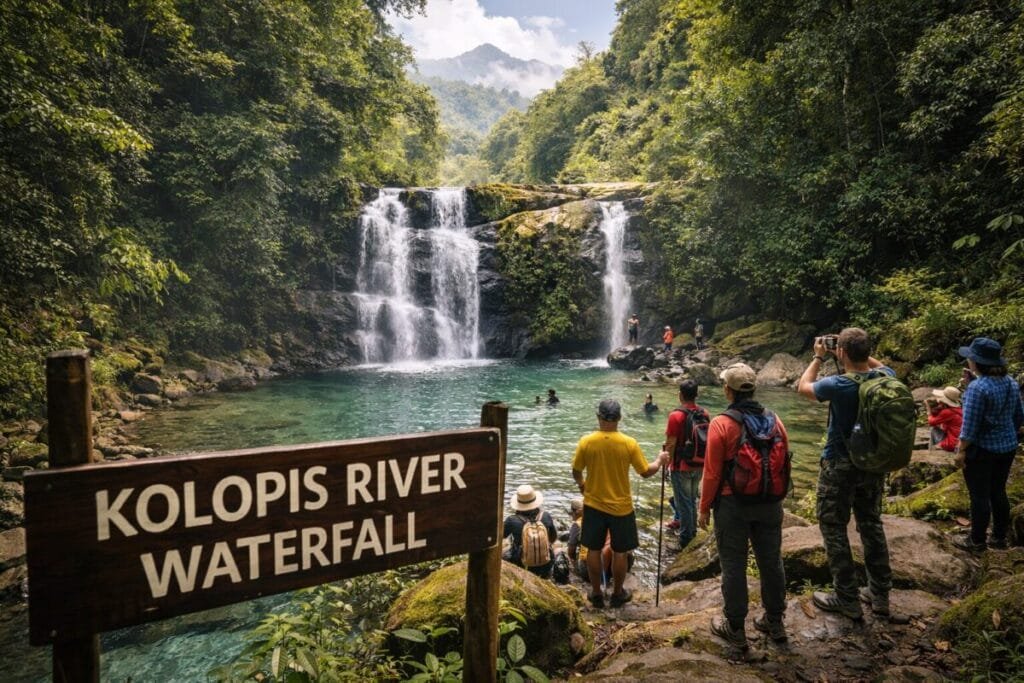
Reaching the waterfall requires a 45-minute trek along forest paths with river crossings and moderate inclines. The remoteness shields the area from mass tourism and preserves its wild character. Two clear water tiers cascade into deep pools surrounded by moss-covered stone and thick rainforest. The soundscape reveals flowing water, cicadas, and cool breezes from the Crocker peaks.
Adventure Integration With Mount Wakid
Kolopis River Waterfall sits along the Mount Wakid trekking route, a corridor popular among local hikers and visiting adventure tourists. The proximity allows Tambunan to develop a compact outdoor circuit that blends hiking, nature interpretation, and river swimming. Outdoor enthusiasts can climb Mount Wakid in the morning and end the day with a refreshing dip in Kolopis’ pools.
The integration supports community-based tourism where local guides lead treks and interpret native plants, wildlife, and folklore. This model ensures tourism revenue flows directly into Sunsuron households rather than leaving the district for external operators. The concept aligns with Sabah’s long-term tourism goal to empower rural communities through adventure, culture, and nature-based products.
Sustainable Development and Conservation Values
Sabah’s tourism authorities emphasize low-impact development for the waterfall site. Infrastructure proposals include trail upgrades, viewing decks, safety features, and basic sanitation. Officials aim to provide access without altering the natural environment. Visitors will enjoy the forest rather than concrete complexes or mass entertainment structures.
Environmental protection remains critical. The region practices the traditional Tagal system, a community-run method for managing river resources and fish populations. Tagal bans fishing in designated zones to allow waterways to replenish. The system gained national recognition for its success in river rehabilitation and shows how indigenous knowledge can support modern tourism strategies.
Aquaculture Innovation Through Empurau Fish
Kolopis River hosts clean, fast-moving water suitable for the Empurau fish. Known as the “King of the River,” Empurau commands high market value across Southeast Asia. Sabah officials and aquaculture specialists evaluate its suitability in Tambunan’s highland rivers to create a dual economic driver for the district.
Empurau aquaculture encourages river protection since the species requires clean and unpolluted water. This creates natural incentives for conservation. A circular economy could emerge where river health supports aquaculture, aquaculture supports local income, and eco-tourism reinforces the value of preservation. This integration aligns with Sabah’s sustainable development policies and Malaysia’s green tourism agenda.
Preparing for Malaysia’s 2026 Tourism Push
Malaysia plans to highlight eco-tourism during its 2026 tourism year. Sabah will position its rainforests, island parks, mountains, and cultural districts as anchors of the national campaign. Tambunan offers a counterpoint to the coastal hotspots of Kota Kinabalu and Sipadan by presenting cooler highlands and traditional village communities.
Local authorities continue to survey Kolopis River Waterfall to design investment-ready infrastructure that respects the land. Government departments collaborate on environmental studies, safety assessments, and land-use planning. Their shared goal focuses on balancing visitor access with ecological integrity. This planning stage helps prevent overdevelopment and overcrowding, problems seen at other popular nature sites.
Tourism Trends Favor Nature and Culture
Travel trends in Southeast Asia show rising demand for nature tourism, slow travel, and off-the-beaten-path destinations. Travelers seek wellness escapes, cultural immersion, and outdoor activities rather than urban shopping corridors alone. Tambunan’s combination of forest treks, village culture, and mountain scenery positions it well to capture these emerging markets.
International tourists value eco-friendly experiences that showcase authentic lifestyles while supporting local communities. Domestic travelers also seek mountain retreats as a break from coastal humidity and urban congestion. Sabah’s interior meets both demands through biodiversity, scenic mountain ridges, and community hospitality.
A Future Defined by Local Stewardship
Tambunan’s approach to Kolopis River Waterfall reflects a tourism philosophy that values inclusion. Local youth gain opportunities in guiding, hospitality, and conservation. Villagers maintain ownership of cultural narratives and ecological knowledge. The land supports livelihoods without sacrificing its character.
Visitors will come to breath fresh highland air, swim in mountain pools, and hear stories from the people who protect the forest. Kolopis River Waterfall offers more than a scenic photo. It offers a model for rural eco-tourism where preservation and prosperity coexist in the hills of Sabah.
For more travel news like this, keep reading Global Travel Wire