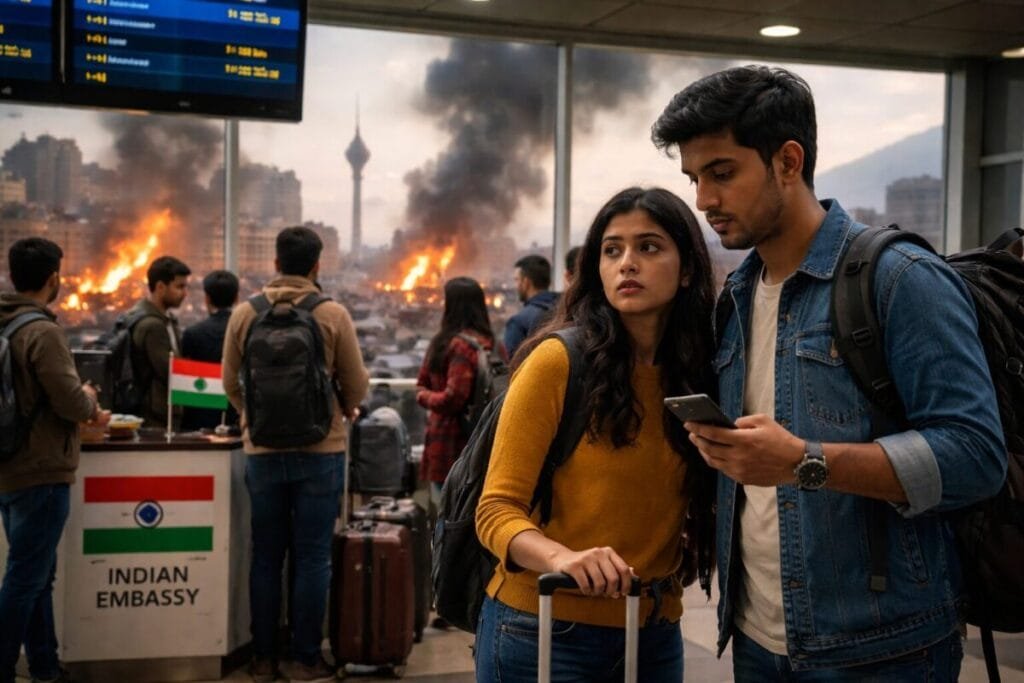
The Indian government has issued an urgent travel advisory asking its citizens in Iran to leave immediately. The notice follows escalating protests, civil unrest, and growing security risks across several regions of Iran. The advisory covers roughly 9,000 Indian nationals, including students, business travellers, and expatriate workers.
Officials have stressed that the safety of Indian nationals remains the top priority. They have urged all citizens to seek the earliest available commercial flights or any safe travel route to return home without delay.
Safety Concerns Drive Swift Government Action
Tensions in Iran have increased due to political and economic instability, frequent demonstrations, and disruptions to everyday life. Reports of clashes and security crackdowns have raised concerns over the exposure of foreign nationals to unpredictable situations.
India’s Ministry of External Affairs (MEA) has been assessing the developments closely. As the situation worsened, the MEA issued updated guidance and held coordination meetings with relevant agencies to streamline evacuation support.
The government has also warned Indian citizens against new travel to Iran for tourism, business, or religious purposes until conditions stabilize.
Embassy Support Systems Activated
The Indian Embassy in Tehran has become the main point of coordination for those requiring assistance. Citizens have been encouraged to register with the Embassy, provide location details, and maintain constant communication through verified channels.
To enable fast departures, citizens have been advised to keep essential travel documents readily accessible. This includes passports, identity cards, student permits, and airline tickets. Embassy officials are assisting with revalidating expired documents or offering temporary arrangements if needed.
Students Among the Most Affected
A significant portion of the Indian population in Iran consists of students enrolled in various academic institutions. Many are based in major cities and rely on public transit and student housing, both of which have faced disruptions due to protests.
The government has taken note of the unique challenges students face during crises. Assistance mechanisms have been activated to guide them through the logistics of flight bookings, clearances, and transit routes. Students have been urged to avoid large public gatherings and remain indoors until departure plans are arranged.
Pilgrims and Business Travellers Receive Guidance
Iran hosts multiple historical and religious sites that attract Indian pilgrims. Business travellers and traders also maintain links with Iranian markets. The advisory encourages both groups to expedite their return travel. Government officials have highlighted that delays may lead to fewer flight options, higher ticket costs, and potential travel bans in severely affected areas.
Avoiding High-Risk Zones and Demonstration Areas
The MEA has strongly advised citizens to avoid protest locations, government complexes, and public venues where demonstrations are common. The advisory also discourages non-essential movement within Iranian cities. Those currently in Iran have been urged to remain aware of local regulations, curfews, and changing transit conditions.
Citizens have been asked to rely on verified information sources and avoid rumours that may create confusion during the evacuation process.
Commercial Routes Still Operational but Uncertain
As of now, commercial flights remain operational, but officials caution that routes may be suspended with short notice depending on how the unrest progresses. Travel experts note that demand can surge quickly during emergencies, making early bookings crucial for smooth departures.
India has signaled readiness to explore emergency evacuation options should commercial flights reduce significantly, especially for vulnerable groups such as students and elderly travellers.
Government Prepared for Possible Escalation
Officials are tracking the situation around the clock to determine if additional measures—including charter assistance or coordinated transfers—may be necessary. India has executed large-scale evacuation missions during previous unrest in regions such as Ukraine, Yemen and Iraq. These operations involved coordination with foreign governments, airlines, and international agencies to ensure safe return of Indian nationals.
While conditions in Iran remain fluid, Indian authorities are preparing similar contingency frameworks should the situation deteriorate further.
Reassurance for Families in India
Families of Indian nationals currently in Iran have expressed concern about communications and safety. The MEA has encouraged families to stay in touch with the Embassy for updates, while assuring them that every effort is being made to support their relatives.
The government has promised regular public briefings to reduce misinformation and maintain transparency about evacuation progress and remaining travel windows.
Tourism Impact and Policy Outlook
The advisory is expected to have temporary effects on bilateral tourism, business travel and pilgrimage routes. Tour operators have already reported cancellations and delays in planned itineraries. Analysts note that tourism response strategies may shift toward strengthening crisis assistance frameworks for travellers in volatile regions.
Policy experts expect continued monitoring, with advisories being revised based on security assessments and diplomatic engagements.
India’s urgent advisory reflects a decisive response to fast-moving unrest in Iran. By activating embassy support, discouraging new travel, and guiding vulnerable groups toward safe departure, the government aims to protect its citizens abroad. While the future of the unrest remains uncertain, India has made clear that the safety of its nationals will remain paramount throughout the crisis.
For more travel news like this, keep reading Global Travel Wire