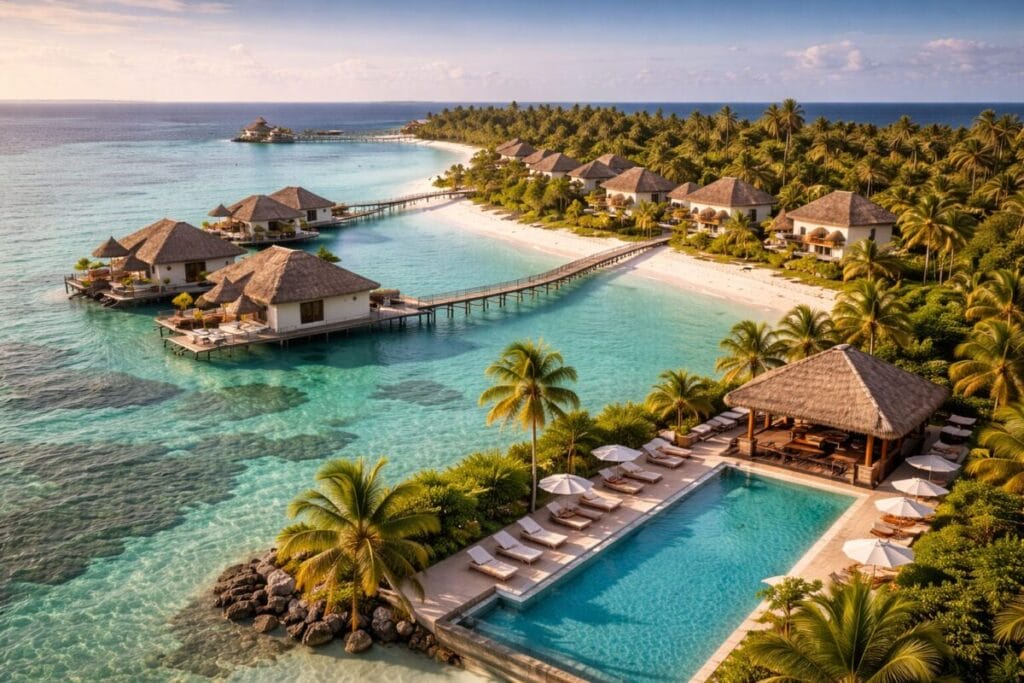
The Maldives is preparing to welcome another major international hospitality brand as Meliá Hotels & Resorts announces the opening of Meliá Whale Lagoon Maldives in January 2026. The new five-star all-inclusive resort will be a significant addition to the country’s luxury hotel landscape, strengthening the Maldives’ global reputation as a sought-after destination for premium travel, wellness, and sustainable tourism. The opening is part of Meliá Hotels International’s broader global expansion strategy and marks a key milestone for the brand in the Asia-Pacific region.
Located in the pristine South Ari Atoll, an area celebrated for its natural marine biodiversity, whale sharks, and turquoise lagoons, the resort will offer a luxury experience integrated with environmental sensitivity. The resort features 100 oceanfront villas, including Beach Villas, Water Villas, and Sunset Suite Villas, each designed to provide guests with private escapes surrounded by panoramic views of the Indian Ocean. By combining modern comfort with natural surroundings, Meliá Whale Lagoon Maldives aims to attract high-net-worth leisure travelers, honeymooners, and eco-conscious guests seeking premium accommodations in the Indian Ocean.
The Maldives has long been recognized as one of the world’s leading luxury tourism destinations. Its remote islands, overwater villas, and marine life draw travelers from across the globe, contributing significantly to national GDP and employment. The introduction of Meliá Whale Lagoon Maldives supports the country’s tourism development plans by expanding accommodation capacity, diversifying resort offerings, and creating new avenues for tourism experiences that appeal to international travelers. The tourism industry in the Maldives continues to evolve, with increasing interest in sustainable tourism models that balance visitor demand with ecological protection.
Meliá Whale Lagoon Maldives is expected to generate economic benefits for the local hospitality sector through job creation, training opportunities, and regional supply chain development. As luxury resorts require extensive support from food suppliers, transport providers, and experience operators, the opening of new resorts often leads to increased commercial activity beyond the hospitality sector. Additionally, the resort is expected to attract visitors who stay longer and spend more, which is an important factor in the Maldives tourism strategy focused on high-value tourism.
Sustainability plays a central role in the development philosophy behind Meliá Whale Lagoon Maldives. The resort will incorporate renewable energy solutions, eco-friendly building materials, marine conservation initiatives, and water management systems designed to minimize environmental impact. With coral reefs and marine habitats central to the Maldivian tourism product, sustainable resort operations are increasingly viewed as essential to long-term tourism viability. The resort plans to work with local stakeholders on conservation programs and community engagement efforts that support both natural preservation and cultural awareness.
This focus on environmental responsibility reflects a broader shift in global tourism trends. Travelers are prioritizing sustainable stays, ethical travel choices, and destinations that protect natural resources. The Maldives, facing unique climate and ecological challenges, is investing in tourism strategies that align with resilience and adaptation. Projects like Meliá Whale Lagoon Maldives strengthen this vision by offering luxury experiences that do not compromise environmental integrity.
Beyond sustainability, the resort will contribute to the Maldives’ evolving tourism dynamics by expanding high-end lifestyle and wellness offerings. Meliá Whale Lagoon Maldives will feature multiple dining venues with a blend of international and local cuisine, wellness facilities, a spa, fitness centers, and recreational amenities that support the growing global demand for wellness tourism. As wellness travel becomes one of the fastest-growing segments in global tourism, the Maldives remains well positioned to attract visitors seeking rejuvenation, nature-based healing, and holistic travel experiences.
The opening also enhances the Maldives’ competitiveness within the luxury tourism market, where major brands continue to expand their footprint. International hotel groups have entered the region with commitments to sustainability, design innovation, and experiential travel. Meliá Hotels & Resorts’ entry reinforces the Maldives’ position as a premier destination for both traditional luxury and sustainable tourism, offering immersive guest experiences that integrate natural landscapes with personalized hospitality.
From a strategic perspective, the launch of Meliá Whale Lagoon Maldives strengthens Meliá Hotels International’s global brand presence. As travel patterns in Asia-Pacific continue to grow, particularly among affluent travelers from Europe, Asia, and the Middle East, the Maldives offers an ideal platform for portfolio expansion. This resort marks a significant advancement for the company as it targets key tourism markets where luxury travel and sustainability intersect.
The opening of Meliá Whale Lagoon Maldives also represents an important step for the Maldivian travel and hospitality industry as it seeks to shape the future of sustainable luxury tourism. By aligning high-end experiences with environmental responsibility and cultural respect, the Maldives is encouraging a model of tourism that remains attractive while preserving its natural assets for future generations. With the resort scheduled for completion in 2026, the Maldives continues to demonstrate resilience, innovation, and leadership in global destination development.
For more travel news like this, keep reading Global Travel Wire